Saed News: While Earth experiences rain made of water, other planets in the solar system witness rain of acid, diamonds, and even toxic snow.
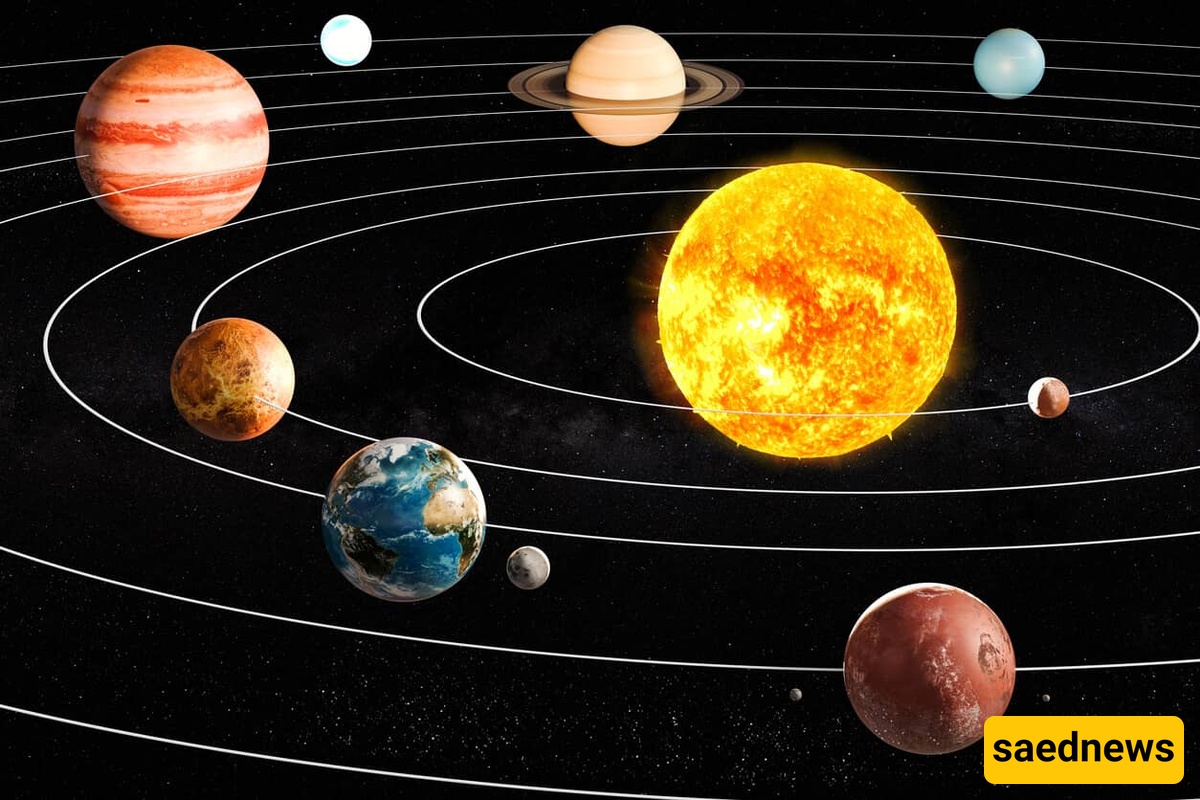
According to SAEDNEWS, citing Hamshahri Online and Fararu, when we talk about rain, we naturally imagine the smell of wet soil and falling water droplets. But once we move away from Earth’s atmosphere, we realize that this romantic definition of rainfall only applies to our blue planet. Across the vast solar system, the meaning of “rain” becomes strange and sometimes terrifying.
Mercury has virtually no atmosphere, so it experiences no form of precipitation. Its sky is always black, and nothing falls from above.
On Venus, clouds are made of concentrated sulfuric acid. However, due to extreme surface temperatures of around 480°C, the acid rain evaporates before reaching the ground, creating a continuous layer of toxic mist.
Mars has a thin and cold atmosphere. Instead of liquid rain, carbon dioxide freezes and falls as dry ice snow on the surface—imagine snow made of frozen gas rather than water.
Perhaps the most fascinating (and scientifically supported) type of precipitation occurs on gas giants. Deep inside Jupiter and Saturn, extreme pressure and heat transform atmospheric carbon into graphite and then into diamonds. In theory, there may be regions inside these planets where diamond “hail” falls continuously.
Known as ice giants, Uranus and Neptune also host extraordinary phenomena. Deep in their atmospheres, methane breaks apart under intense pressure, releasing carbon that crystallizes into solid diamonds. Scientists believe diamonds may fall like hail and form thick layers of gemstones deep within their atmospheres.
At the far edge of the solar system, Pluto experiences extremely low temperatures that allow methane to freeze and fall as snow over its dark mountain ranges, creating an alien and eerie landscape.