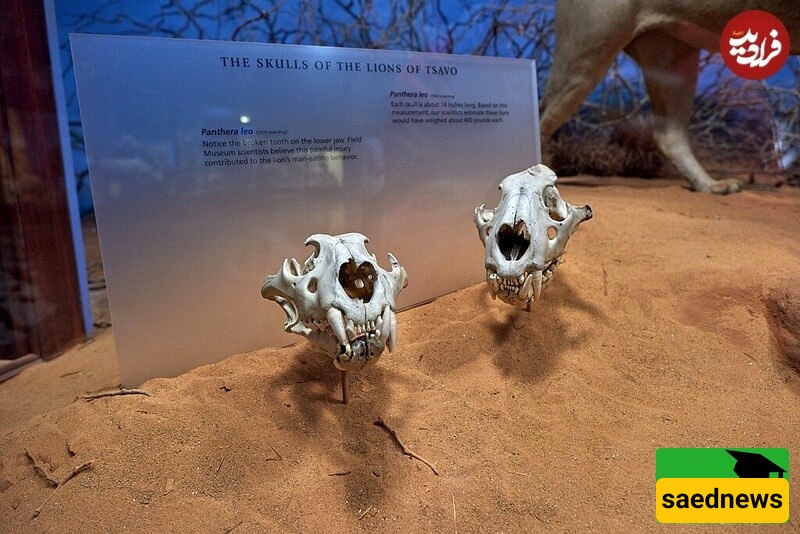
SAEDNEWS: In 1898, a pair of lions repeatedly attacked campsite tents in Kenya, killing at least 28 people. These lions, famously known as the Tsavo man-eaters, were eventually shot, and their remains were displayed at the Field Museum of Natural History in Chicago. Now, researchers have uncovered a darker story through a new genomic study.
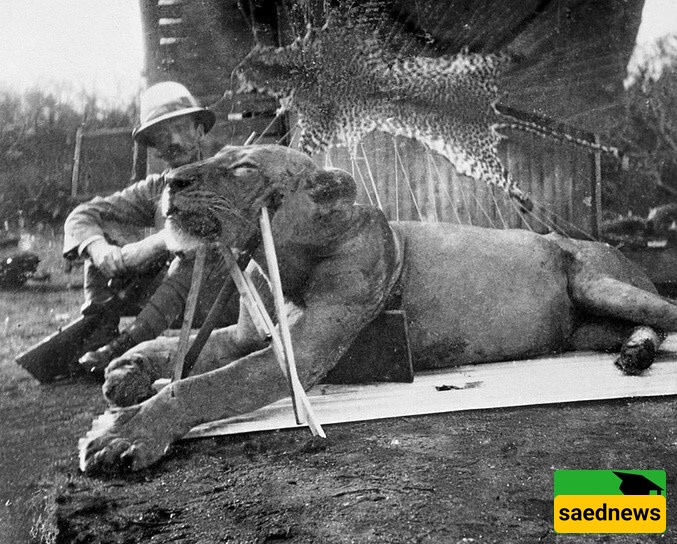
According to the History and Culture section of SaedNews, via FaraDid, the Tsavo lions—immortalized in the 1996 American film The Ghost and the Darkness starring Michael Douglas and Val Kilmer—may have been dead for over a century, yet researchers continue to uncover new insights from studying them. This time, the revelations come from hair trapped in their jawbones! Intriguingly, decayed teeth in some of these lions help explain their turn to man-eating. This serves as a prime example of how modern technologies can illuminate unresolved historical mysteries.
Ripan Mali from the University of Illinois Urbana-Champaign stated, “With advances in biotechnology, unexpected sources of knowledge—here in genomics—become accessible, allowing us to learn more about the past. These developments have revealed crucial information about the ecology and diet of lions historically, as well as the impacts of colonization on life and land in this part of Africa.”
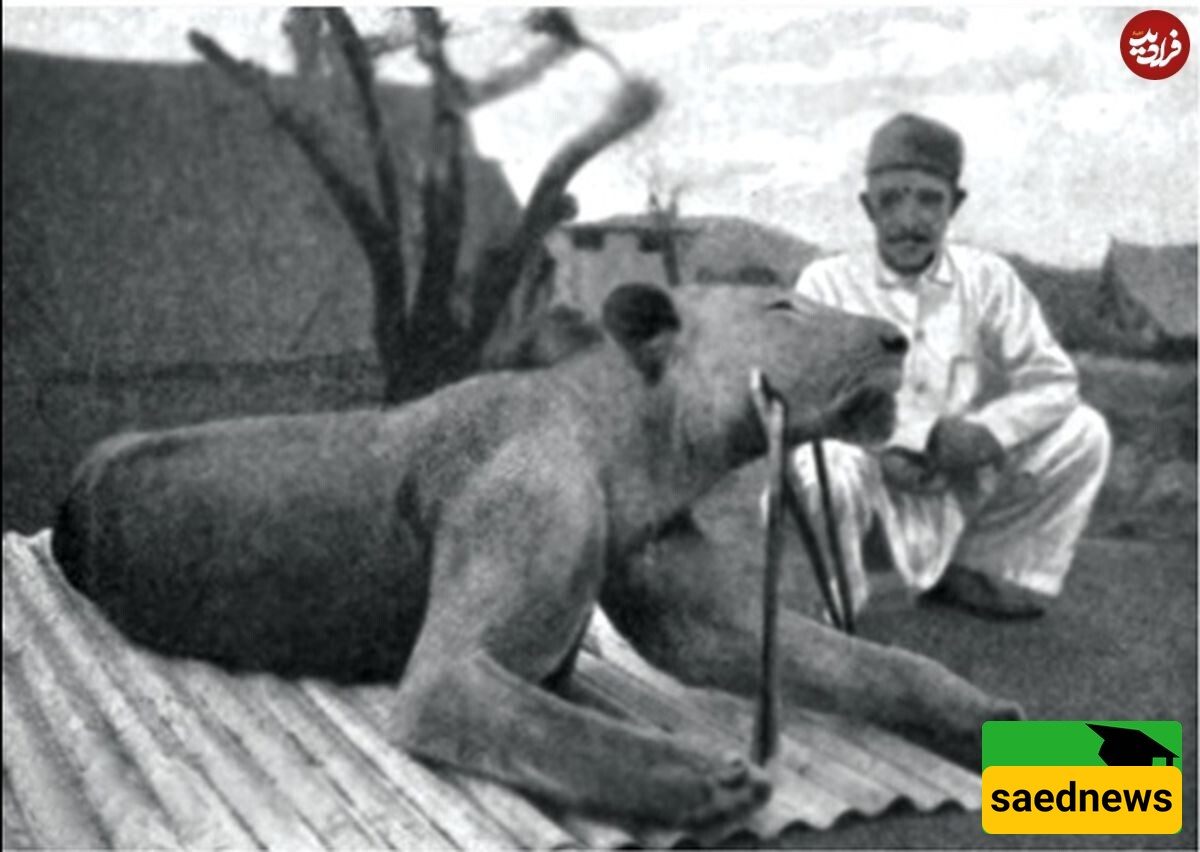
Mali and colleagues devised a method to extract and analyze DNA preserved in hair samples, reconstructing the diets of these infamous lions. They examined microscopic dental damage on the lions’ canine teeth, where visible cavities contained hair from their prey that had accumulated over time.
Alida Di Flaming of the University of Illinois Urbana-Champaign explains, “This suggests that the Tsavo lions may have traveled farther than previously thought—or that hartebeest were present in the Tsavo region at that time. The nearest grazing areas for hartebeest were over 80 kilometers away from the spot where the lions were killed in 1898 at the Tsavo-Athi junction.”
The study is ongoing. Researchers now aim to analyze the compressed hair samples in greater detail, hoping to distinguish dietary preferences according to age. This work not only demonstrates the potential of genomic research but also promises new insights into historical human-lion conflicts—insights that could even be applied to older Tsavo lion specimens.