SAEDNEWS: Antifreeze proteins, sugar-packed cells, and even brain shutdown—many species have discovered astonishing ways to halt their bodily functions and survive until spring.
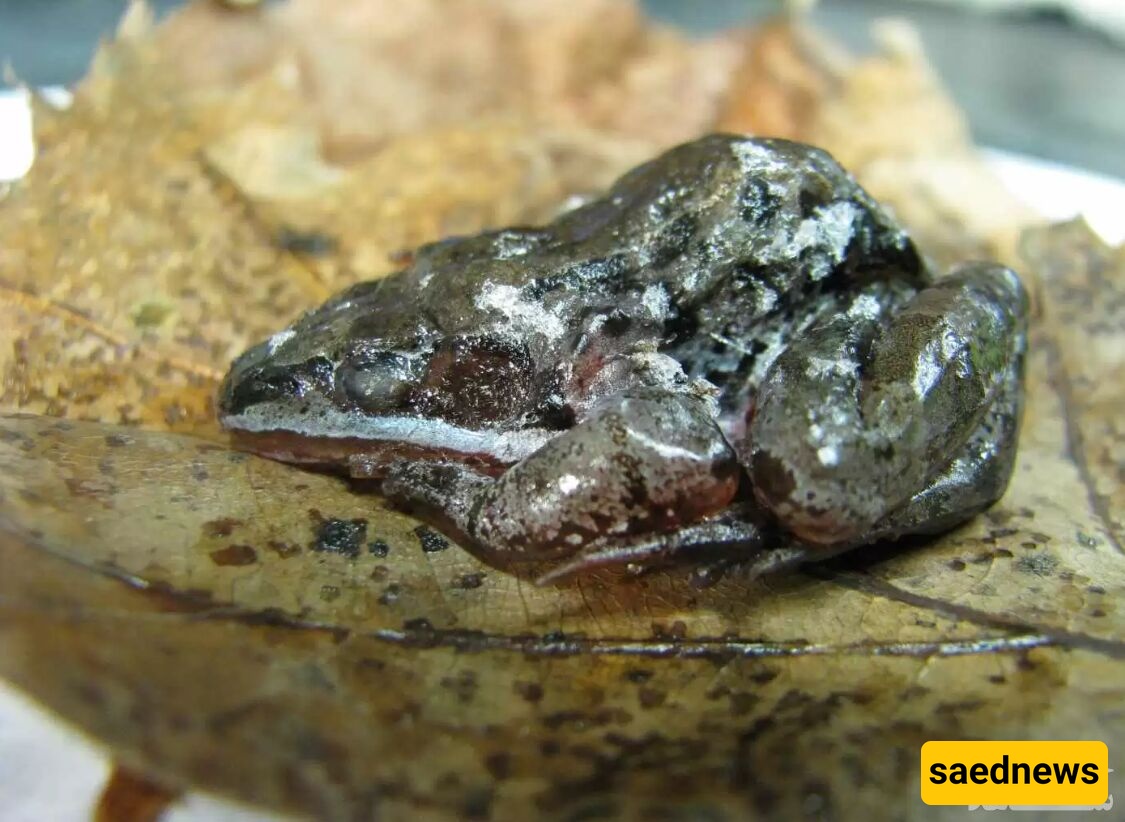
According to Saed News’ Society section, citing Bartarinha, years ago, a university professor shocked his students with an unusual experiment. He showed them a wood frog that had been frozen solid yet was still alive. In a sudden moment, he appeared to hurl it against the wall—and the frozen frog shattered on impact. The students’ jaws dropped in astonishment.
Moments later, the professor revealed the trick: he hadn’t actually thrown the frog. For dramatic effect, he had used a block of ice instead. His real point? To illustrate a fascinating natural phenomenon: the wood frog truly “freezes” during winter to survive, then thaws back to life in spring.
The Miracle of the Wood Frog
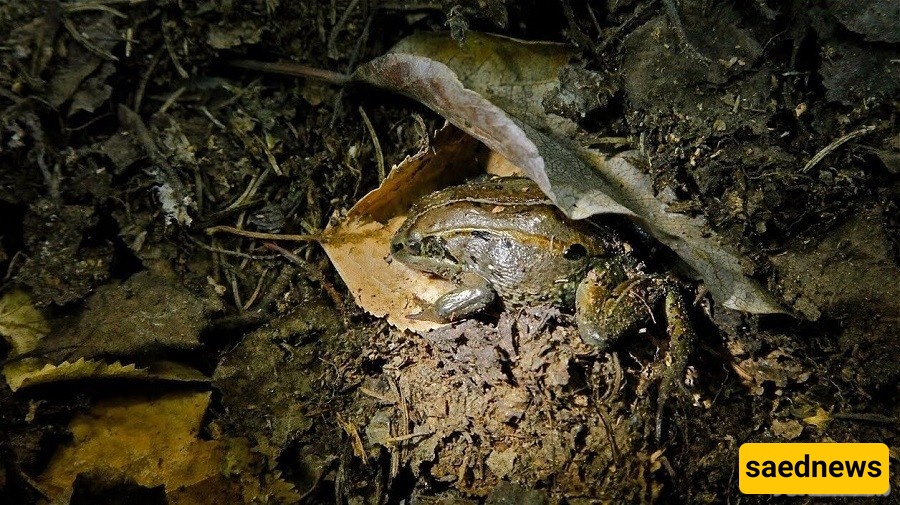
The wood frog is among the few animals on Earth capable of surviving complete freezing, and it has been studied extensively. As temperatures drop in autumn, the frog burrows into leaf litter, allowing cold to seep into its body until all activity stops—its heart, brain, and organs halt.
The wood frog isn’t unique in this extraordinary adaptation. Thousands of insect larvae also freeze and thaw repeatedly, some on a daily basis depending on environmental conditions. Young painted turtles can freeze without such mechanisms. Tardigrades, tiny microscopic creatures, can lose almost all their body water and wait for spring.
Kenneth Storey, a biochemistry professor at Carleton University in Ottawa, Canada, who studies freeze tolerance, explains: “If you can survive freezing, you gain a major advantage in the natural world.”
The Role of Sugar
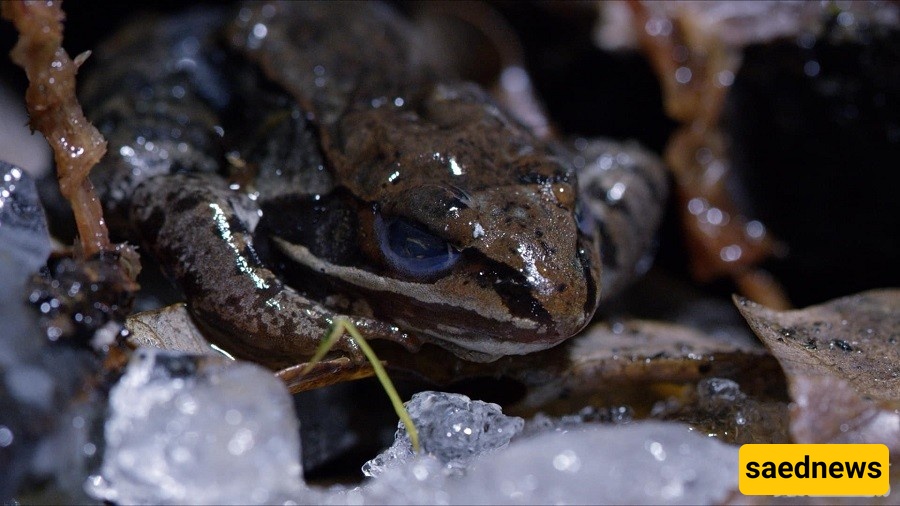
Storey describes the process: “Imagine a wood frog. Its body is liquid, fluid. Ice begins to penetrate from the outside. Its skin partially freezes, and then ice spreads through its veins and arteries.”
From this point, the process becomes even stranger. The frog’s eyes go cold and lifeless, its brain shuts down, and ice directs blood toward the heart—until the heart itself freezes.
This transformation requires profound biochemical changes. MicroRNA molecules reorganize the cells to protect them from damage. Ice forms slowly around the organs and cells, while the liver releases extraordinary amounts of glucose—a syrupy liquid acting as an antifreeze, protecting vital organs and cells from dying. When spring arrives, Storey explains, “The sun shines, the mud softens, the frog’s body warms, and the ice melts.”
Freeze Tolerance Across Species
Freeze tolerance varies among animals. Alaskan wood frogs can survive temperatures as low as –20°C (–5°F), while North Carolina wood frogs endure only down to –13°C (8.6°F). Yet the mechanisms are similar.
Other frogs, including brown tree frogs, spring peepers, and cricket frogs, as well as numerous insects and larvae, share this ability. But freezing isn’t the only strategy. According to recent research in Science of the Total Environment, young painted frogs reorganize their metabolism with microRNA, requiring far less glucose than wood frogs. Consequently, they freeze only partially, enough to remain alive. Adult frogs hibernate underwater in mud, surviving up to four months without breathing.
Antifreeze Proteins
The term supercooling refers to avoiding freezing below zero. In nature, especially in human organs, supercooling carries risks. Ice requires a nucleating agent—a particle like dust or cholesterol—to form. Yet some insects and animals avoid crystal formation entirely, keeping their frozen blood liquid.
Polar ground squirrels, for instance, remove potential ice nuclei to outpace freezing. This doesn’t mean they can supercool indefinitely. Any external interference can form ice, turning them into lifeless icicles.
Sugar and Protein: Nature’s Freeze-Proofing Tools
Maintaining a liquid state has benefits, but accidental ice formation is a hazard. Many cold-climate species produce sugar or antifreeze proteins to lower blood freezing points, allowing body temperatures below 0°C without ice formation. Some fish rely on antifreeze proteins, while many insects use sugar.
Insects have evolved different strategies. Midge larvae freeze and thaw within 24 hours in winter, while moth larvae remain liquid. Like wood frogs, midge larvae use sugar to protect cells from freezing damage. Moth larvae rely on sugar to prevent freezing, even during extreme supercooling to –36°F.
Dehydration as a Survival Strategy
Tardigrades, microscopic invertebrates living in extreme environments, survive by dehydrating completely. Humans cannot; losing just 5% of body water can be fatal. Tardigrades shut down their brains, retract their limbs, and endure cold. When rehydrated, they return to life immediately.
Wood frogs and other hardy animals offer medical insights, especially in organ transplantation. Human hearts survive only four hours outside the body. Inspired by nature, scientists aim to freeze whole organs with glucose, preserve them in suspended animation, and safely revive them for transplants.
Frozen yet alive, the wood frog and its extraordinary peers continue to inspire scientists and nature enthusiasts alike, revealing the astonishing resilience of life itself.