SAEDNEWS: Archaeologists have uncovered rock carvings depicting several pharaohs during an underwater expedition near Aswan, Egypt.
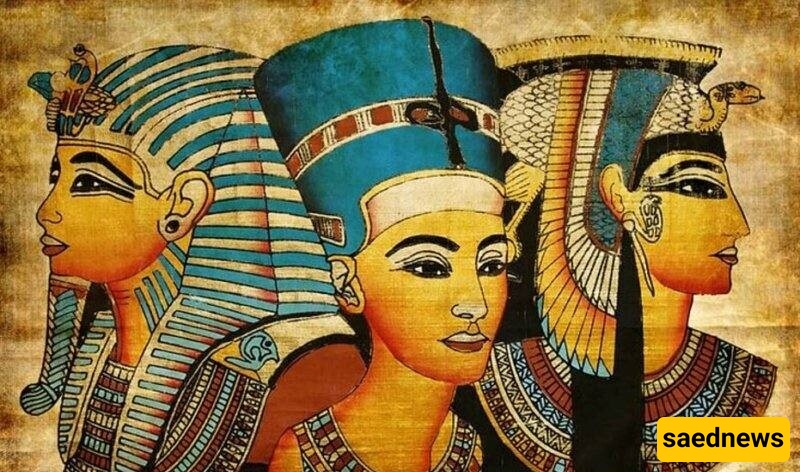
According to the History and Culture Desk at Saed News, a joint French-Egyptian team has uncovered ancient carvings beneath the Nile in southern Aswan, in an area that was submerged during the construction of the Aswan High Dam between 1960 and 1970. Before the flood, UNESCO led extensive efforts to document and relocate archaeological remains from the area. However, many artifacts could not be moved in time, and unfortunately, they were soon submerged as the dam project progressed.
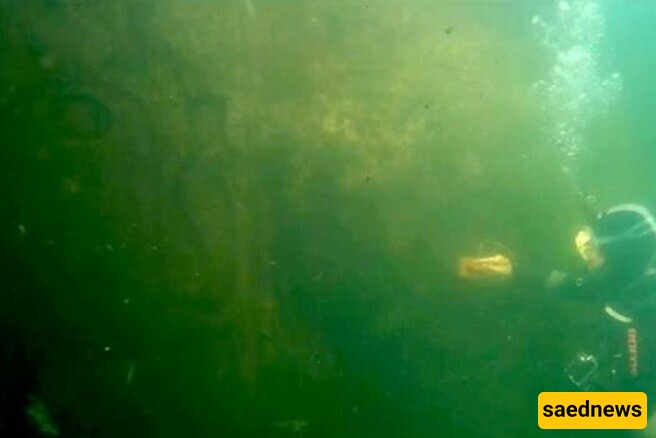
Aswan held great significance for ancient Egyptians, as it lay near the country’s southern border and was home to several important temples, including Abu Simbel—a site featuring four colossal statues of Ramses II (reigned 1303–1213 BCE), each approximately 21 meters tall. Aswan also houses the Philae temple complex, where the last known Egyptian hieroglyphic inscription was carved in 394 CE.
The Egyptian Ministry of Tourism and Antiquities said the team’s mission is to identify and record inscriptions and carvings now underwater. To do this, team members are diving to the remains and documenting them using photography, video, and photogrammetry—a technique that involves taking dozens of photos of an object, which can later be used to create a 3D digital model.
In a statement, ministry officials said that recently uncovered images include depictions of Amenhotep III (reigned ca. 1390–1352 BCE), Thutmose IV (ca. 1400–1390 BCE), Psamtik II (ca. 595–589 BCE), and Apries (ca. 589–570 BCE), rulers of the 18th and 26th dynasties. The statement offered few details about the content of the inscriptions or the appearance of the carvings but noted that they are well-preserved. As the team continues its work, more remains are likely to be discovered.
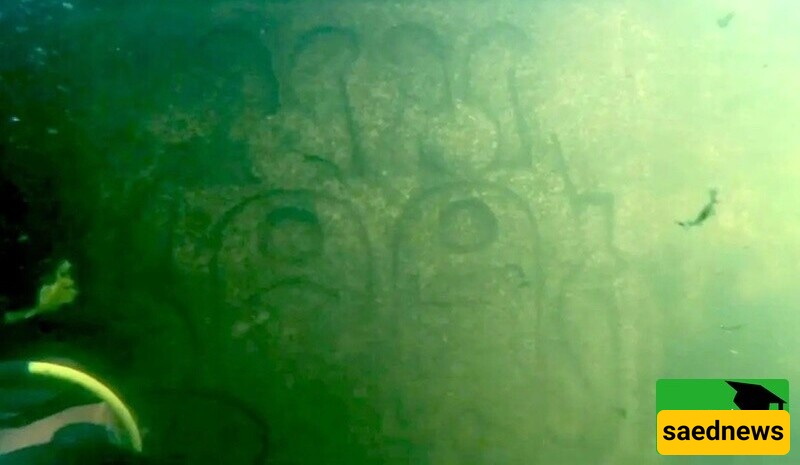
Even decades after being submerged due to the Aswan High Dam project, the carvings of ancient Egypt remain visible.
Live Science reached out to scholars not involved in the study for their perspective. Jitse Dijkstra, a professor of Classics and Religious Studies at the University of Ottawa, described the findings as intriguing but said more information is needed to fully understand their significance. William Carrothers, a lecturer at the School of Philosophical, Historical, and Interdisciplinary Studies at the University of Essex, noted that the discoveries suggest more archaeological material survived the flooding than UNESCO had anticipated during the rescue operations of the 1960s and 1970s.
Alejandro Jiménez-Serano, an archaeologist who has led excavations at a cemetery near Aswan and a professor of Egyptology and Near Eastern archaeology at the University of Jaén in Spain, told Live Science that Aswan was an important granite quarry site. It’s possible the newly discovered remains had been intended for relocation to another part of Egypt. Alternatively, they could have been part of temples near Aswan.
















![Meet Clone Alpha: The Human-Like Robot Redefining the Limits of Technology [Video]](https://en.saednews.com/storage/files/post/e11a0fae-588f-44d1-bb15-fb9e7dbc1119-NlBIil6L8Kqqjlhn/circle-image.jpg)