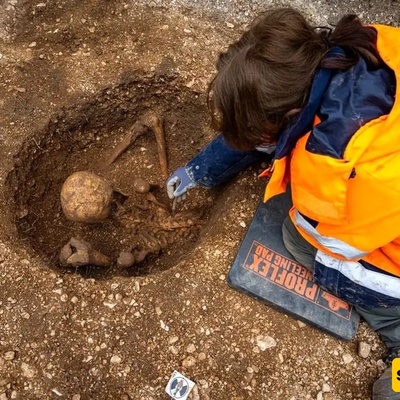
SAEDNEWS: Paleontologists in South Africa say they have discovered the oldest known burial site in the world. The site contains the remains of a distant, small-brained human relative, previously thought incapable of complex behavior.
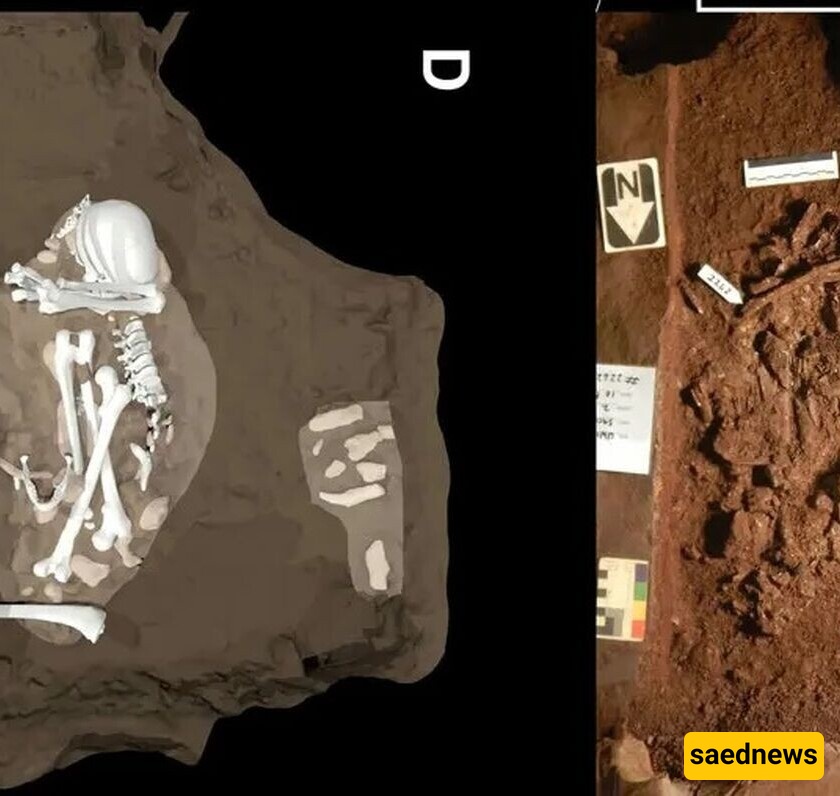
According to Saed News’ social affairs service, citing FaraDID, researchers in 2023, led by renowned paleoanthropologist Lee Berger, announced the discovery of several Homo naledi specimens—stone-age human-like beings that could climb trees—buried some 30 meters underground in a cave system within the Cradle of Humankind, a UNESCO World Heritage site near Johannesburg.
In a series of papers published in eLife, the scientists wrote, “These are the oldest burials ever recorded in the human record, predating evidence of Homo sapiens burials by 100,000 years.”
These findings challenge the current understanding of human evolution, as it was generally believed that larger brain size enabled complex, symbolic behaviors such as burying the dead.
The oldest known burials prior to this were discovered in the Middle East and Africa, containing remains of modern humans and dating back roughly 100,000 years. However, the burials uncovered in South Africa by Berger and his team date back at least 200,000 years.
The burials belong to Homo naledi, a primitive species bridging the gap between apes and modern humans, with brains the size of an orange and standing about 1.5 meters tall.
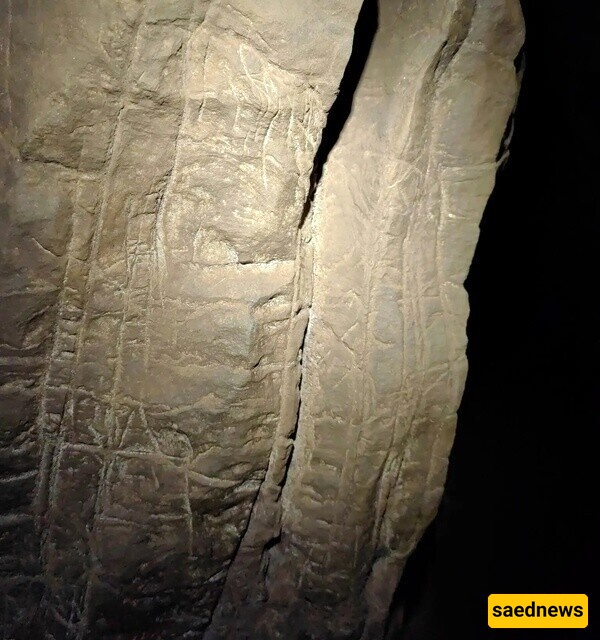
Some markings on the cave walls—believed by certain researchers to be signs for Homo naledi tombs—further indicate complex behavior.
Homo naledi, previously discovered by Berger with curved fingers and toes and limbs adapted for walking, had already challenged the notion of human evolution as a straight, linear path. The species’ name comes from the “Rising Star” cave system where the first bones were found in 2013.
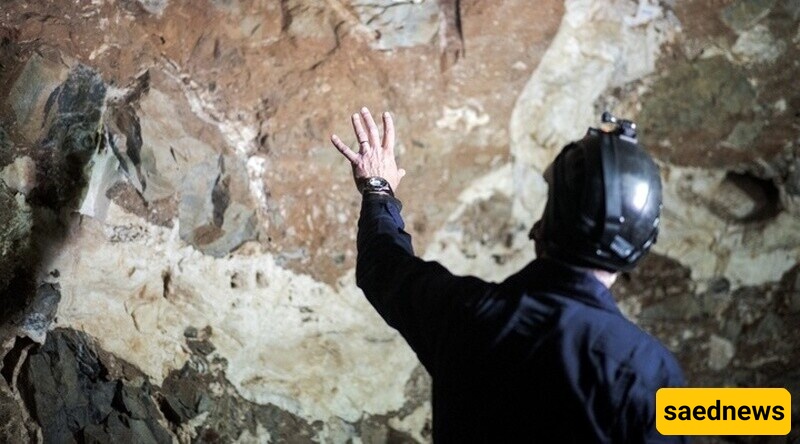
During excavations that began in 2018, oval-shaped burials were discovered at the center of the new study area. The pits, deliberately dug and then filled over the bodies, contained at least five individuals. Researchers note, “These discoveries indicate that burial practices were not limited to Homo sapiens or other large-brained humans.”
Burial location is not the only evidence suggesting that Homo naledi engaged in complex emotional and cognitive behaviors. Geometric engravings, including hashtag-like shapes, were also found on deliberately smoothed surfaces of a nearby cave pillar. Berger states, “This suggests that humans are not unique in developing symbolic traditions—and may not even have been the originators of such behaviors.”
Such claims are likely to stir debate in the paleoanthropology world. When Berger first suggested in 2015 that Homo naledi could perform tasks beyond its small brain size—a discovery supported by National Geographic—many scientists disagreed.
He said at the time, “Acceptance of this idea was very difficult for scientists, because they believed such behaviors required large brains. We want to tell the world that this assumption is incorrect.”
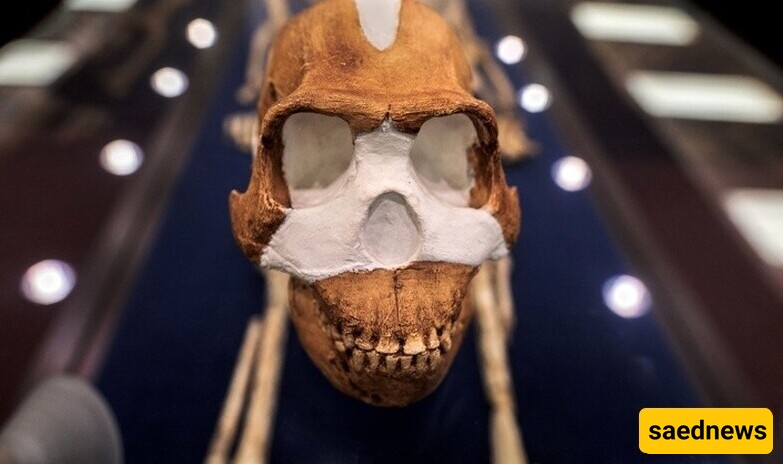
Researchers note that these discoveries reshape our understanding of human evolution, though further analysis is needed.
Augustin Fuentes, a professor of anthropology at Princeton University and one of the study’s authors, says, “Burial, meaning-making, even ‘art,’ may have a much more complex, dynamic, and non-human history than we previously imagined.”
Carol Ward, an anthropologist at the University of Missouri not involved in the research, stated, “If confirmed, these findings are potentially highly significant. I am eager to see how the arrangement of the remains rules out alternative explanations other than deliberate burial, and I look forward to reviewing the results carefully.”
Ward also noted that the paper acknowledges it cannot rule out the possibility that some wall markings may have been made by later humans.