SAEDNEWS: Clothing Reflects Culture: Even in the Modern Era, We Dress Alike
According to the History Service of Saed News, quoting Hamshahri, clothing and fashion in any era go far beyond appearance. They are often of interest to researchers seeking to understand various aspects of daily life in that period. Clothing has a close connection to a society’s culture. Even in the modern era, where many people dress similarly, traditional outfits across Iran express the cultural language of their regions and hint at the values and attitudes embedded in that culture. Studying historical evidence of fashion allows us to better understand the cultural mindset of past generations.
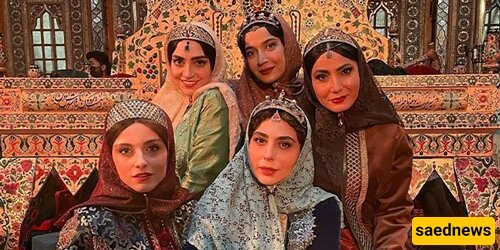
If you visit the photo archive at Golestan Palace, the attire and style of Qajar women immediately catch your attention. This article provides a look at women’s clothing during the Qajar period.
Why Do Qajar Styles Stand Out in Historical Photos?
Among historical periods, the Qajar era is particularly striking and often referenced in conversations. This may be because photographs from earlier periods are scarce, so the Qajar era serves as a vivid visual bridge to the past. Another reason could be the bold European-influenced modernity that Naser al-Din Shah introduced to Iran. Fashion from earlier times often seems laughable to later generations simply because it reflects a worldview very different from ours—just as pleated trousers and voluminous jackets from the 1970s and 1980s now seem almost whimsical.
In this article, we’ll explore Qajar fashion, especially the changes introduced by Naser al-Din Shah. After reading, if you revisit the Golestan Palace photo archive, you may find your questions about Qajar women’s attire better answered.
Did Royal Women Dress Differently from Ordinary People?
Most surviving evidence from past eras concerns court life, not ordinary citizens. Many of the Qajar-era photographs, for example, depict women from the royal court. Consequently, our main sources of information about fashion are palace-related.
However, women in the Qajar court often set trends for the broader society. When a certain style became popular among court women, it gradually spread among the general public. For instance, Qajar rulers who traveled to Europe would bring back European-inspired fashions for their wives and female relatives, which then influenced ordinary women over time.
What Did Qajar Women Wear?
Qajar women were generally considered religious and observant of Islamic law. Travel accounts from foreign visitors during this era note that ordinary women typically wore chadors, adhering to the norms of modesty. Therefore, Qajar fashion favored loose, long garments that preserved women’s modesty.
Beyond religion, social, economic, cultural, and political factors also influenced women’s attire, though exploring these fully is beyond this article’s scope. Research indicates that Qajar women’s clothing generally consisted of several key pieces:
Shaliteh (Trousers): Usually long and thick with significant volume.
Shirt/Dress: Typically made from light fabric; earlier in the Qajar period, dresses featured more elaborate decorations.
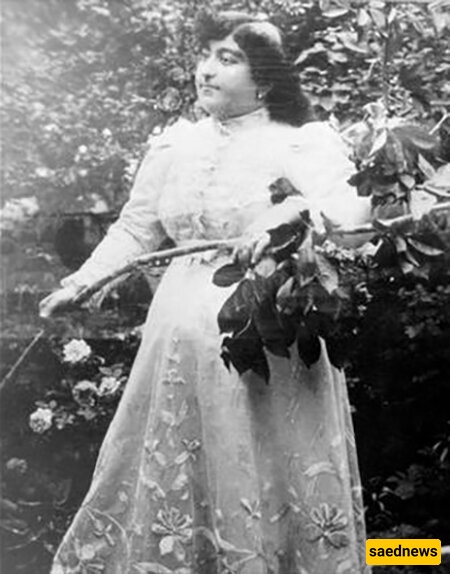
Arkhalegh: An upper-body garment with fitted sleeves and triangular cuffs called Sanbuseh. Arkhalegh combined practical coverage with ornamental beauty.
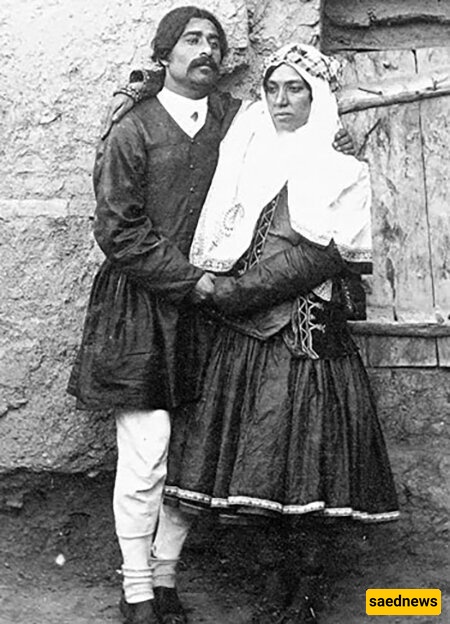
Head Coverings: Women used various headpieces, sometimes decorative nets with caps and araqchin (forehead bands).
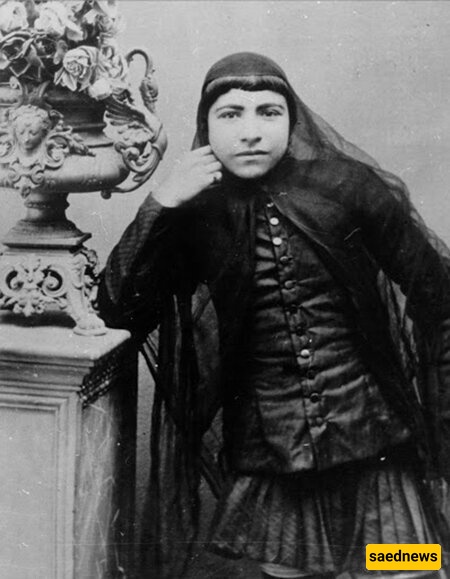
Chador: Worn outdoors, often simpler than in previous eras, decorated mainly with ribbon trim.
Rubandeh: A face veil used when leaving the house, typically made from a piece of cotton fabric.
Chaqchour: Loose, pleated trousers worn outdoors; the term survives in the modern phrase chador-chaqchour.
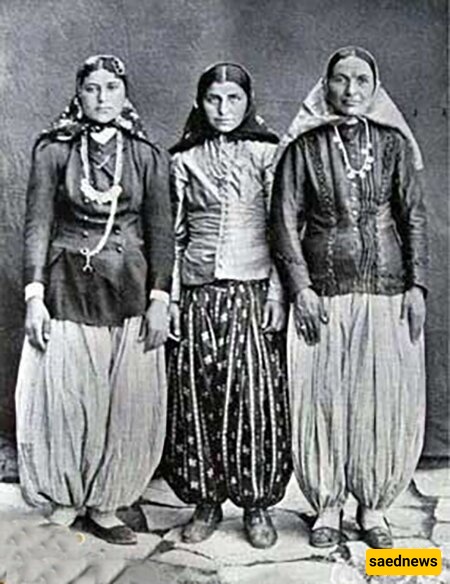
These elements, often adorned with intricate designs, defined the fashion of the Qajar era. Examples can also be seen at the White Palace (Kakh-e Abi).
How Did Naser al-Din Shah Influence Fashion?
Naser al-Din Shah’s numerous trips to Europe played a significant role in transforming Iranian culture. Fascinated by European styles, he believed their modernity and progress were reflected in their appearance, and he sought to introduce similar aesthetics in Iran—including women’s clothing.
As a result, court women’s dresses became tighter and shorter. Ordinary women, however, were slower to adopt these new fashions, which created a visible distinction between the royal court and the public. For example, inspired by Russian ballet, Naser al-Din Shah ordered court women’s skirts to resemble ballerina tutus, prompting tailors to adapt the traditional shaliteh accordingly—a striking mix of tradition and imported modernity.
This push for modernization in fashion gradually influenced wider society. Today, the Qajar style may seem amusing to us due to the striking contrast between tradition and modernity, but understanding it fully requires careful study and research.




![Mysterious Ghost Captured by James Webb Telescope in Space [Photo]](https://en.saednews.com/storage/files/post/b9941a9d-7162-4b40-8090-ecfcc8b7ef59-GSffBk6i9vZEGrJX/1x1-image.jpg)