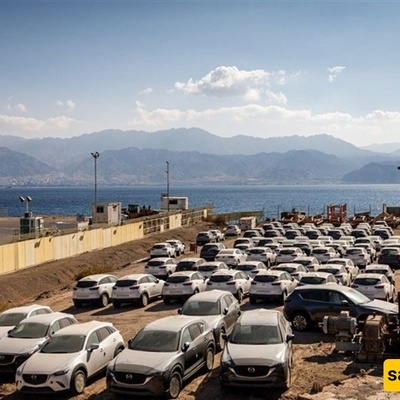
SAEDNEWS: Despite claims that the war has ended, the port of Eilat in occupied Palestinian territories has yet to emerge from what observers describe as a state of paralysis caused by the Yemeni blockade.
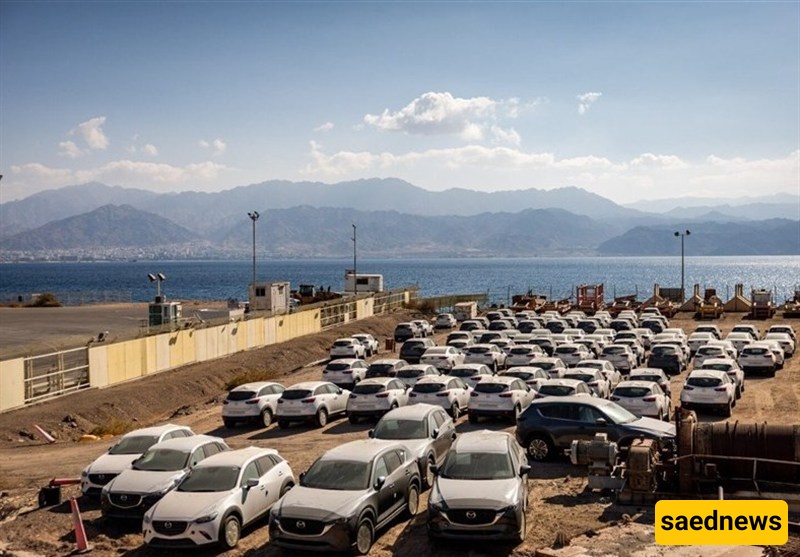
Following an 80% collapse in revenues, efforts to rescue the port from the consequences of the blockade imposed by Yemen continue, with no clear prospect of recovery.
Israel’s economic daily Calcalist published a report under the headline, “Will the Port of Eilat Be Able to Resume Operations in the Near Future?”
The report said the owners of the port are attempting to revive activity by purchasing or leasing several ships to establish a private maritime route to Eilat, hoping to import several thousand vehicles through the port.
In the report, it was noted that concession holders operating the port are now seeking to take what they describe as an “extraordinary strategic step” by setting up a maritime shipping company, with the aim of breathing life back into a port whose core activity had been vehicle imports.
After commercial shipping companies continued to refuse to sail to Eilat, the port’s concession holders announced they intend to buy or lease two vessels and directly transport vehicles from the Far East to the port.
They believe that by doing so, they may partially revive activity at the port and potentially persuade other shipping lines to resume service on the route.
The operators said they are prepared to pay between $35,000 and $50,000 per day to lease each vessel for the 35- to 50-day journey from the Far East to Eilat, in an effort to re-establish the maritime route.
Meanwhile, the issue of insuring these ships remains a major challenge, though proponents of the plan argue that launching the route could open the door for other vessels to follow.
The Eilat Port Authority claims that the shutdown is not merely a problem for car importers, but a comprehensive national crisis for the Israeli regime that affects every Israeli.
It argues that diverting vehicles to the ports of Ashdod and Haifa reduces storage capacity, delays the unloading of other essential goods and ultimately drives up costs for consumers.
Port officials warn that concentrating all imports on a single front—the Mediterranean Sea—undermines the Israeli regime’s resilience in the face of future crises.
The Eilat Port Authority stresses that the port is the economic lifeline of the city, and that its closure directly harms hundreds of families and the entire regional economy.
Previously, the port pursued several avenues to restart operations, including directly appealing to the United States to seize Houthi assets as compensation, contacting Egypt to seek assistance in ensuring ship passage through the Suez Canal, and drafting a preliminary plan for Israeli regime institutions to share the higher transit costs of vessels forced to use longer, more expensive routes.
Under that plan, the ministry of economy was expected to issue an order obliging car importers to bring vehicles manufactured in the Far East exclusively through Eilat, similar to an arrangement granted to the port during the first three years of its concession.
From a cost perspective, cancelling that order would have increased vehicle prices by $300 to $400.
The port proposed a cost-sharing agreement with the ministry of finance, under which the government would cover 50%, the port 25%, and importers the remaining 25% of the added costs.
According to port sources, importers had agreed to the plan, but discussions in the finance committee revealed that no funding source existed to implement it.
Separately, Israel’s Channel 14 television reported that, having lost hope in official institutions taking meaningful action to save the port, the concession holders have now taken matters into their own hands.
The report said their final attempt lies in establishing a private maritime transport company, in the hope that it may offer a way out of the crisis and avert the complete collapse of the Port of Eilat.