SAEDNEWS: Wild rose is a perennial, self-fertile plant that grows naturally and in a wild state along forest edges, near wells, in water pits, in dry regions on rocky surfaces, and even in shrublands.
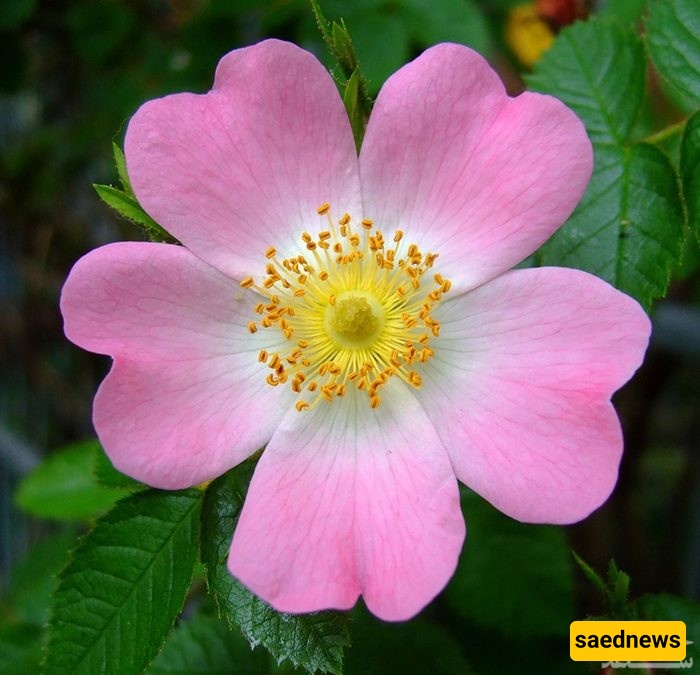
Scientific name: Rosa canina
Family: Rosaceae (Rose family)
Common name: Dog Rose
Native range: Europe (also found in North Africa and Western Asia)
Dog rose (Rosa canina) is an attractive ornamental shrub with medicinal properties. It is a deciduous, perennial plant that typically grows as a wild or semi-wild shrub in many regions. The plant can be propagated by seeds, cuttings, and layering.
It is widely known for its beautiful flowers and nutrient-rich fruits.
Growth form: Shrub, often climbing with support
Stems: Slender, green to brown with sharp thorns
Leaves: Pinnate with 5–7 oval leaflets
Flowers: Pink, white, or yellow; highly decorative
Fruits: Oval-shaped, red or orange berries known as rose hips
Fruit structure: Contains fine internal fibers and seeds
Vitamin content: Extremely rich in Vitamin C
The plant is known internationally as Dog Rose.
Dog rose is native to Europe and is also found in:
North-West Africa
Western Asia
Various regions of Iran, where it grows wild
It commonly grows in mountainous areas, forests, and uncultivated lands.
In traditional medicine, rose hips (the fruit) are highly valued.
Rich source of Vitamin C
Strengthens the stomach
Lowers blood pressure
Helps regulate blood sugar
Soothes kidney pain and inflammation
Useful for diarrhea treatment
Supports heart health and has calming effects
The fruit is often consumed as herbal tea or infusion.
Rose hips also contain anti-parasitic fibers traditionally used in herbal medicine.
Climbing varieties require support structures (trellises or walls). The plant uses its thorns to climb and spread. It is widely used in:
Garden walls
Landscape design
Entrance decoration
Villas and parks
Highly resistant to cold
Tolerates harsh weather conditions
Can survive winter frost
Commonly found growing naturally in Iran
Softwood cuttings: Late spring to early summer
Hardwood cuttings: Late autumn
Best planted in mid-September
Flowering occurs in spring and may continue until mid-autumn.
According to old English folklore, wild white dog roses became so widespread that England was once called “Albion,” derived from the Latin word alba meaning “white.”
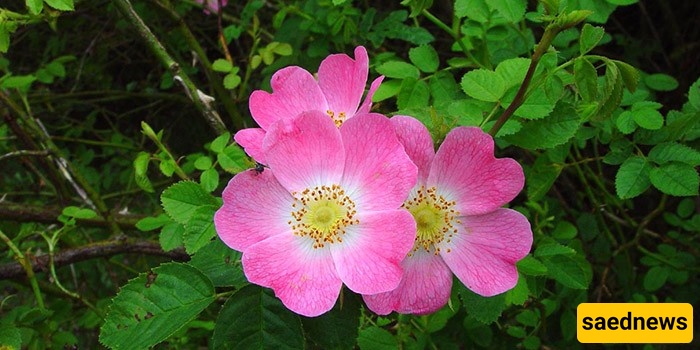
Used for covering walls and decorative structures.
Found in mountainous regions, especially Kurdistan. Highly tolerant of poor soils and harsh climates.
Produces deep pink to red flowers with strong fragrance. Sensitive to strong winds.
Grows naturally in forests, mountains, and dry rocky areas. Highly valued for medicinal use.
Found across many regions of Iran including:
Alborz mountains
Gilan and Mazandaran
Kurdistan
Isfahan
Kermanshah
Fars
Kerman and others
Adaptable to many soil types
Best in loamy soil with good drainage
Poor performance in sandy or highly alkaline soils
Requires full sun
Can tolerate partial shade
Should be placed near sunny windows if grown indoors
Moderate water needs
Water when soil becomes dry
Best watering time: early morning
Requires well-drained soil
Tolerates temperatures down to -10°C
Ideal indoor temperature: 20–24°C
Organic matter improves soil fertility
Fertilizer type depends on plant age and season
Minimal pruning required
Remove suckers in warm seasons
Major pruning in late winter before growth begins
Old or damaged branches can be removed to rejuvenate the plant
Germination may take up to 2 years
Requires alternating warm and cold periods
Scarification improves germination speed
Seeds are soaked, then planted in sandy soil at 1–3 cm depth
Requires consistent moisture
Most common method
Length: 10–20 cm
Taken from healthy one-year-old stems
Rooting occurs in 7–8 weeks
Transplant after 3–4 months
Done in late winter or early spring
A healthy branch is bent into soil
The buried section develops roots
Once rooted, it is separated from the parent plant
Common problems include:
Aphids
Spider mites
Powdery mildew (causes leaf drying and weak growth)
Control methods:
Use insecticides when necessary
Remove infected leaves and branches
Dog rose (Rosa canina) is a hardy, beautiful, and medicinally valuable plant. It is widely used in landscaping, herbal medicine, and natural ecosystems due to its resilience, nutritional fruits, and ornamental flowers.