SAEDNEWS: Local Koofteh is one of the traditional dishes of Chaharmahal and Bakhtiari Province, prepared the night before the New Year as a special dish. In terms of cooking method and ingredients, this koofteh is significantly different from Tabrizi Koofteh, and the people of Shahr-e Kord cook it with meat, fish, or chicken along with local herbs.
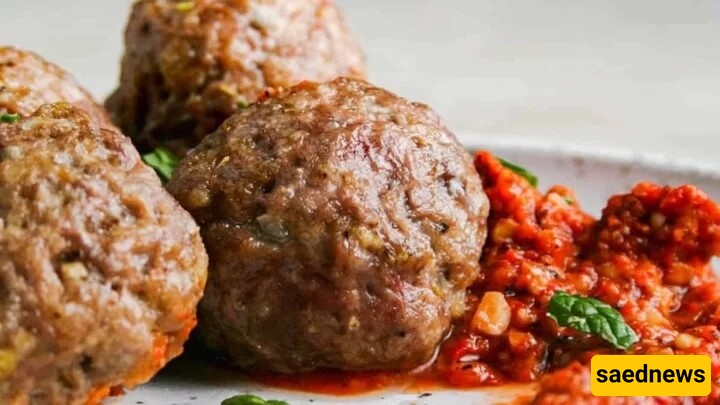
According to the Saed News Cooking Service, on the night before Nowruz, people traditionally pound the meat in a mortar. Once it is thoroughly crushed, they add soaked semi-cooked rice, aromatic herbs, salt, and spices, and continue pounding. Then they remove the mixture from the mortar, knead it well, and shape it into small meatballs.
To cook them, water is brought to a boil in a pot, and the meatballs are added along with raisins and plums, allowing the dish to cook thoroughly.
Each meatball is typically filled with plums, raisins, and other ingredients. In one or two of the meatballs, however, a whole egg or a coin is used instead. Each family member or guest takes one meatball, and the local belief is that whoever finds the egg or coin in their meatball will have good luck and positive events throughout the year.
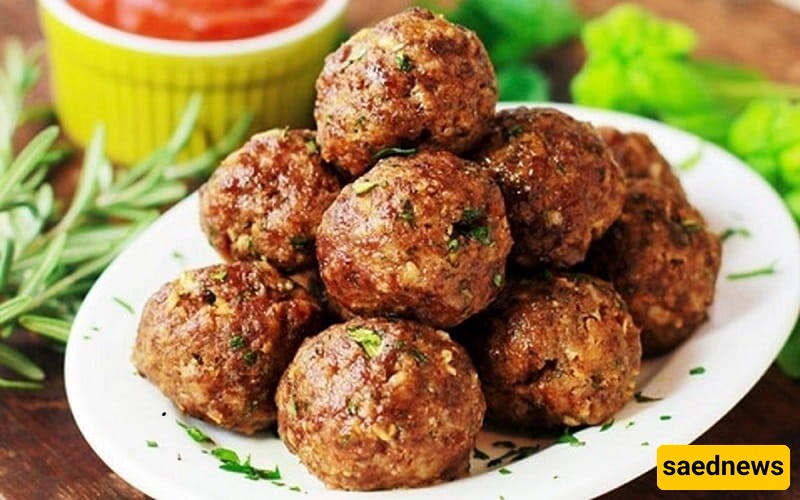
In Shahrekord, when making koofteh, instead of combining meat with rice, a mixture of chickpea flour, onions, and meat is often used. The cooking ceremony of these small meatballs on Nowruz is called “Koofteh Pizan.”
For Koofteh Pizan, the meat is thoroughly pounded in a mortar. Once it becomes smooth and uniform, the soaked rice from the night before, along with herbs, salt, and spices, is added, and the mixture is pounded again until fully blended.
The koofteh mixture is then removed from the mortar and kneaded thoroughly by hand. Water is brought to a boil in a pot, raisins and plums are added, and the Shahrekordi small meatballs are dropped into the boiling water to cook.