Saed News: The two victims were trying to save their valuable treasures, but they could not escape the disaster themselves.
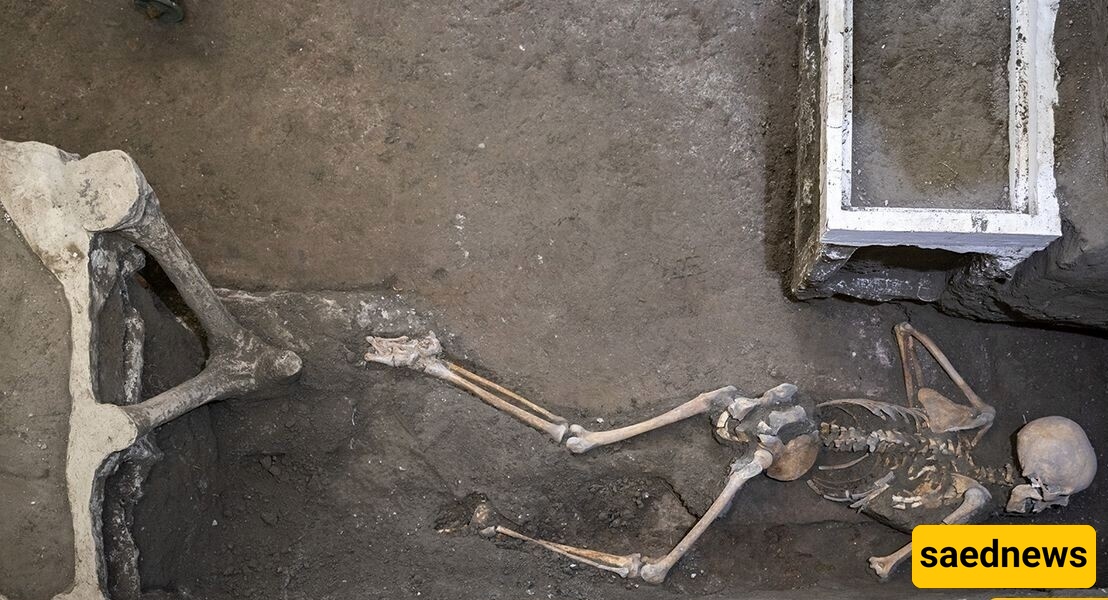
According to SAEDNEWS, a recent discovery of two skeletons at the ancient site of Pompeii has allowed researchers to reconstruct the terrifying final moments of those who died in the eruption of Mount Vesuvius in 79 AD. The “cursed couple,” identified as a young man and a middle-aged woman, were apparently trapped in a room where they had sought shelter before being killed by fast-moving streams of scorching volcanic gases.
Archaeologists discovered a treasure of valuable items next to the woman’s body, including precious earrings and a collection of coins, suggesting that she may have struggled in hopes of saving her possessions from the impending disaster.
The two skeletons were uncovered during excavations in a city block of Pompeii known as Region 9. The woman, estimated to be between 35 and 45 years old, was found lying on her side on a bed, while the young man, believed to be over 20 years old, was discovered crushed under a collapsed wall.
Since pumice did not enter the room, researchers believe the pair may have entered it seeking shelter from the falling volcanic debris that devastated open areas of Pompeii. However, as the adjacent room filled with pumice, they ultimately became trapped.
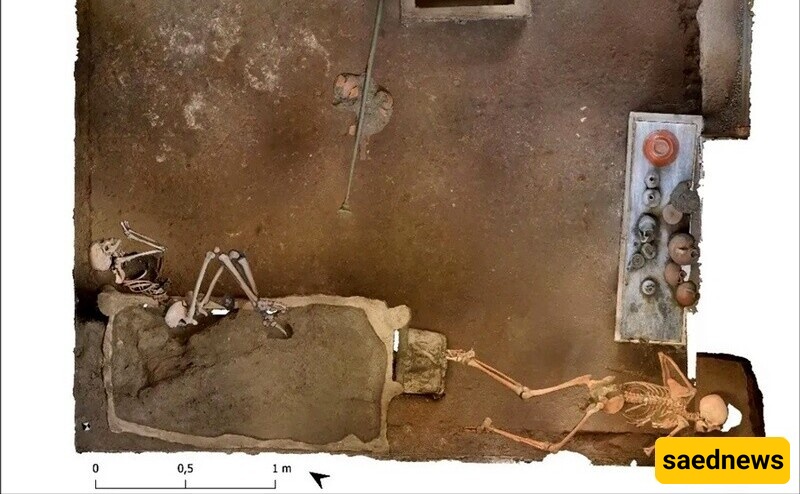
A few centimeters of ash on the ground suggest they likely died due to a pyroclastic flow, a fast-moving current of hot gas and volcanic material. In a recent study describing the scene, researchers suggest this deadly flow may have caused the wall to collapse, leading to the young man’s death.
As for the older woman, the authors believe she may have survived slightly longer than the young man, remaining on the bed as she awaited death. Exactly how much longer she survived is unknown, but her final moments were undoubtedly distressing.
Archaeologists found a set of iron keys near the woman’s body, likely belonging to a nearby chest. She also had a collection of gold, silver, and bronze coins, as well as gold and pearl earrings.
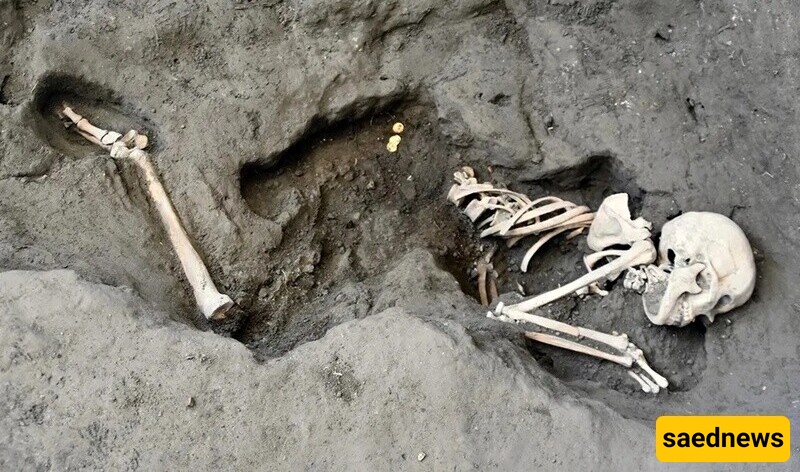
According to the authors of the study, the earrings were in the “crotalia” style (meaning “rattles”), named because the pearls would clink together. Another piece of jewelry was a pendant in the form of an amulet, likely intended to offer protection during childbirth.
Researchers believe the woman was attempting to flee with her treasures but tragically failed to escape Region 33.
To reconstruct the space, researchers poured plaster into the voids left in the ash, creating casts of wooden furniture that once decorated the room. This revealed ghostly outlines of a bed, a toppled stool, and a wooden table with a marble top.