Saed News: This extraordinary woman with exceptional military abilities became the number one target of the Nazi Gestapo in 1943.
According to SAEDNEWS, quoting Parsineh, this remarkable woman was placed at the top of the Gestapo’s most-wanted list in 1943 due to her extraordinary military skills.
Nancy Wake (codenamed “The White Mouse”) was the most successful Allied female operative during World War II. She saved thousands of soldiers and eventually became the Gestapo’s number one most-wanted person in 1943. She proved herself as an exceptional fighter in the French Resistance, a network of independent groups fighting against Nazi occupation of France in the early 1940s. Her life has inspired many films, television productions, and books, and she also wrote her autobiography titled The White Mouse.
Wake was born on 30 August 1912 in Wellington, New Zealand. In 1914, shortly after her birth, her family moved to Australia and settled in North Sydney. Her childhood was marked by poverty and instability. Her father, a journalist, later left the family under the pretense of filming a documentary, leaving her mother to raise six children alone.
She studied in Sydney but eventually ran away from home and began working as a nurse at the age of 16 in various parts of Australia. Later, she received a £200 inheritance from her aunt and used it to travel to France and London, where she found work in journalism. She eventually settled in France and married a wealthy industrialist named Henri Fiocca in 1936.
During her life, Wake witnessed Gestapo brutality against Jewish people in the streets, which fueled her hatred of the Nazis. When Germany invaded France in 1940, her wealth and social status initially gave her some protection, and she began assisting local resistance groups. She also helped the famous Scottish officer Ian Garrow in smuggling stranded British soldiers out of France.
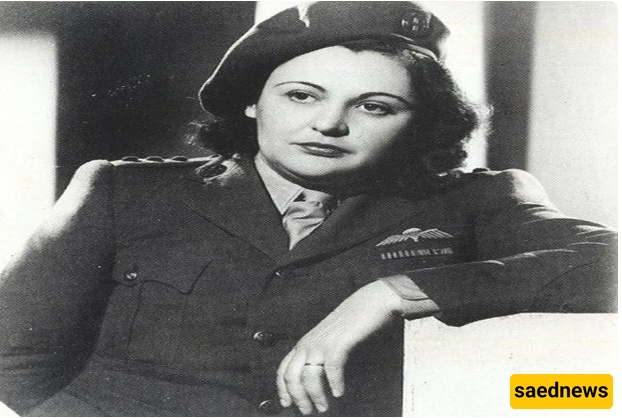
In 1943, the Nazis discovered her activities and placed a 5 million franc bounty on her head, making her the Gestapo’s number one target. She was forced to flee Marseille, leaving her husband behind. Her husband was later arrested, tortured, and executed by the Gestapo for refusing to reveal her location.
While escaping France, Nancy was captured and interrogated for four days by French militia but managed to convince them to release her. She eventually escaped to Britain, where she was recruited by the Special Operations Executive (SOE). There, she trained in survival, silent killing, codes, radio operations, night parachuting, explosives, firearms, and grenades.
In 1944, she parachuted into France alongside dozens of agents to support Allied operations. She organized supply drops, communication networks, and resistance fighters, leading a 7,000-strong resistance network that conducted guerrilla attacks against German forces.
She became especially famous for cycling 310 miles through German checkpoints to restore communication with London after a coded network was destroyed.
Nancy Wake is also known for killing an SS officer with her bare hands during an operation to silence an alarm at a German weapons factory. She also led a successful raid on the Gestapo headquarters in Montluçon. Her resistance forces reportedly inflicted heavy losses on German troops while sustaining minimal casualties.
After the war, she received several honors, including the George Medal (UK), Medal of Freedom (USA), Resistance Medal (France), and multiple French military decorations.
She later married former prisoner of war John Forward and moved to Australia in 1960. She lived a quiet life and had no children. Her autobiography The White Mouse was published in 1985.
Nancy Wake died on 7 August 2011, just weeks before her 99th birthday.