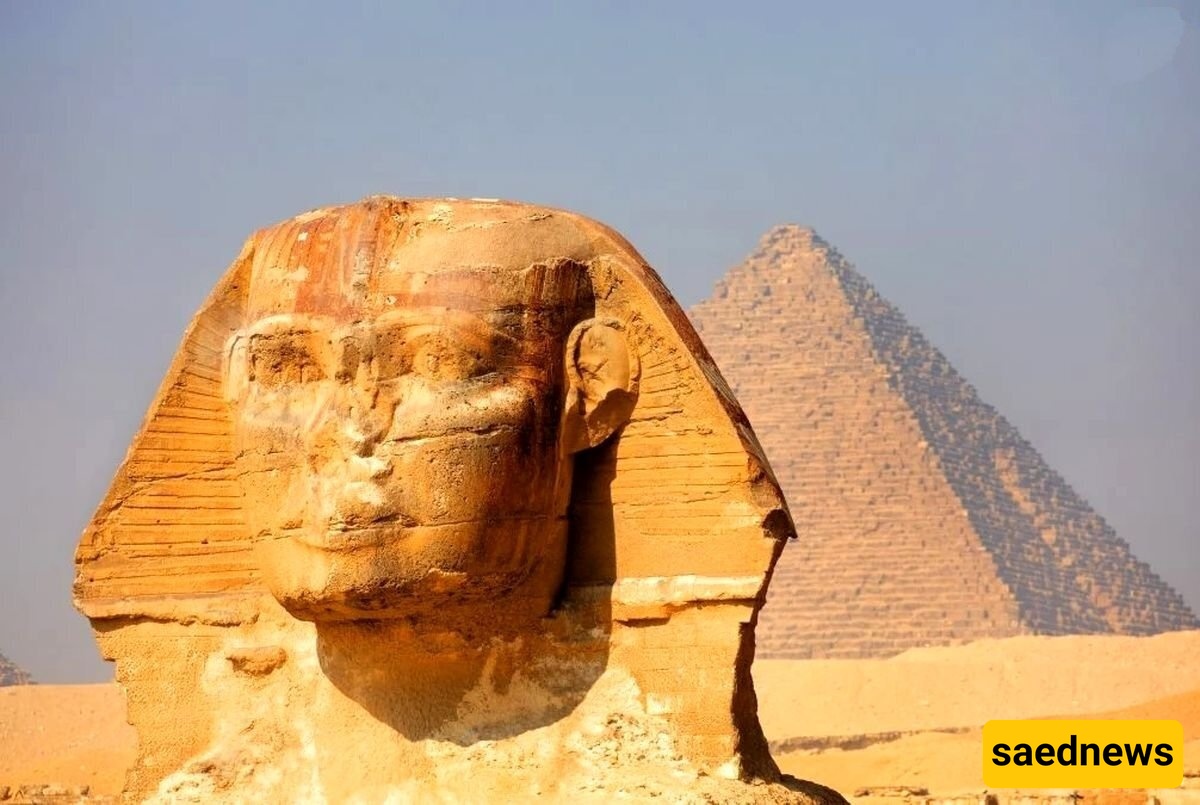
SAEDNEWS: Among the surviving artifacts of Ancient Egypt, the Great Sphinx of Giza is one of the most famous and, at the same time, most enigmatic monuments.
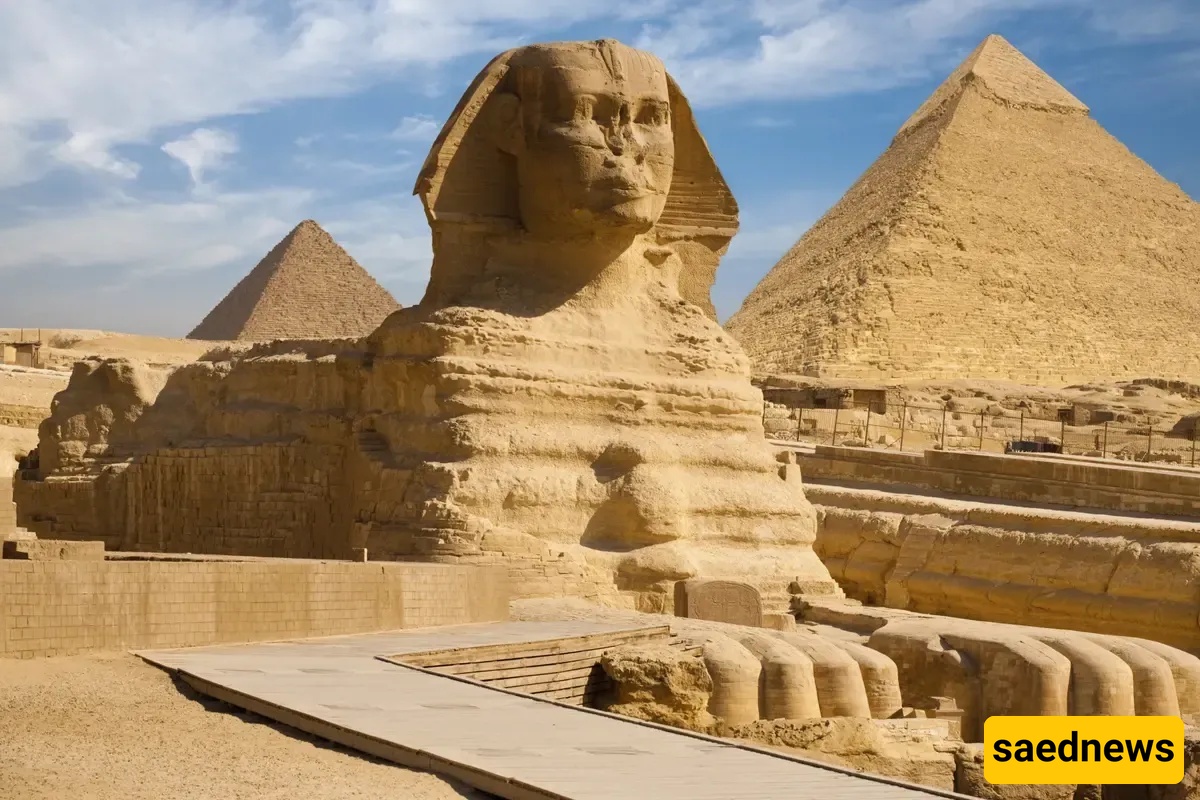
According to Saed News, this statue features a human head on a lion-like body and was likely a symbol of the power and grandeur of Egypt’s pharaohs. Some also believe that its face represents Pharaoh Khafre. The statue stands in front of the Giza Pyramids, as if acting as their guardian. Despite its immense scale, its exact origin and purpose remain unclear to archaeologists.
The “Old Kingdom” period of Egypt (c. 2686–2181 BCE) was one of the most brilliant eras in the civilization’s history, when monumental stone structures were built. The first pyramid was constructed during the reign of Djoser, and later, during the Fourth Dynasty, pyramid construction reached its peak.
During this period, Khufu built the Great Pyramid of Giza, and after him, Khafre came to power. Most researchers believe that the Sphinx was also built during Khafre’s reign, making it approximately 4,500 years old.
Khafre, who ruled from around 2558 to 2532 BCE, came to power after the death of his brother Djedefre. It is said that Egypt enjoyed political stability during his reign, which enabled major architectural projects.
Although some later Greek historians described him as a harsh ruler, archaeological evidence suggests that his era was a time of economic prosperity and large-scale construction. The pyramid of Khafre and its surrounding complex—including temples and stone causeways—were all built to demonstrate his power and divine status, and the Sphinx was likely part of this same complex.
Despite its fame, the limestone structure remains a mystery. Most Egyptologists believe its face was modeled after Khafre, but there is no direct inscription or record from the time of its construction to confirm this.
One of the key pieces of evidence is a much later inscription from the time of Thutmose IV, around a thousand years later. Known as the “Dream Stele,” it links the Sphinx to Khafre.
Its proximity to Khafre’s pyramid and the use of the same type of limestone also suggest that the two structures were related.
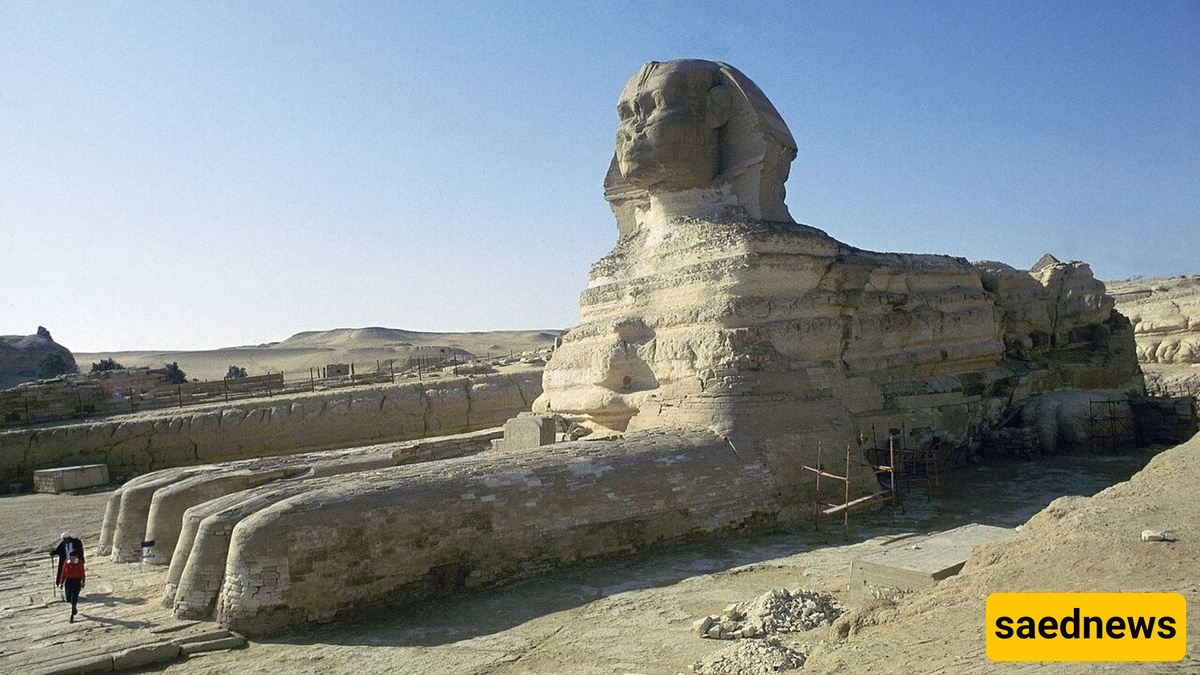
The Great Sphinx is located on the western bank of the Nile River near modern-day Cairo. Carved from limestone, it measures approximately 73 meters in length and 20 meters in height, making it one of the largest statues in the world.
Contrary to common belief, it was not built entirely from scratch; instead, it was carved out of a naturally formed limestone ridge shaped by wind erosion.
In ancient times, the statue was also painted, and during the Roman period it was even described as having a bright red color.
The exact purpose of the Sphinx remains unknown, but it was likely a symbol of royal guardianship. Such statues were commonly placed near temples and tombs.
Its alignment with the Giza pyramids may also be connected to the movement of the sun and possibly linked to the sun god Ra. In later periods, the Sphinx gained additional religious significance and became associated with the deity Hor-em-akhet.