SAEDNEWS: Archaeologists have been surprised by the discovery of 2,000-year-old human remains in France, found buried in a seated position and facing west.
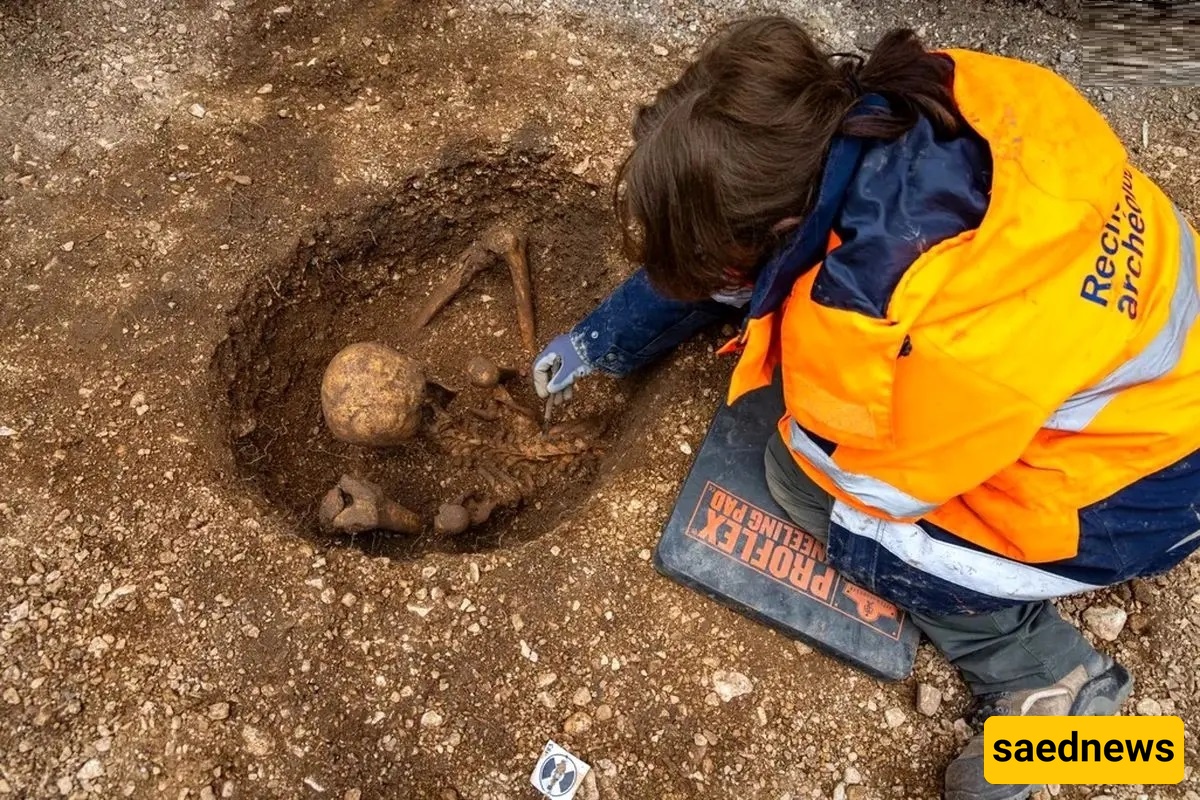
According to Saed News, in 2024 archaeologists in France uncovered an unusual burial site containing 13 human bodies. All of the individuals appeared to have been buried in a seated position facing west—an arrangement that is both rare and puzzling.
Researchers have now announced the discovery of at least five additional burials of the same type in a previously unexplored section of the site. These new findings raise further questions about the culture to which these individuals belonged more than 2,000 years ago.
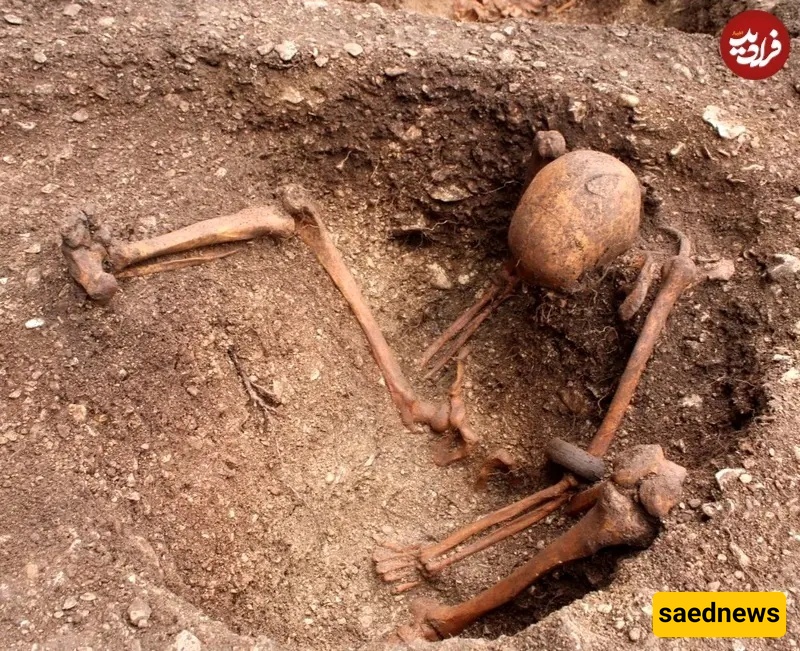
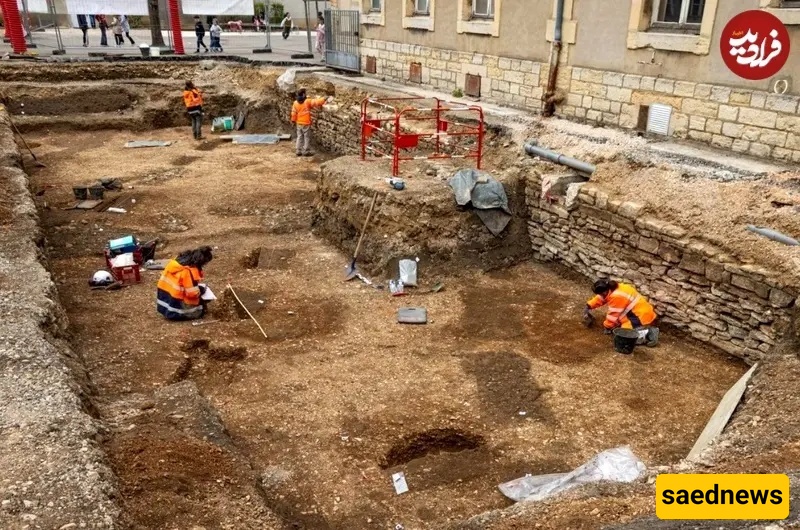
According to a statement released on March 18 by France’s National Institute for Preventive Archaeological Research (INRAP), the skeletons were discovered during excavations carried out alongside the reconstruction of a primary school in the city of Dijon, located in the Burgundy region of eastern France.
Like the remains found in 2024, the newly discovered individuals were also buried seated, facing west, with their hands placed on their knees. At least three of them were aligned in a row parallel to the earlier graves, approximately 20 meters away.
INRAP researchers have also completed a preliminary analysis of the original 13 skeletons. All were men between the ages of 40 and 60, with estimated heights ranging from 165 to 183 centimeters. Their teeth were in good condition, and they appeared to have been in relatively good physical health at the time of death. However, their bones—especially in the legs—show signs of intense physical activity.
Among these individuals, five or six show evidence of untreated violence, suggesting they may have been deliberately killed. Some display cuts on the upper arm bones, and in one case, a sharp blow—possibly from a sword—appears to have been inflicted on the skull.
Experts believe these seated burials may be linked to the Gauls, a group of Celtic tribes who lived during the Iron Age across parts of modern-day France, Belgium, Germany, Italy, and Switzerland. Only one artifact has been found with the remains: a black stone bracelet dating from approximately 300 to 200 BCE, a period consistent with the presence of the Gauls in the region.
Régis Labeaune, an INRAP researcher, told Agence France-Presse that “given the number and quality of these discoveries, it can be said that an important Gaulish settlement existed in Dijon.”
Similar examples of seated burials have been found in France, Switzerland, and Britain, but they are extremely rare. Only about 75 such cases are known worldwide. Most of these graves are located on the outskirts of settlements—away from cemeteries but close to elite residences or religious sites. All of the individuals are adult men, and their bodies appear to have been carefully arranged after death.
In a 2025 report, World Archaeology Today noted that the consistent layout of these burials, the precision in positioning the bodies, their proximity to religious or aristocratic areas, the selective choice of individuals, and the rarity of the practice all suggest that these people likely held special social status.
According to researchers, those buried in this manner may have been members of powerful families, warriors, ancestors, or individuals connected to political or religious structures.
However, until more evidence emerges, the purpose and meaning of this burial practice remain unclear.
Annamaria Latorre of INRAP told AFP: “We still do not have a clear hypothesis. Being an archaeologist can sometimes be a very frustrating profession.”