SAEDNEWS: Velenjak was once a small village about 2 km from Imamzadeh Saleh in Tajrish. Nearly 500 years ago, Shah Abbas I settled Mazandaran Sayyid families—descendants of Imam Sajjad—near a spring, giving rise to the village.
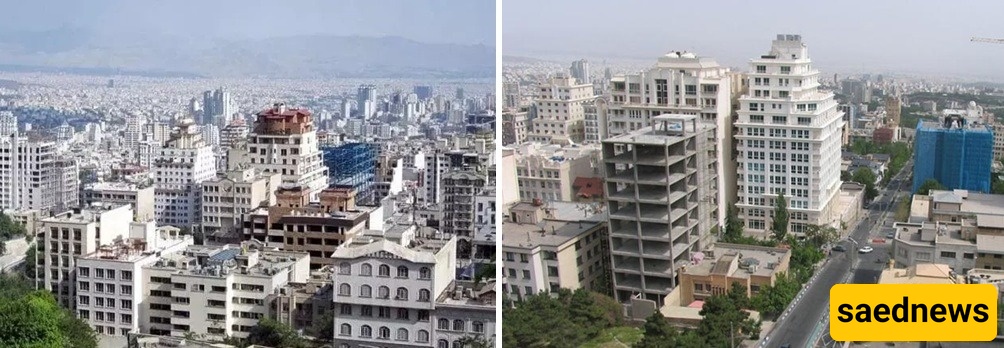
According to the History and Culture Service of Saed News, citing Faradid, the village of Valenjak—once home predominantly to Sayyids and featuring a summer residence of Tehran’s Friday Imam—has evolved into one of Tehran’s most luxurious and expensive neighborhoods. Towering high-rises and modern skyscrapers have almost entirely erased the memories and traces of its old garden homes.
Valenjak, a hillside neighborhood in northern Tehran, falls within District One of the city municipality. It is bordered by the Tochal Heights to the north, Shahid Chamran Highway and Tehran International Exhibition Center to the south, Vali Asr Street to the east, and the neighborhood of Evin to the west.
In earlier times, this area was mainly composed of grasslands and mountainous terrain, making it a favored hunting ground for Qajar kings. Over time, it developed into a collection of well-known summer gardens. In later periods, wealthy residents of Tehran took a particular interest in the area, building elegant and valuable houses. Most urban transformation, however, began in the 1970s (1350s in the Iranian calendar), and after the Islamic Revolution—especially in recent years—the gardens and villas have largely been replaced by high-rise towers and modern skyscrapers.
Valenjak was originally a village located about 2 kilometers from Emamzadeh Saleh in Tajrish. Historical accounts suggest that around 500 years ago, by order of Shah Abbas I, several Sayyid families from Mazandaran (descendants of Imam Ali ibn Husayn, the fourth Imam) settled near a spring, founding the village. The original site of this village is believed to be where the current Valenjak Grand Mosque now stands, at the northernmost section of Ejazi (Asef) Street. The Ejazi family name belonged to one of Valenjak’s founding families, primarily engaged in agriculture and livestock.
Naserollah Hadadi, a researcher and Tehran historian, recounts: “Agha Seyed Mohammad, the younger brother of Abolqasem, Tehran’s Friday Imam, and descendant of Seyed Mohammad Mehdi Khatunabadi, came to Tehran from Isfahan during the reign of Fath-Ali Shah Qajar, following the Iran-Russia war, to offer condolences to the king mourning the loss of his son. At the Shah’s request, he stayed in Tehran, and his descendants later intermarried with the Qajar family. He himself was appointed as Tehran’s Friday Imam.
“The Friday Imam had two summer gardens: one in Valenjak and another in eastern Tehran (today’s Ashraq Cultural Center). The eastern garden became known during the Constitutional Revolution when the Imam sought refuge in the Russian Embassy and later fled to Europe. The Valenjak garden, however, became famous as the Zahir Al-Emami Garden.”
Historian Hojjat Balaghi adds: “Valenjak was a village entirely inhabited by Sayyids, with a road suitable for car travel. The area was developed by the Mirza Abolqasem family and remained under the care of Sayyids. Agha Seyed Mohammad purchased a large garden here during Reza Shah’s era, which still exists. He was known as an upright, noble, strong, and healthy figure who often walked from Tajrish to his garden home. After his death, he was buried at Gonbad Sar Agha, and the Zahir Emami family are his descendants.”
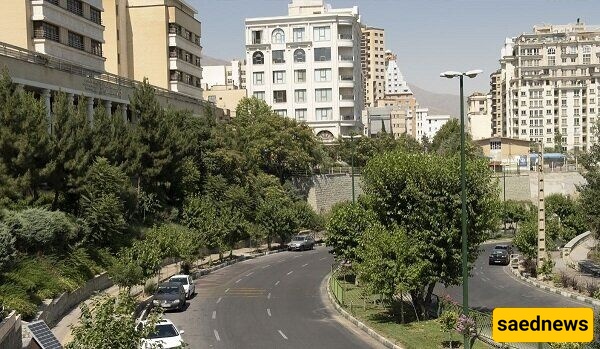
According to long-standing Iranian royal tradition, any king considered all lands of the country as his own. This practice was particularly evident in the capital. The Qajar family had a strong affinity for northern Tehran’s slopes, primarily for hunting and constructing summer estates for leisure, especially during the hot summer months.
These northern slopes also served as strategic routes toward the country’s northern borders. The Tochal foothills, where Valenjak is located, were entirely under the control of the Qajar royal family and courtiers. Royal estates were directly owned by the Shah, who could gift them to relatives, courtiers, or harem women. For example, Naser al-Din Shah gifted Valenjak to Majd-ol-Dowleh, Kashanak to Anis-ol-Dowleh (a royal favorite), Souhank to Doost Ali Khan, and Darband to Ali Khan Zahir-ol-Dowleh.
Hadadi explains: “Valenjak lands were part of Tehran’s crown lands and lacked defined legal status until Naser al-Din Shah’s reign. During his time, Prime Minister Moshir-ol-Dowleh created a detailed register of royal properties due to wars and financial pressures, leasing some lands to cover expenses. Tochal lands, however, were transferred only to heirs out of personal preference.”
After the Qajar era, Reza Shah Pahlavi built a summer palace near Ali Khan Hill (Tehran’s Bam) in Valenjak. He confiscated all Qajar royal and court properties for himself but left the Valenjak estates inherited from Majd-ol-Dowleh and Majd-ol-Saltaneh (grandfather and father-in-law of his wife, Touran Amirsoleimani) intact, maintaining them under the Amirsoleimani family until the end of his reign.
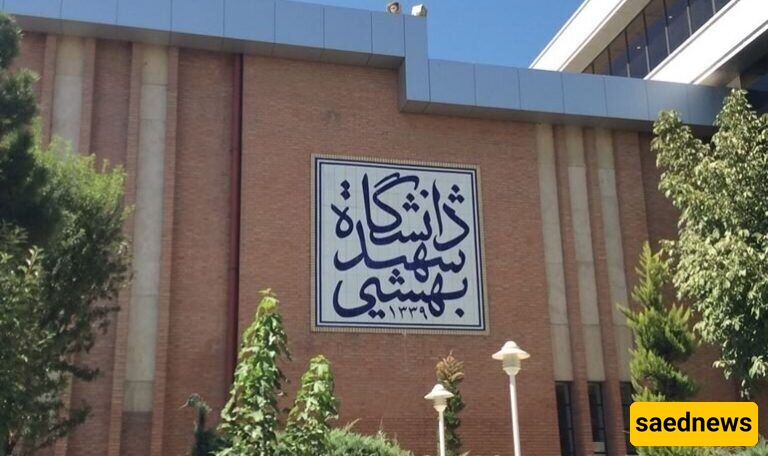
Today, Valenjak hosts some of Tehran’s most important and scenic locations. Tehran’s Bam (mountain viewpoint) and the Tochal Cable Car are key recreational attractions, drawing locals on weekends for leisure, sports, and walks. Shahid Beheshti University is another major institution in the neighborhood, adding to Valenjak’s prestige and importance.