SAEDNEWS: On May 16, 1958, the United States carried out the Wahoo nuclear test as part of Operation Hardtack in the open ocean near Enewetak Atoll in the Marshall Islands. The test involved detonating a 9-kiloton nuclear device approximately 500 feet (150 meters) below the water’s surface, where the ocean depth reached 3,200 feet.
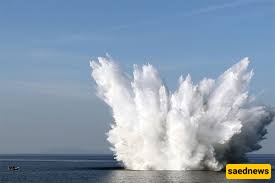
According to the History and Culture Service of Saed News, this test was designed to study the effects of underwater nuclear explosions on ships and maritime equipment, serving as a continuation of earlier tests such as Baker (1946) and Wigwam (1955).
Within one second of the detonation, a massive spray dome formed, rising to a height of 840 feet (approximately 260 meters), and within seven seconds it transformed into a cone nearly 3,800 feet (1,200 meters) in diameter. Gases and water vapor dispersed in all directions, with a vertical column ascending for 12 seconds while lateral gases spread outward for up to 20 seconds. The base surge—a wall of radioactive dust—was propelled by 15-knot winds, moving at 21 to 24 miles per hour (about 39 kilometers per hour) and extending to a radius of 8,000 feet, remaining visible for several minutes.
The destructive impact on nearby vessels was unmistakable. A target ship located roughly 5,900 yards away shook violently, while a commercial ship less than half a mile (approximately 715 meters) from ground zero sustained severe damage to its primary and auxiliary equipment and was left immobilized. Even one hour and ten minutes after the explosion, water samples taken above the detonation site showed radiation levels of 5 roentgens per hour—lethal to humans without protection. What initially appeared to be a towering water fountain was, in reality, a display of the devastating power of one of the most destructive nuclear weapons ever tested at sea.