SAEDNEWS:The President of the United States, while addressing members of the country’s military, unintentionally disclosed the underlying reason behind his occasional threats directed at Iran.
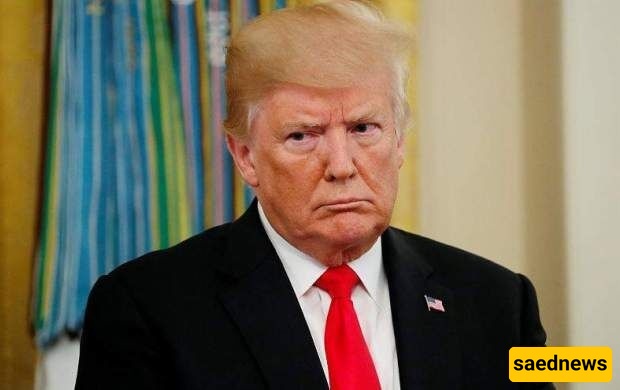
According to the political desk of Saed News, citing Fars, U.S. President Donald Trump arrived Friday (U.S. time) at Fort Bragg military base in North Carolina and, as usual, directed threats toward Iran.
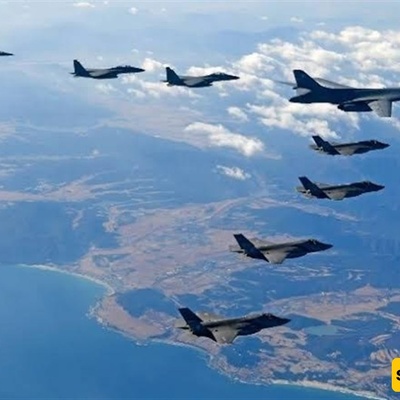
He once again spoke of dispatching a second aircraft carrier toward Iran and added, “I would like to see whether we can reach a deal or not.”
However, while addressing service members at the base, Trump inadvertently revealed the underlying aim of these threats, stating that the objective was to intimidate Iran into accepting a deal favored by the United States.
“Making a deal with them (Iran) is difficult,” he said. “Sometimes you have to create fear; that’s the only thing that can settle matters.”
In a separate exchange with a reporter at the base, the U.S. president returned to his familiar rhetoric, expressing his desire for “regime change in Iran.” Trump claimed, “Regime change in Iran would be the best possible outcome.”
Although only hours earlier he had said, “I think negotiations with Iran will succeed,” he completely reversed his position, stating that reaching an agreement with Iran would be very difficult. Many analysts describe these contradictions as a form of bluffing and psychological and media warfare, tactics often associated with high-stakes gamblers.
When asked by a reporter what he wanted from the Iranians in negotiations, Trump responded: “They should now give us the deal they should have given from day one. If they offer us a proper and real agreement, we won’t attack. They talk a lot, but they take no action. It would be excellent if we could resolve the Iran issue once and for all.”
Trump’s admission that he seeks to “scare” Iranians in order to extract concessions at the negotiating table has previously drawn attention from some Western analysts.
Michael O’Hanlon, a defense and foreign policy analyst at the Brookings Institution, recently wrote that the presence of the U.S. Central Command commander in the American negotiating team was “unusual” and aimed solely at intimidating the Iranian delegation.
Taken together, these developments suggest that the U.S. administration places significant emphasis on intimidation to secure concessions from Iran. However, as Bloomberg has noted, “Donald Trump does not know Iranians very well.”
In a recent report, Bloomberg questioned how much Trump truly understands about Iran — a country he has threatened with military action twice in less than a year. The report argued that this question is not meant to mock the president, but rather to highlight how a lack of basic understanding of the complex societies of the Middle East — particularly since the fall of the Shah in 1979 — has repeatedly led American decision-makers into costly miscalculations.