SAEDNEWS: Summer is a good opportunity for you and your children to visit buildings, palaces, and mansions, each of which represents a living history of our architecture and heritage. Visiting some of Tehran’s mansions and palaces is open to the public, while others are not.
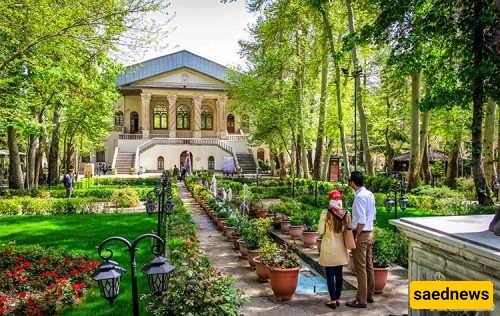
According to Saednews Society Service Report, Arbab Hormoz Mansion is one of the historical buildings remaining from the Qajar era.
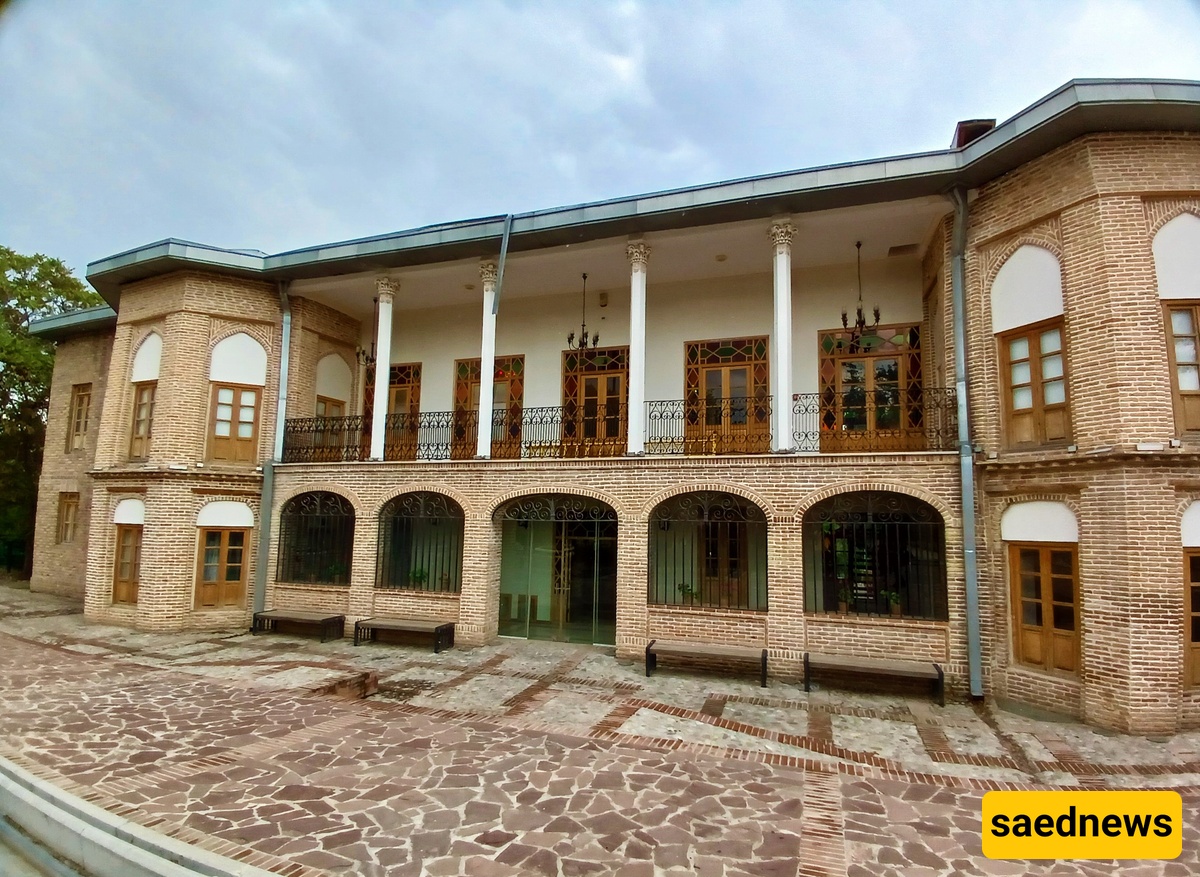
This mansion has been used as the Iran Graphic Museum since 2014. Most Qajar-era buildings in Tehran are located in the central and northern parts of the city, but Arbab Hormoz Mansion is one of the few historical sites in eastern Tehran, situated in the Tehranpars area.
Hormoz Arash, known as Arbab Hormoz, was a Zoroastrian born in the Kheirabad neighborhood of Yazd. In 1948, he purchased what is now Tehranpars—an area of about 36 million square meters consisting of the villages of Majidabad, Mehdiabad, and Hosseinabad—from the widow of Abolghasem Khan Bakhtiari. Half of the property was registered in his name and the other half in his wife Parvaneh Aghahi Arash’s name.
The current mansion, with an area of about 900 square meters, was built in a combined traditional and Western architectural style, consisting of two floors and a small basement. It was originally constructed in a garden of about 1 million square meters, of which only 42,000 square meters remain today.
The Iran Graphic Museum and Arbab Hormoz Mansion are open from Sunday to Thursday (non-holiday days) from 10:00 AM to 6:00 PM. The entrance fee is 1,000 tomans.
Address: Tehranpars Street, Fourth Square of Tehranpars, Police Park, Arbab Hormoz Mansion
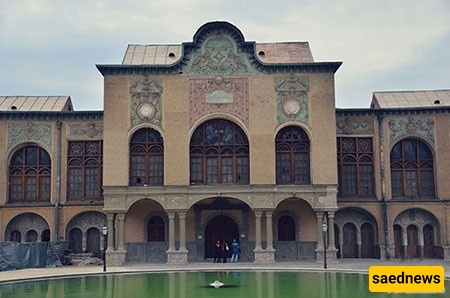
Masoudieh Mansion is one of the historical buildings from old Tehran and the Qajar era.
It is highly significant both architecturally and historically, and attracts many domestic and international tourists who come to admire its beauty.
The Masoudieh complex was commissioned by Massoud Mirza, known as Zell-e Soltan, son of Naser al-Din Shah, in 1295 AH on a land of about 4,000 square meters. It includes several sections such as the inner and outer courtyards and other auxiliary structures. The architect of the complex was Master Shaban Memar-Bashi.
The complex consists of five main buildings: the Divan House, the Dining Hall, the Hozkhaneh (water hall), Seyed Javadi Mansion, Moshir al-Maleki Mansion, and the entrance gatehouse. It is richly decorated with stucco work, tilework, calligraphy, wall paintings, and diverse architectural ornamentation.
The site contains seven inscriptions placed in different parts of the complex. The first library and national museum of Iran were also established in a corner of this mansion.
Address: Baharestan Square, southwest side, Ekbatan Street
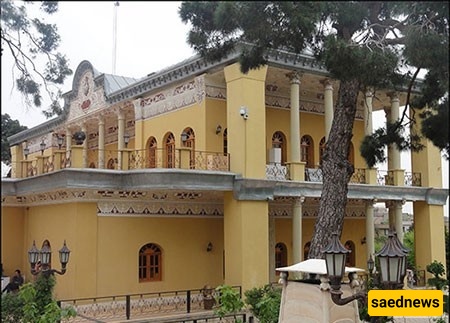
Ain al-Dowleh Mansion is a historical building in Tehran, dating back to the late Qajar and early Pahlavi I periods. Its architecture reflects the style of the Qajar era.
One of the most notable historical events associated with this mansion is the Tehran Conference during World War II.
The exterior of the mansion is open to visitors daily except Fridays and public holidays from 8:00 AM to 4:00 PM.
The original building belonged to Ain al-Dowleh, a Qajar-era minister, and was a simple two-story summer residence. The ground floor featured a royal hall with mirror decorations and side corridors.
The garden covers an area of 11,900 square meters in a north–south rectangular layout with four gates (two main entrances in the north and south, and two secondary entrances in the east and west).
Today, the Borj Gallery operates inside the mansion.
Address: Pasdaran, Heravi Square, Vafamanesh Street, Jamali Street, No. 17
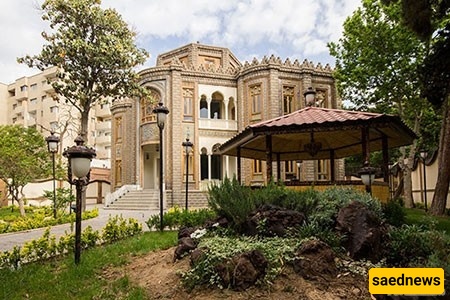
Kooshk Mansion, also known as Shaghaghi House, originally belonged to Hossein Shaghaghi and was built about 80 years ago after his return from Germany to Iran.
The building includes a basement, ground floor, first floor, and a “kolah farangi” (tower-like pavilion), constructed diagonally on a plot measuring approximately 33 × 49 meters. It dates back to the Pahlavi I era and covers an area of about 1,550 square meters.
The mansion has an oval-like plan and features four beautiful verandas. Its interior decorations include wall paintings, mirror work, stucco, and impressive tilework.
The building has three floors and includes six bedrooms, a study or office room, five halls, and several basements equipped with facilities.
Today, parts of the mansion are used for cultural and educational activities related to handicrafts. The first floor and basement are managed by Iran’s Cultural Heritage Organization for workshops, NGOs, and training programs in traditional crafts.
Address: Ferdowsi Street, Kooshk Street