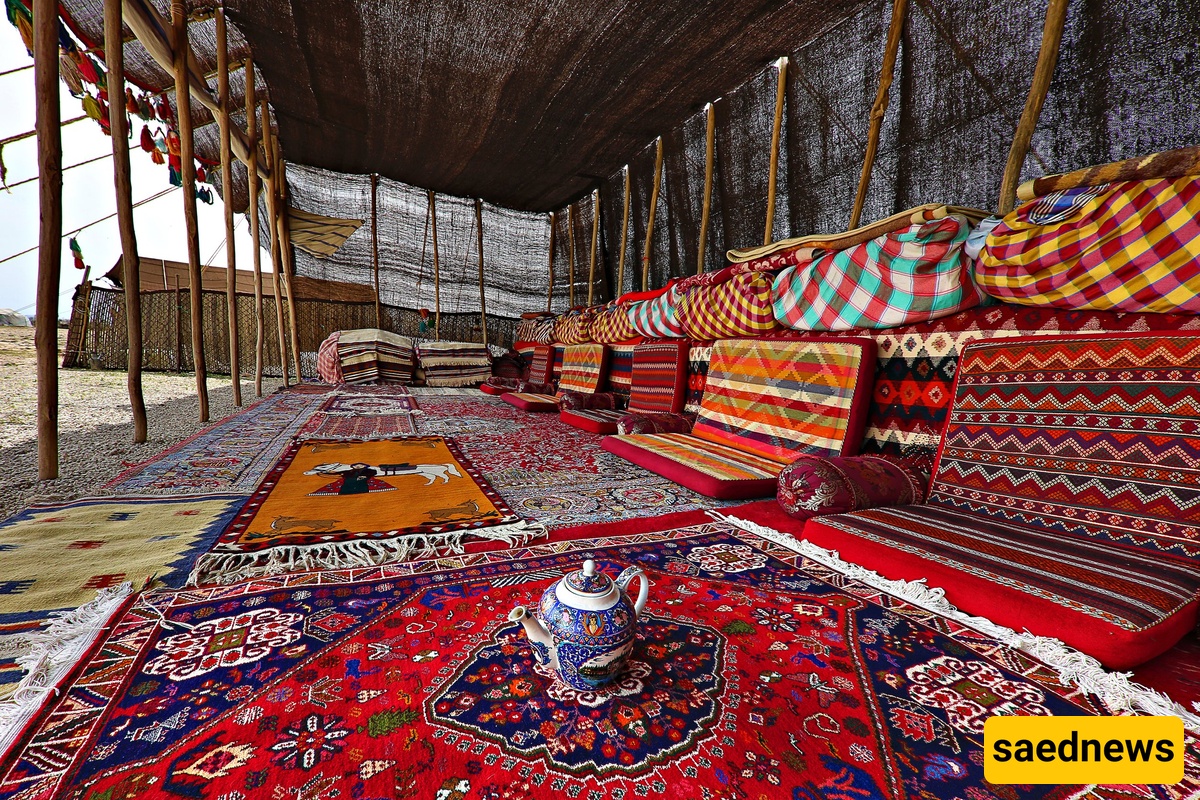
SAEDNEWS: The vivid colors and distinctive designs of Qashqai carpets add visual richness to Siah-Chadors, the traditional black tents used by Iran’s nomadic communities. Such an striking contrast, seen in only a few places worldwide, has drawn attention to the artistry and cultural value of Qashqai weaving.
According to SAEDNEWS, Behnam Mohammadi Kashkuli, a producer and researcher of the Qashqai hand-woven carpet, referred to the origin of hand-woven carpets in the Qashqai tribe and said that the Qashqais were nomads, and until the 1950s, their economy was based on animal husbandry, and agriculture was gradually added to it, Miras Aria reported.
Since the 1970s, with the expansion of nomad education and training, more of them have settled in large cities. Until then, the living conditions in remote mountainous areas, the limitation of needed goods due to the lack of mass production and distance from the market, etc., have caused the nomads to obtain all the tools they needed from the surrounding nature and their own raw materials.
Referring to the items needed to produce handicrafts and ultimately the diversity in the production of hand-woven products, he stated that the main items the Qashqai used to meet these needs were the hair and wool of their animals. They used goat hair to provide Siah-Chador (black tent), and they used the wool of other animals to prepare various types of bedding such as carpets, kilims, gabbeh, jajim, etc.
Hand-woven products were mostly consumed within the tribal areas, but even during that period, they were sometimes exchanged with marketers and khans of tribes and cities in exchange for essential goods during migration. Also, some of the finest examples of these hand-woven products were given as gifts by Qashqai khans to other khans or politically and socially influential people, or were woven on their orders. With the entry of foreigners into the country and their visits to the Qashqai tribe, hand-woven items, especially carpets, attracted their attention and were gradually introduced to the market.
He said media activities made tourists eager to visit the Qashqai tribe.
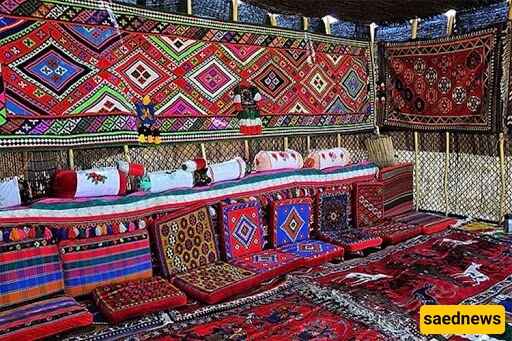
Mohammadi Kashkuli added that of course, it must be said that at that time, carpets from other regions of Iran were known in the world. With the introduction of the Qashqai tribe, the hand-woven carpets of tribal women gradually found their fans, and their reputation spread among lovers of hand-woven carpets in the world.
Referring to his father's role in producing and offering hand-woven Qashqai carpets, he stated: “The turning point in producing the Qashqai carpet was the initiative of my father, Haj Khalil Mohammadi Kashkuli. He, who observed the market interest and the foreign tendency towards handmade Qashqai carpets, thought of mass production, especially the production of Kashkuli carpets. He had been officially initiating the introduction of Qashqai carpets to the market since the 1960s. When my father saw the market’s reception of Qashqai carpets, he thought of mass production.”
“My father did not look at carpet production solely for the purpose of generating income. His actions were actually a facilitator for strengthening nomadic families and introducing the noble culture of the Qashqai tribe.”
He added: “Haj Khalil Mohammadi Kashkuli changed the dimensions of Qashqai carpets at the request of customers. Until then, Qashqai carpets were woven in small sizes due to their ease of transportation during migration and the limited dimensions of the black tents, but with the introduction of the market, carpets with dimensions of 9, 12, 24 meters, etc. were also woven. Gradually, the work reached a point where weavers from other Qashqai tribes, other tribes and villagers of Fars province also produced carpets on his orders, and at one point, about 400 weavers worked for him. During his working life, he produced and offered about 80,000 square meters of high-quality, durable and aesthetic carpets, and this was very influential in introducing the Kashkuli carpet as a work of art.”