SAEDNEWS: Farmer in Western Slovakia Discovers Massive Human-Made Stone While Plowing His Field
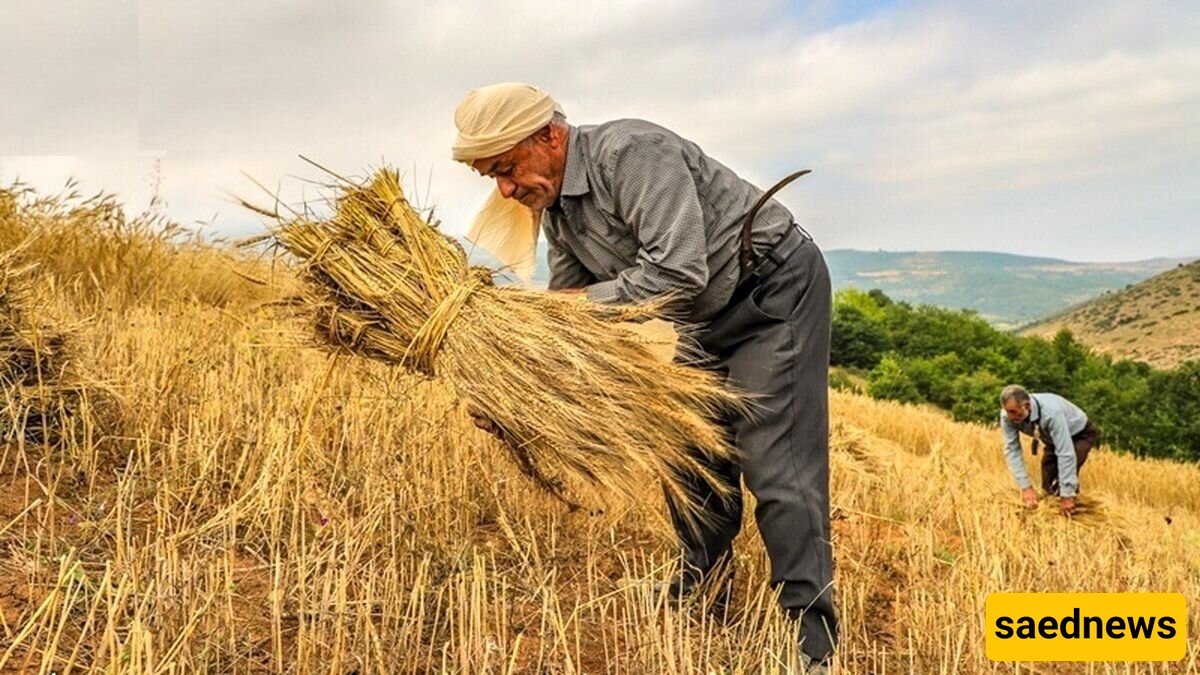
According to Saednews, A farmer in western Slovakia struck a stone while ploughing his field. It was not the first time an obstacle had interrupted his work, but this time he decided to dig it out completely. As he excavated further, he realized the object was not a natural rock at all, but clearly a human-made structure.
In a press statement on 11 December, Slovakia’s Monument Board reported that the farmer, working in Kostolná-Záriečie, had discovered a circular concrete structure buried underground.
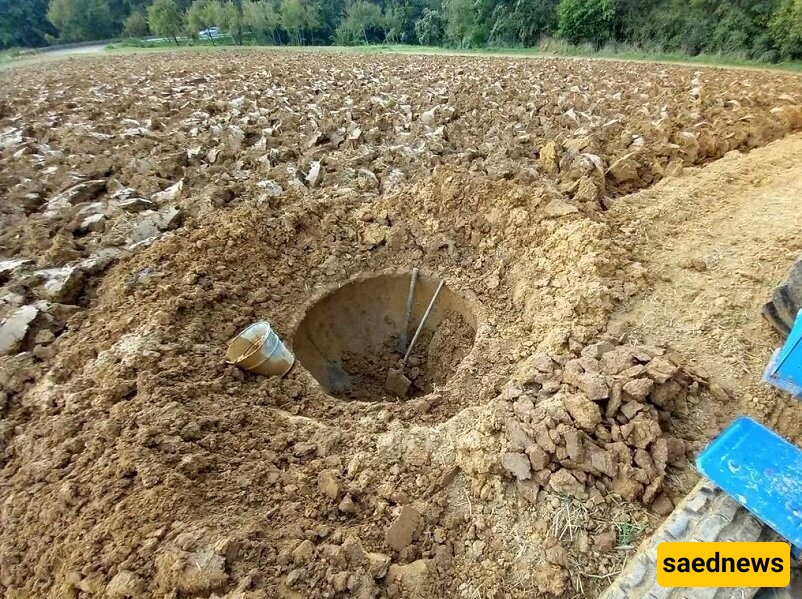
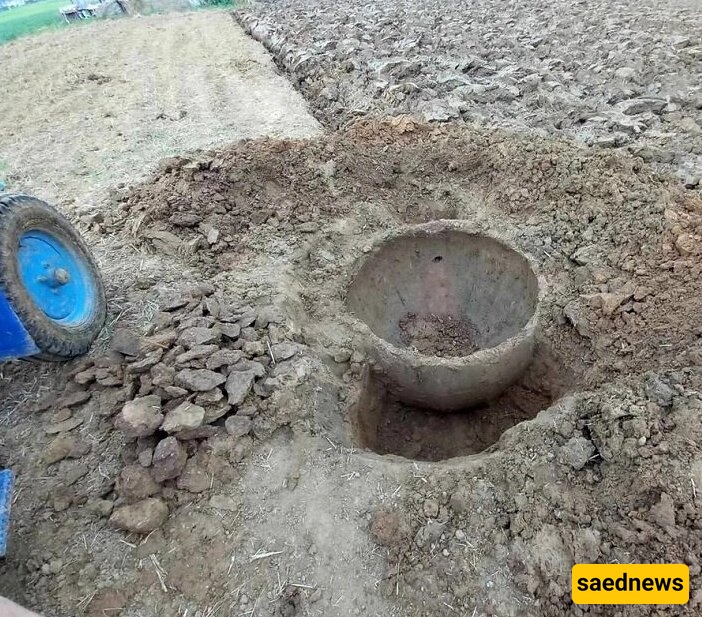
Photographs shared by the village council of Chocholná-Velčice in a Facebook post on 17 October show the excavation process, revealing a partially buried object resembling a large stone bowl.
But what exactly was this stone-like structure?
Heritage experts identified the find as the lower half of a German World War II machine-gun bunker. These defensive emplacements were known as Kugelstand and Kugelbunker, used by Nazi forces during the war.
Built from reinforced concrete, these structures were typically spherical with an opening at the top. They served as firing positions for machine guns and shelters for infantry soldiers.
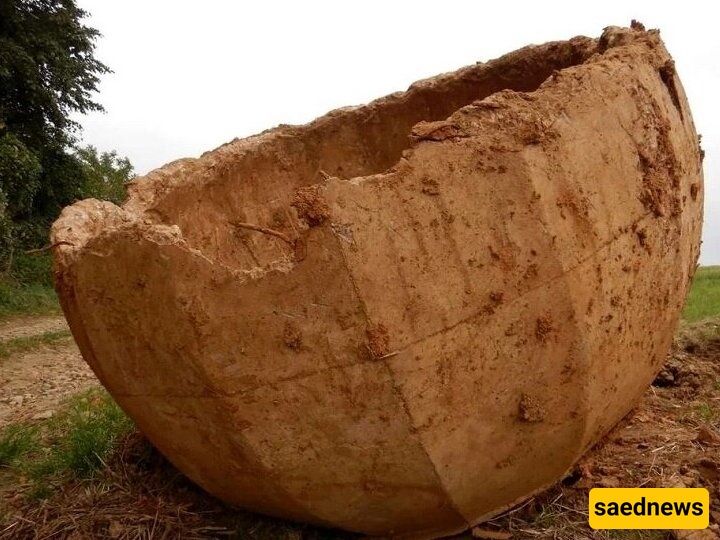
In 1945, during the final months of World War II, the village of Chocholná-Velčice lay near the front line for about two weeks. German forces defended the area against the advancing Soviet Army before eventually retreating. During this period, they reinforced their positions using machine-gun bunkers.
Metal detector surveys of the field found no additional artifacts, suggesting that the bunker was likely never actively used as a firing position.
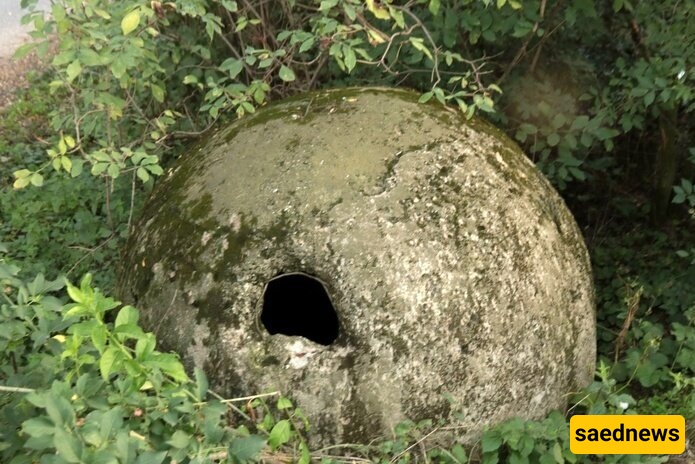
Over time, the upper part of the bunker was probably destroyed by agricultural ploughing and eventually forgotten.
Authorities estimate that German forces constructed up to a thousand such machine-gun bunkers in Slovakia during World War II. After the war, some were destroyed, others left in place, and some were later repurposed as flower pots, playground equipment, or other structures.
The bunker discovered in Kostolná-Záriečie has since been transferred to the Trenčín Museum. The village lies about 70 miles northeast of Bratislava, near the Slovak-Czech border.