SAEDNEWS: The Most Beautiful Yet Difficult-to-Care-For Houseplant: Often Confused with Maranta and Calathea
According to Saednews, Family: Marantaceae
Scientific name: Ctenanthe lubbersiana (also commonly referred to as Ctenanthe oppenheimiana)
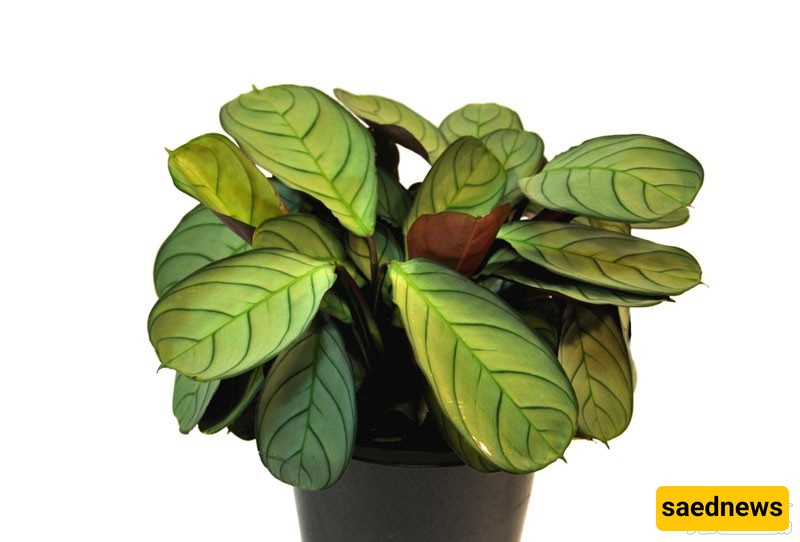
Ctenanthe is an attractive indoor ornamental plant with elongated, pointed leaves measuring about 20–25 cm in length. It has long leaf stalks, and under suitable conditions, it can reach a height and spread of up to 75 cm (about 18 inches).
This plant is considered one of the most beautiful houseplants. In Persian, it is known by names such as Setenanthe, Teh Nanth, Golshaneh, and “Never Never Plant.” It belongs to the genus Ctenanthe of the Marantaceae family and is native to Brazil.
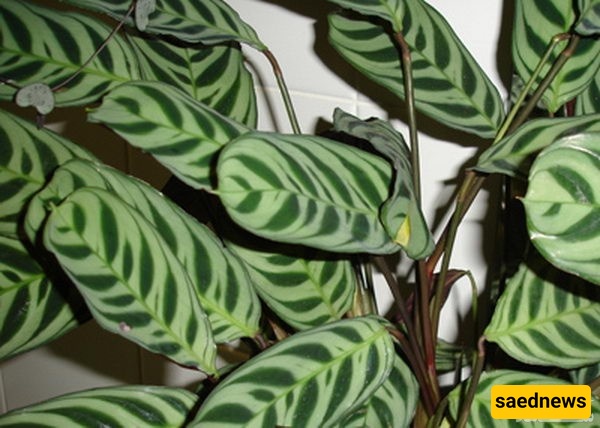
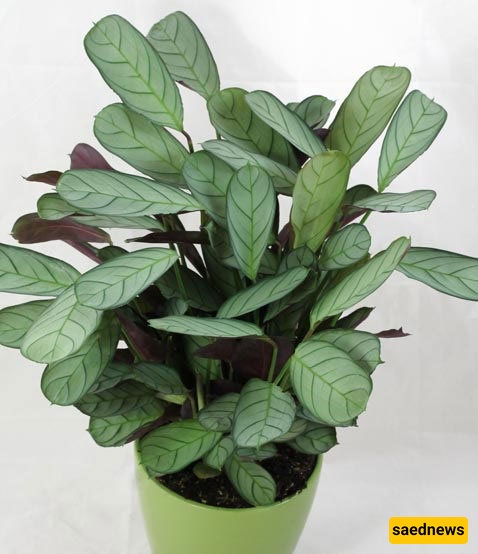
It is a perennial ornamental plant, often included among “tricolor” decorative varieties. One of its distinctive features is the movement of its leaves, which tend to align horizontally in relation to light and shade, creating a striking visual effect. It is sometimes confused with Maranta and Calathea, but Ctenanthe typically has more upright leaves. The upper leaf surface is creamy with green veins, while the underside is purplish.
Ctenanthe does not require strong light and tolerates shade well. However, it needs more light during winter. Direct summer sunlight can scorch and curl the leaves.
In winter, keep the plant at temperatures above 16°C, although it can tolerate around 15°C. In summer, the maximum suitable temperature is about 29°C. In cold conditions, the leaves tend to fold downward, while in heat they curl upward.
Allow the soil to dry slightly between waterings. Lack of water can cause leaf curling.
High humidity is essential. One common method is placing the pot on a tray filled with water and pebbles (a “humidity tray”) to increase moisture around the plant. Dry air causes leaf curling.
Feed the plant every 14 days using liquid or water-soluble fertilizer designed for ornamental houseplants, according to the product instructions.
The best soil is a light, well-draining mix such as African violet soil or high-quality potting soil suitable for indoor plants.
Repot annually in spring into a slightly larger pot. Ensure proper drainage. Repot when roots begin to emerge from the drainage holes.
Clean leaves using a damp cloth or sponge. Avoid chemical leaf-shine products. Regular misting helps maintain humidity and keeps leaves clean.
Propagation is done by dividing the plant into 3–4 sections during repotting and planting them separately in new pots.
Rust-like spots on leaves: Often caused by chemical leaf-shine products. Stop using them and clean leaves with water misting instead.
Brown spots on stems or underside of leaves: Usually caused by insect infestation. Treat the plant monthly with a systemic insecticide until symptoms disappear.
Pale leaves with fine webbing underneath: Indicates spider mites. Use a suitable miticide and treat the plant until the infestation is controlled.