SAEDNEWS: The Jeju–Seoul Air Route is the Busiest in South Korea, but the Island Holds Another Fascinating Attraction
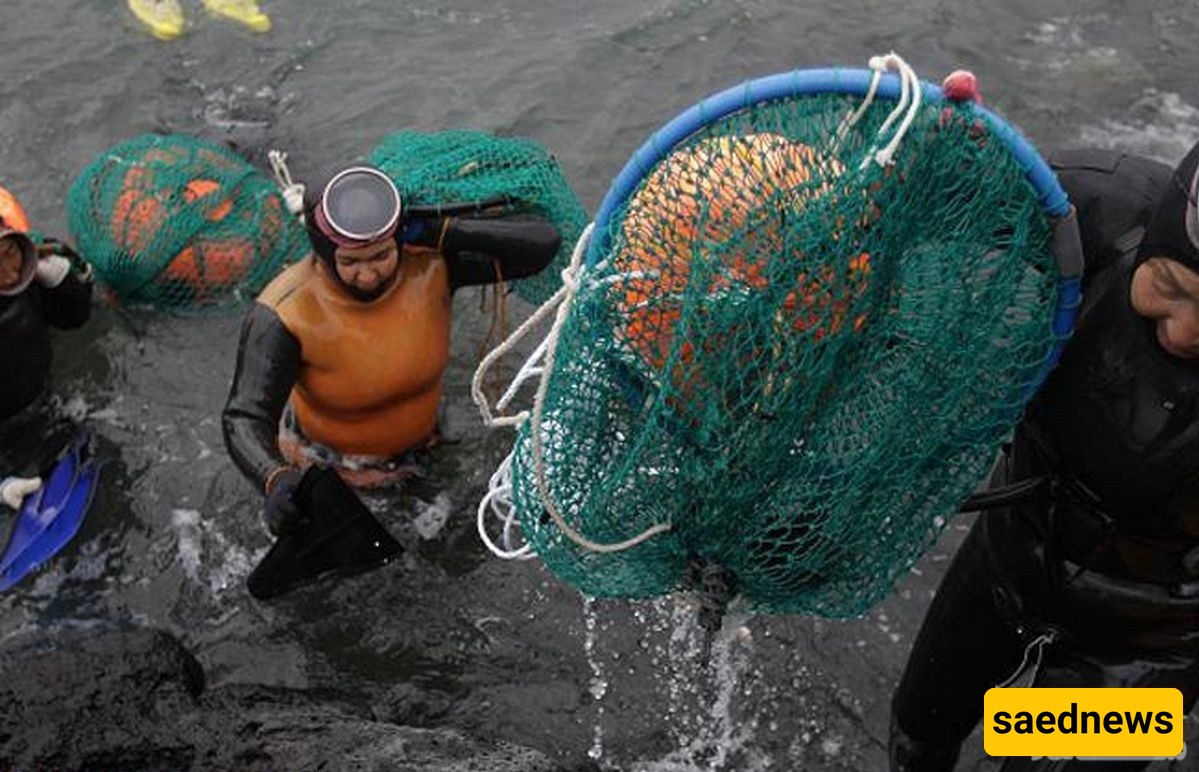
According to Saed News, quoting Young Journalists Club, a look at the lives of women across the world over the centuries reveals vastly different lifestyles, especially in remote corners of the globe. On a remote volcanic island called Jeju in South Korea, there is a community of women known as haenyeo, which literally means “women of the sea.” Their livelihood comes from harvesting seafood and seaweed directly from the ocean.
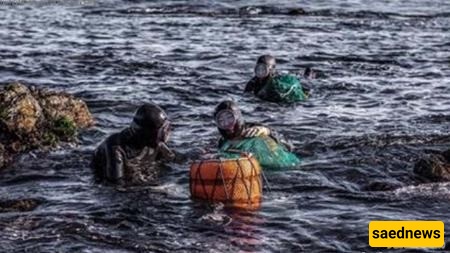
It may not sound unusual at first, but these women dive into the ocean without any breathing equipment and collect marine creatures by hand. While a typical diver can stay underwater for about two minutes at a depth of ten meters, the haenyeo dive much deeper using traditional diving masks and old-fashioned lamps strapped to their heads. They also wear lead weights around their waists to prevent floating back to the surface. A round floating device called a tuak, about the size of a basketball, drifts on the water surface with a net suspended beneath it to catch their harvest. Sometimes, the haenyeo use sharp tools to pry shellfish and other creatures from crevices in the ocean floor.
Between 2012 and 2014, photographer Hyung S. Kim visited Jeju repeatedly to photograph these women. Kim recalls: “It was an extremely difficult process. They weren’t used to being photographed, so they often avoided me entirely.” Most of the women were over sixty years old; the youngest was thirty-eight, and the oldest he photographed was over ninety. In his photos, the haenyeo appear as they truly are—tired and breathless—but also demonstrate incredible mental and physical endurance. Their work is dangerous, and every day they navigate the fine line between life and death. Viewing their images reveals a striking duality of femininity, blending a woman’s strength with her delicacy.
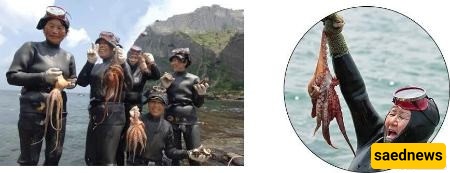
After years of advocacy, last year, the demanding and unique profession of the haenyeo was finally added to UNESCO’s Intangible Cultural Heritage list, recognizing their extraordinary contribution to cultural and maritime traditions.