SAEDNEWS: Cacti that grow in narrow, shaded areas tend to remain elongated and produce few or no flowers. Excess water is harmful for most species. All cacti should be kept in a greenhouse or under a polyethylene cover, although a few hardy types—such as Cereus, Echinopsis, and Opuntia—can grow outdoors in warm climates.
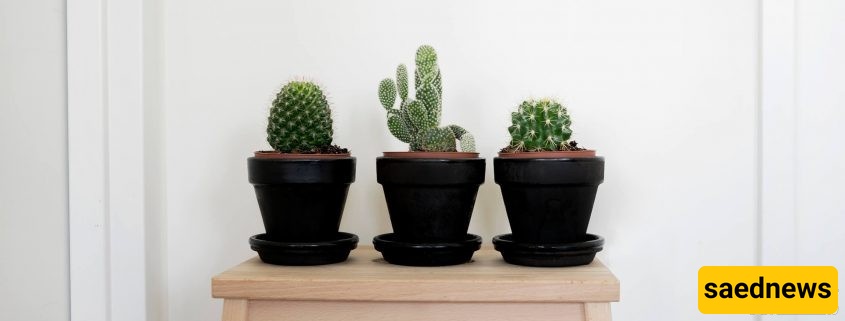
According to Saed News, citing Nazboo, the cactus is a plant from the Cactaceae family, a group within the order Caryophyllales, characterized mostly by being spiny and succulent.
Originally, cacti grew only in the northern, southern, and central regions of the Americas, but today they are spread by humans across many warm and arid regions of the world. Cacti store water during sudden storms and use it during months of drought. There are no native cactus species in Iran.
Domestication of some cactus species has reduced their natural resilience. For example, if a cactus grown in partial shade is suddenly exposed to intense sunlight, it can suffer sunburn. Therefore, domesticated cacti should be kept under appropriate conditions. All cacti prefer plenty of light, but in regions with very hot summers, it is recommended to protect them from direct sunlight during midday and afternoon.
Cacti grown in shade tend to be thin and elongated, produce few flowers, or may not bloom at all. Overwatering is harmful for most species. All cacti should ideally be kept in greenhouses or under polyethylene covers, although some hardy varieties, such as Cereus, Echinopsis, and Opuntia, can grow outdoors in warm climates. Fresh air circulation is essential for abundant flowering and healthy plant tissue. A cactus greenhouse should have a roof made of glass, fiberglass, or polyethylene, with open side walls. In very hot regions, the western side should be closed with a brick wall.
Although cacti are hardy and easy to grow, success largely depends on proper soil composition and watering. While the above-ground parts (stems) are succulent and often elongated, their underground roots are small and short, limiting their ability to absorb moisture. Additionally, cacti may not require large amounts of water.
A suitable soil mix for most cacti includes:
1 part loamy or sandy soil
1 part well-rotted cow manure
2 parts medium-textured leaf mold
1 part sand
A small amount of bone meal
Some pesticide may be added to keep ants and other root-feeding insects away.
Cacti, especially spiny varieties, should not be over-fertilized and usually need their pots replaced at least once a year. Excess fertilization makes them watery and prone to rot. During summer, they require more nutrients, and occasional feeding with potassium- and phosphorus-rich fertilizers is recommended. Liquid manure can also be used, but care must be taken to avoid over-fertilization. Nitrogen concentration should generally not exceed 500 mg per liter.
Specialized cactus fertilizers are recommended to ensure plant growth and health.
Clay pots are generally preferred over glazed, metal, or plastic ones, as they allow air exchange. Pots should be clean, sterilized, and dry before planting. Pots should be appropriately sized: very large pots retain excessive moisture, which is harmful, while small pots may restrict root growth.
Cacti can be planted in the ground or in pots at any time of year by skilled individuals, but beginners are advised to transplant when plant growth slows. Care must be taken to avoid damaging the spines, as they do not regenerate. Seedlings and small cuttings planted near the edges of pots tend to perform better than those in the center, where excess water can reduce rooting success.
Cacti are adapted to extremely dry conditions. Correct watering is crucial: overwatering is more dangerous than underwatering, as it can kill the plant, while insufficient water merely slows growth. Watering schedules depend on the season, soil type, planting location, and cactus species. Water should be neutral or near-neutral in pH.
Key principles of cactus watering include:
Do not water while the soil is still moist.
To check soil moisture, tap the pot with a wooden hammer: a high-pitched sound indicates dry soil, while a low sound indicates moisture.
Gradually reduce watering from autumn to allow the plant to enter dormancy.
In winter, small amounts of water prevent root desiccation. In spring, watering should resume, except in regions with mild winters.
Avoid dripping water on the plant from above, as it can cause rot.
Most cacti do not require staking, as their roots hold them firmly. Tall columnar types may need support, with bamboo stakes being effective.
Cacti can be propagated by seeds, cuttings, offsets, and grafting. Seedlings take longer to mature and require more care than cuttings or grafts.
Seeds: Most cactus seeds germinate within one week to one month, though Opuntia may be slower. The best sowing time is typically April to October. Optimal germination temperature is 21°C. Seeds should be sown in shallow, sterilized containers using a mixture of equal parts leaf mold and sand. Larger seeds should be lightly covered with fine sand. Seeds are watered from below and kept in partial shade under glass or newspaper to regulate light intensity.
Offsets and Cuttings: Many cacti produce offsets near the base, which can be separated once rooted. Cuttings should be taken with a sharp knife, left to callus for 4–5 days in the shade, and planted in a sterile sand-leaf mold mix. During rooting, avoid excessive watering. Rooting may take 2–4 weeks depending on conditions.
Grafting: Grafting is common and useful for fast growth, producing hybrids, or saving rare species. It can be done via:
Flat graft: Matching flat surfaces of scion and rootstock and securing them with tape or string.
Cleft graft: Cutting a V-shaped slit in the rootstock and inserting a wedge-shaped scion.
Oblique graft: For tall, thin rootstocks, cutting at an angle and securing with string.
After grafting, plants are kept in shade, and ties are removed after about a week. The “dormant graft” method uses a rootless base, with the scion grafted and allowed to root while secured in a pot. Grafting is mainly done in summer, when dry conditions reduce the risk of rot. Some rootstocks may produce suckers that compete with the scion and should be removed. Proper rootstock selection is critical to graft success.