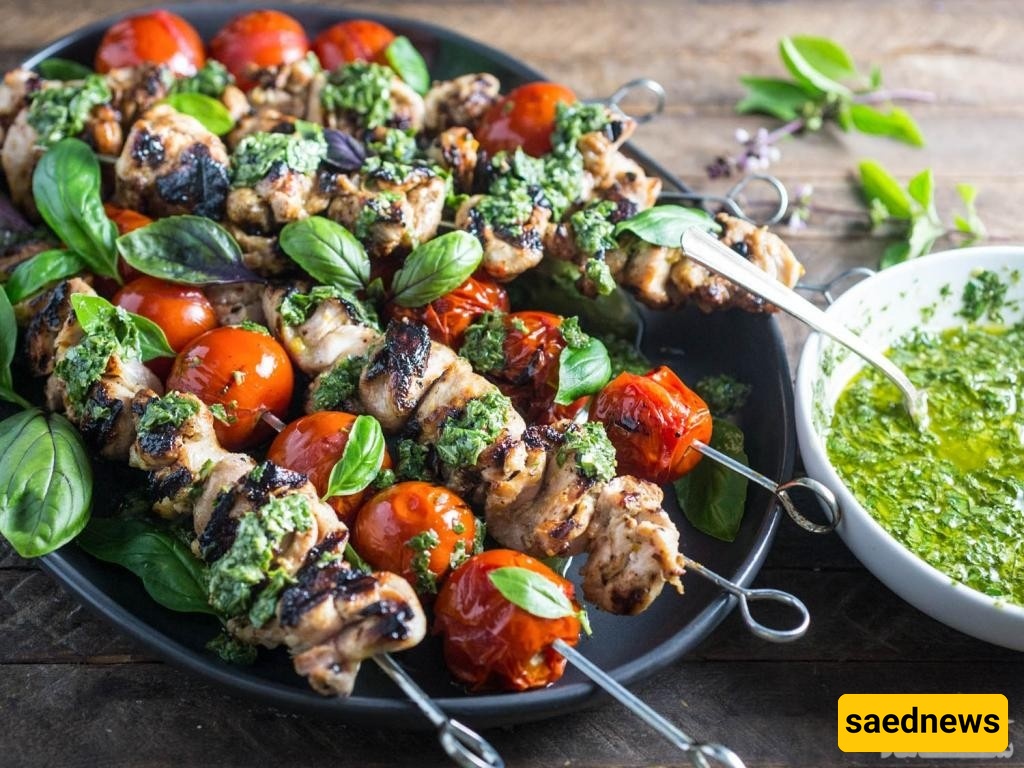
SAEDNEWS: Kebab is a dish made from various types of meat such as beef, lamb, chicken, and fish, which are cooked quickly on a grill or in a pan instead of being boiled or steamed.
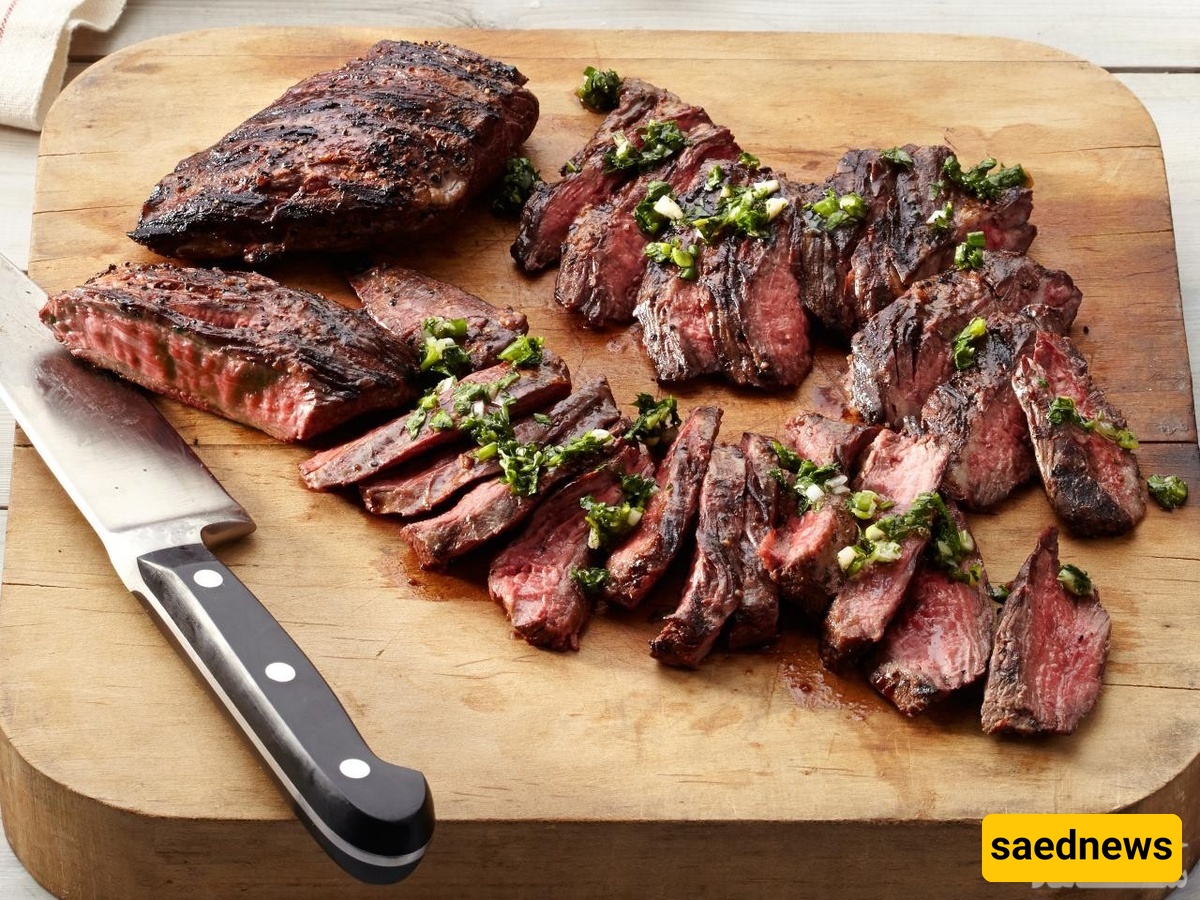
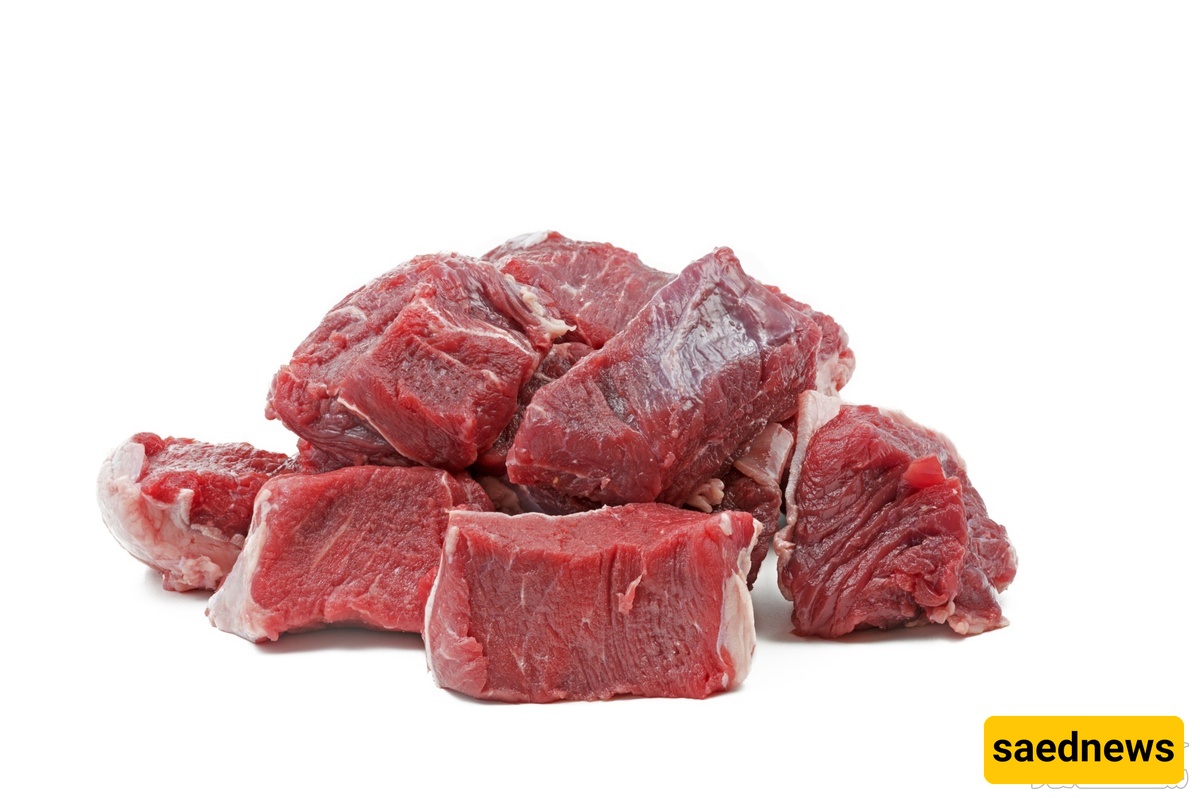
According to Saednews Family Magazine Service report, if you are using red meat for making kebabs, choose cuts with less muscle and faster cooking time, such as tenderloin or sirloin. If using veal, only use veal tenderloin.
When buying meat, make sure it is young. A light pink color and the weight of the meat can help determine its freshness and youthfulness.
A whole veal tenderloin should weigh about 1 to 1.5 kilograms. If preparing kebab for a large number of people, it is better to use 2–3 smaller tenderloins or sirloins instead of one large piece.
Stage | Description |
|---|---|
Aging (Tenderizing) | Storing meat in a refrigerator under proper conditions to soften it |
Cutting | Slicing meat correctly based on fiber direction |
Marinating | Flavoring the meat with ingredients |
Cooking | Grilling the kebab properly |
Aging refers to keeping meat in a refrigerator or cold storage under suitable temperature conditions to make it more tender.
Immediately after purchase, remove the meat from packaging, wash it, and dry it.
Do not place meat in plastic containers or let it come into contact with plastic materials.
Store it quickly in the refrigerator for 24–48 hours.
During this time, meat juices (blood residues) will be released.
Turn the meat several times so it stays evenly moist in its own juices.
Enzymatic activity in muscle tissue helps soften the meat and improves its taste. Aging does not mean the meat is “old”; aged meat is different from spoiled meat.
If you do not have enough time, you can use commercial meat tenderizer powders.
Natural tenderizers like kiwi or fig can also be used:
Grate one kiwi or fig finely
Mix with meat
Let it rest for 30 minutes before cooking
After aging, cutting is a crucial step.
Identify meat fibers (visible as parallel lines).
Always cut against the direction of the fibers.
Cut meat into 5–6 cm pieces first.
Then slice into strips about 1–1.5 cm thick.
This ensures that when skewered, the fibers are broken properly, resulting in tender and soft kebabs after cooking.
After cutting:
Slice onions lengthwise (against onion rings).
Add salt and knead until onion releases juice.
Add oil and optional saffron.
Mix meat with marinade.
Cover and refrigerate for the required time.
Use 1 cm-wide stainless steel skewers.
Remove meat from marinade (ensure no onion pieces remain).
Skewer the meat evenly.
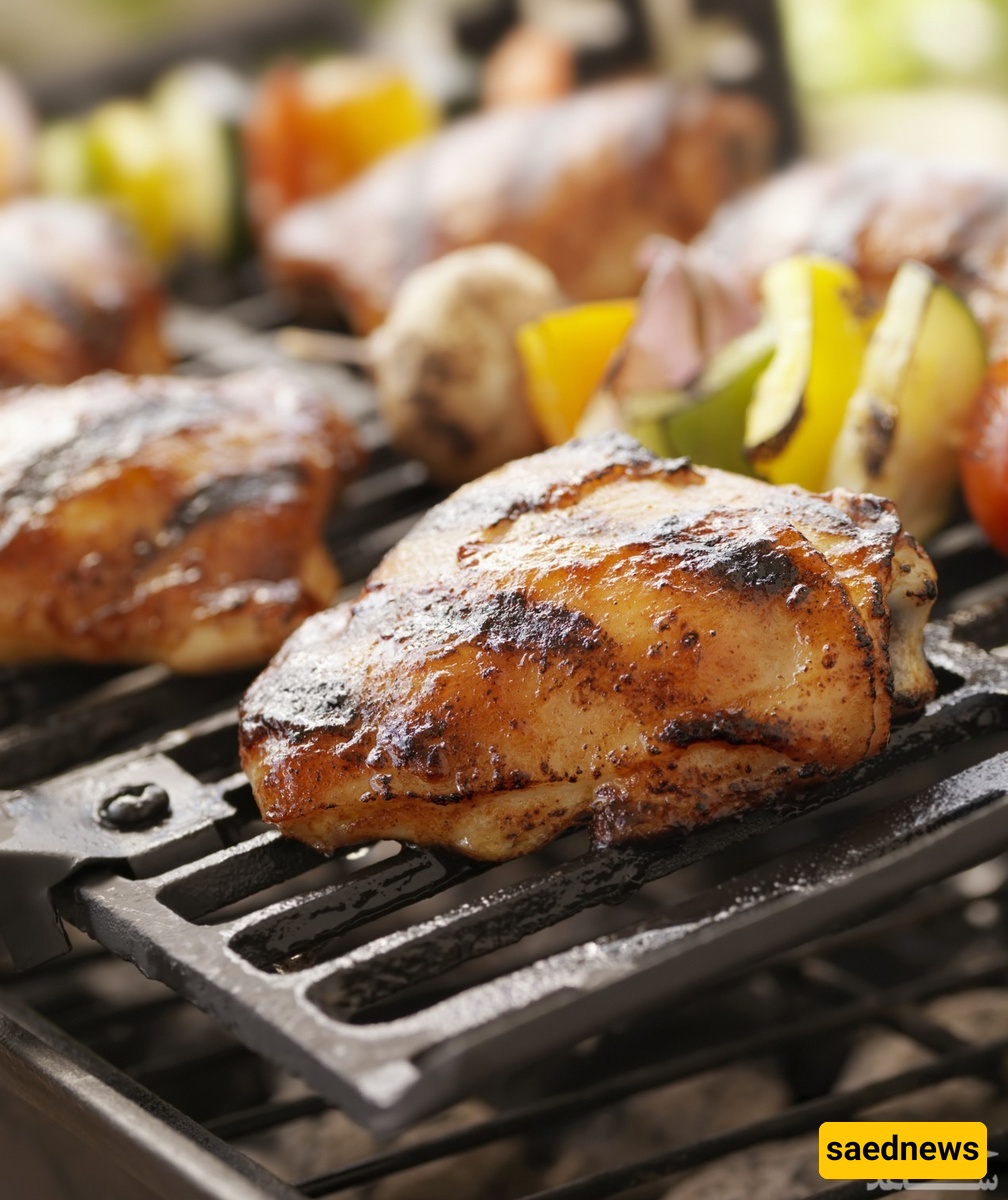
High heat causes the outside to cook while the inside remains raw.
Preheat grill for 15 minutes before cooking.
Use medium heat for even cooking.
Avoid overcooking, as it makes meat dry and tough.
Butter and hot lemon juice can be used to enhance softness and flavor during cooking.
Type | Description |
|---|---|
Charcoal Grill | Best for traditional Iranian kebabs; adds smoky flavor and aroma |
Gas Grill | Convenient; should be preheated for 15 minutes with cast iron plates |
For charcoal grills:
Use fire starter gel
Wait until charcoal becomes red-hot and smoke-free before grilling
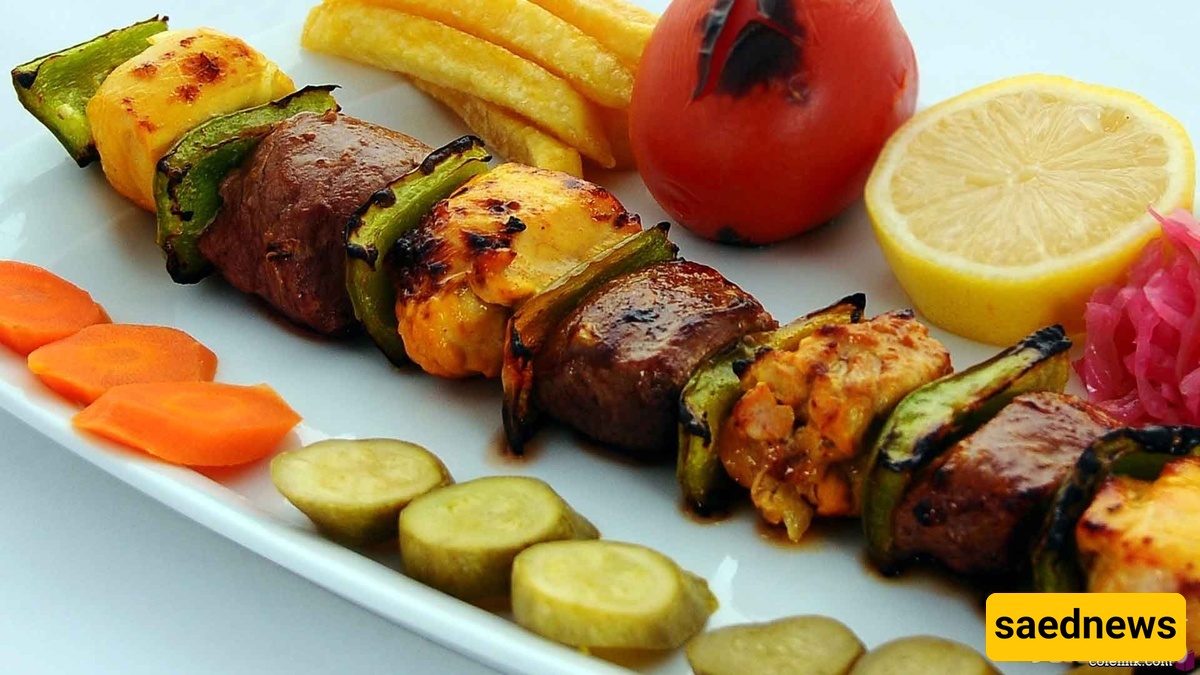
Chicken does not require aging.
Marinating is the most important step.
Chicken cooks faster than red meat.
Breast cooks faster than thigh or wings.
Overcooking makes chicken dry and tough.
Serve immediately after cooking to preserve taste and juiciness.
Do not place kebab directly on bread, as it absorbs meat juices.
Warm the serving dish beforehand to prevent fat from solidifying.