SAEDNEWS: According to The Guardian, U.S. Vice President JD Vance left Islamabad after 21 hours of talks with Iran ended without agreement. He said Tehran refused U.S. conditions, including a pledge not to build nuclear weapons, while the fragile ceasefire and the status of the Strait of Hormuz remain uncertain.
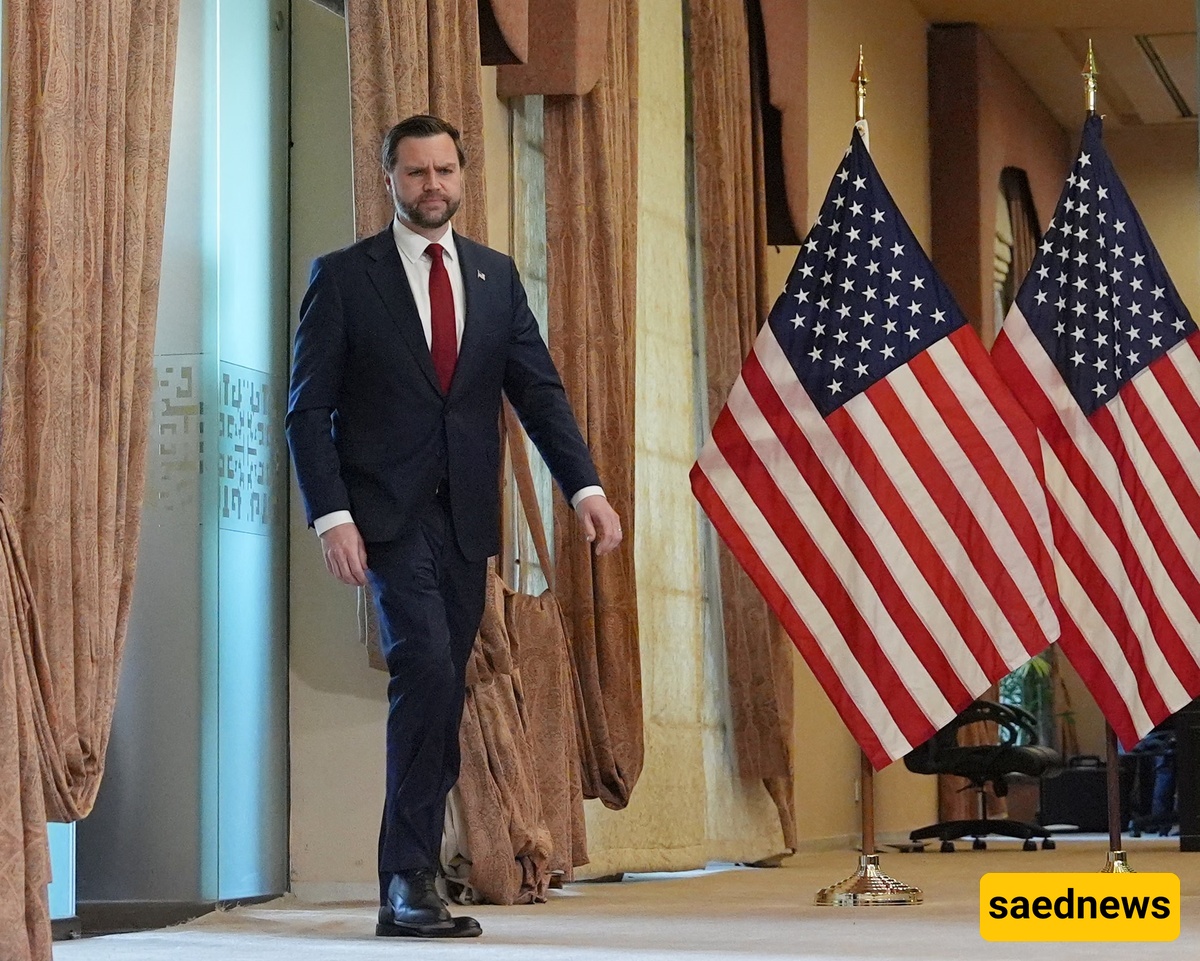
According to the economic service of Saed News Agency, citing The Guardian, U.S. Vice President J.D. Vance left Islamabad on Sunday without reaching an agreement with Iran after 21 hours of intense negotiations.
Vance, referring to the failure of the talks, stated that Iran had refused to accept U.S. conditions, including a commitment not to pursue the development of nuclear weapons.
He said: “The bad news is that we did not reach a deal, and I think this is much worse news for Iran than for the United States.”
He added: “So we are returning to the United States without an agreement. We have clearly stated our red lines.”
Vance said he had spoken with U.S. President Donald Trump at least half a dozen times during the negotiations, noting that one of the main points of contention was nuclear weapons development.
He stated: “We need to see a clear commitment that [Iran] will not pursue nuclear weapons, nor pursue tools that would allow it to rapidly achieve them.”
He added that this was the U.S. president’s primary objective and also the goal of the negotiations.
Iran’s Tasnim News Agency reported that what it called “extremist demands” by the United States prevented a deal from being reached, leading to the end of the talks.
Prior to Vance’s remarks, the Iranian government had stated on X (formerly Twitter) that negotiations would continue and that technical experts from both sides would exchange documents.
The Islamabad talks marked the first direct U.S.-Iran meeting in more than a decade and the highest-level negotiations since the 1979 Islamic Revolution. The outcome could have influenced the fate of a fragile two-week ceasefire and the reopening of the Strait of Hormuz, a vital shipping route responsible for around 20 percent of global energy supplies, which Iran had reportedly blocked since the start of the conflict. The war has sharply increased global oil prices and resulted in thousands of deaths.
Vance, special envoy Steve Witkoff, and Donald Trump’s son-in-law Jared Kushner met for two hours with Mohammad Bagher Ghalibaf, Speaker of the Iranian Parliament, and Foreign Minister Abbas Araghchi, before taking a break, according to a Pakistani mediating source.
The Iranian delegation arrived on Friday dressed in black, wearing mourning attire for the late Supreme Leader Ayatollah Ali Khamenei and other victims of the war. According to Iranian authorities, members of the delegation carried the shoes and bags of schoolchildren killed in a U.S. airstrike on a school near a military complex. The Pentagon said the strike is under review, while Reuters reported that military investigators believe the United States was likely responsible.
A Pakistani source said: “During the first meeting, the atmosphere fluctuated and tensions rose and fell between both sides.”
During the U.S.-Iran talks, Islamabad, a city of more than two million people, was placed under strict security lockdown with thousands of paramilitary forces and army troops deployed on the streets. Pakistan’s role as mediator marks a significant shift for a country that was diplomatically isolated just a year earlier.
At the same time, the U.S. military announced it was “setting conditions” for clearing operations in the Strait of Hormuz.
The strategic waterway was central to the ceasefire discussions. The U.S. military said two of its warships had passed through the strait and conditions were being prepared for mine-clearing operations, while Iranian state media denied that any U.S. vessels had entered the passage.
Before the talks began, a senior Iranian source told Reuters that the United States had agreed to unfreeze Iranian assets held in Qatar and other foreign banks. A U.S. official denied the claim, saying no such agreement had been made.
In addition to unfreezing foreign assets, Tehran has demanded control over the Strait of Hormuz, war reparations, and a region-wide ceasefire including in Lebanon, according to Iranian state television and officials.
Iran has also sought to impose transit tariffs in the Strait of Hormuz.
Trump’s stated objectives have shifted, but at a minimum he has demanded free passage for global commercial shipping through the strait and limits on Iran’s uranium enrichment program to ensure it cannot develop nuclear weapons.