SAEDNEWS: Foreign Minister Abbas Araghchi said on Sunday that Iran favors “diplomacy,” but at the same time, it is “ready for war”.
According to SAEDNEWS, Iran’s Foreign Minister Abbas Araghchi said recent remarks describing Iranians as “men of war” should not be interpreted as an indication that the Islamic Republic seeks conflict.
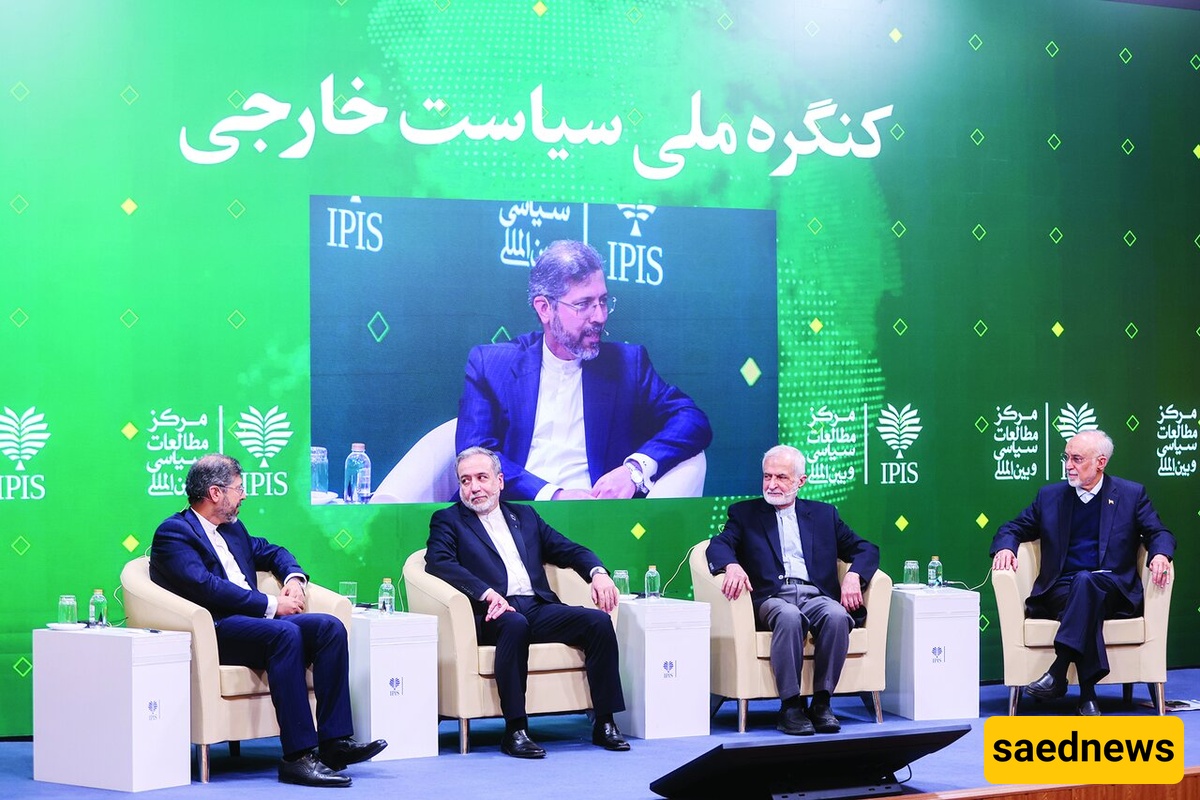
Speaking at the first National Congress on Foreign Policy and the History of Foreign Relations, Araghchi stressed that Iran does not pursue war, but will not abandon its core rights under international law.
The main dispute between Tehran and Washington, he said, remains Iran’s nuclear enrichment program. For more than two decades, Iran has maintained that as a signatory to the Nuclear Non-Proliferation Treaty (NPT), it will never relinquish its right to uranium enrichment.
“Iran’s power comes from its ability to say no to the great powers,” Araghchi said.
The congress was attended by senior officials and experts, including Kamal Kharrazi, head of Iran’s Strategic Council on Foreign Relations (SCFR), former foreign minister Ali Akbar Salehi, diplomats, university professors, and foreign policy researchers.
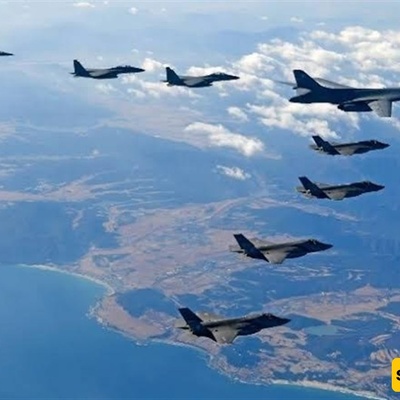
Araghchi’s remarks came two days after intensive talks with U.S. representatives in Muscat, Oman, regarding Iran’s nuclear program. The negotiations coincided with the deployment of the U.S. aircraft carrier Abraham Lincoln and accompanying warships near Iranian waters—moves Tehran views as attempts to intimidate Iran into accepting what it calls excessive demands.
Addressing the nuclear standoff with the United States, Araghchi said Iran has paid a heavy price for its peaceful nuclear activities, including enrichment, but that these costs have been aligned with national needs.
He emphasized that uranium enrichment serves multiple civilian purposes, including agriculture, healthcare, and electricity generation.
“I want to examine this issue through the lens of independence and dignity,” he said. “Why do we insist so strongly on enrichment, even at the cost of an imposed war? Because no one has the right to dictate what we should or should not possess.”
The foreign minister reiterated that Iran is willing to address concerns and answer questions regarding its nuclear program. “If there is no trust, trust can be built,” he said, adding that this does not grant any country the right to deny Iran its lawful capabilities.
Iran, he said, must demonstrate that it does not accept domination or external orders.
Araghchi said Iran is prepared to clarify any ambiguities surrounding its nuclear activities, stressing that diplomacy is the only viable path.
“Other options have failed,” he said. “They bombed our nuclear facilities, but they did not achieve their objectives. Knowledge cannot be destroyed through bombardment.”
Referring to attacks on Iranian nuclear sites by Israel and the United States in June 2025, he added that technology and expertise cannot be eliminated through force, leaving negotiation as the sole alternative.
“The essence of Iran’s power lies in standing against bullying, domination, and pressure,” Araghchi said. “They fear an Iranian atomic bomb, but we are not pursuing one. Our real power is the ability to say no to great powers.”
Kamal Kharrazi, head of the SCFR, also addressed the congress, emphasizing that Iran should prioritize relations with neighboring countries.
He acknowledged that Iran made mistakes in the early years of the Islamic Revolution, particularly regarding the concept of “exporting the Revolution.”
“The Revolution could not be exported through improper methods,” Kharrazi said. “Its ideals should take root in the hearts of others through its values, making them its defenders.”
As an example, he asked why many Iraqis support the Islamic Revolution, noting that Iran did not impose itself militarily on Iraq. Instead, he said, Iran resisted Iraqi aggression during the 1980s war under Saddam Hussein.
“At the beginning of the Revolution, our actions caused concern among some neighbors,” Kharrazi said. “This is why regional relations must now be inclusive and prioritized.”
Kharrazi added that resistance must extend beyond the military domain. While Iran’s armed forces effectively defend the country, he said resistance is also necessary in diplomacy and media—areas not limited to official institutions.
He stressed that Iran’s hostility toward its adversaries is a response to external aggression.
“When faced with hostility, we must respond in kind,” he said, citing U.S. actions since the early days of the Islamic Republic.
Rejecting claims that Iran provokes conflict, Kharrazi pointed to Iraq’s 1980 invasion, arguing that Saddam Hussein acted on a miscalculation, believing Iran was too weak to resist.
Former foreign minister and former nuclear chief Ali Akbar Salehi also addressed the congress, identifying unresolved international relations as the greatest challenge facing Iran’s governance.
“For four decades, this issue has remained unsettled, and its fluctuations have directly affected domestic affairs,” Salehi said.
He pointed to a gap between the ideals of the Islamic Revolution and its practical achievements, arguing that while goals were clearly defined, the path to achieving them was not.
“It was like attempting to climb Mount Damavand without preparation,” he said.
Salehi also criticized the failure to fully implement Iran’s Constitution, describing it as progressive but poorly executed. He noted that the absence of genuine political parties has deprived the system of internal corrective mechanisms, leading to the accumulation of unresolved pressures.