SAEDNEWS: These days, working with gold leaf has become very popular, and it can be said that gold leaf has entered almost all forms of art. In today’s post, we want to explain the techniques of working with gold leaf in a very simple way for you.
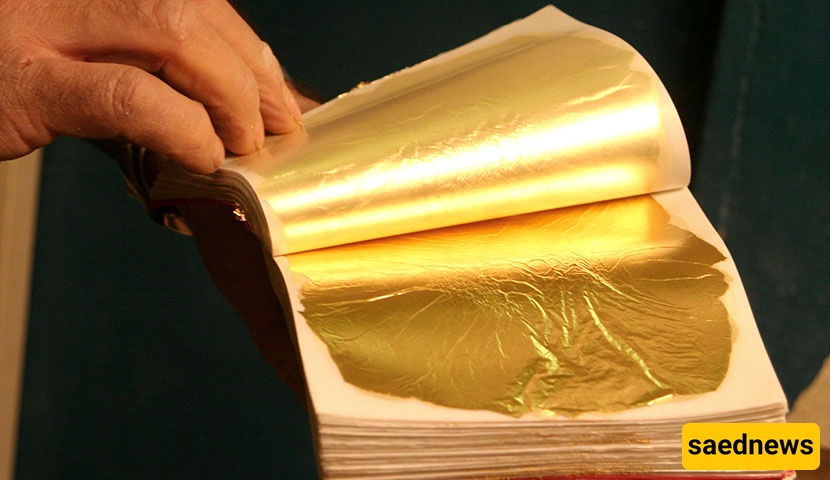
Gold leaf is a modern material widely used in resin art, patina work, and decorative design. Its ability to be applied on surfaces such as wood, fabric, walls, and decorative paintings is one of the main reasons for its growing popularity.
These ultra-thin sheets have a delicate structure, and although working with them is relatively simple, it requires a high level of precision and care. The bright, attractive golden shine of gold leaf has made it especially popular among those who create luxury-style decor and accessories. In fact, working with gold leaf is so accessible that anyone interested in canvas painting can use it and enjoy the process.
To carry out this enjoyable technique, you will need the following materials:
Gold leaf adhesive (size glue)
A dense brush with semi-long bristles
Solid gold leaf sheets
Canvas or any surface you want to decorate
A high-density sponge
First, apply the gold leaf adhesive evenly on the desired surface. Wait until it fully dries and turns transparent. This type of glue remains slightly tacky even after drying, meaning it will still feel sticky to the touch.
Next, place the gold leaf sheets onto clean paper for easier handling, then gently apply them onto the glued surface. Gold leaf is extremely delicate and will stick immediately upon contact.
If any gaps or tears appear during application, they can be filled using smaller pieces of gold leaf. It is also recommended to keep leftover fragments, as they can be reused for decorative detailing.
For storage, gold leaf sheets should be placed between thin wax papers to prevent damage.
Before application, ensure the surface is completely clean, smooth, and free from bumps or irregular textures. If you are designing a specific pattern, draw it first on the canvas, then apply glue using a small brush or sponge. After placing the gold leaf, gently press and fix it using a soft brush, then remove excess pieces.
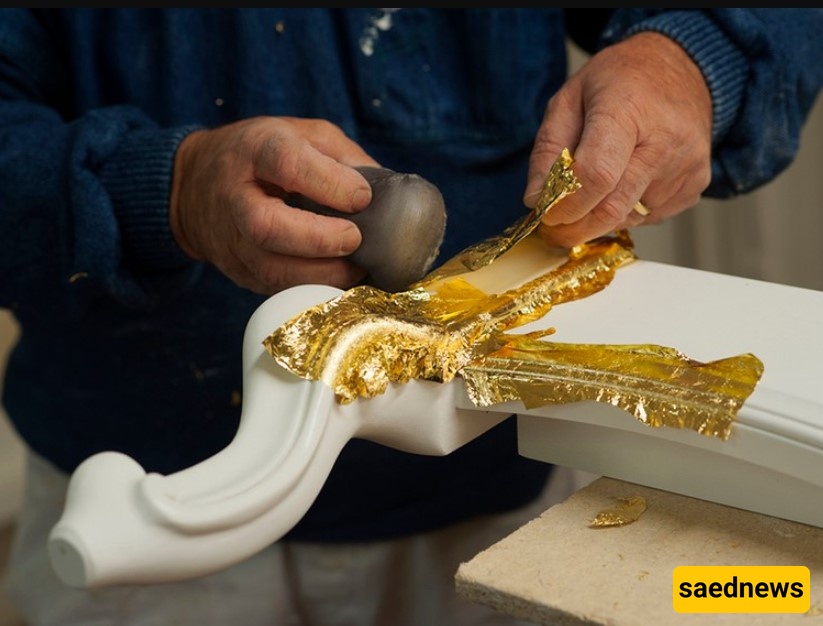
Gold leaf, along with similar metals such as silver and copper leaf, consists of extremely thin metal layers. Metal coating techniques are among the oldest decorative arts, dating back thousands of years.
To create an antique or aged effect:
Apply a dark brown or black wash over the surface to reduce excessive shine.
Lightly scratch areas to simulate natural wear over time.
Use an ochre or rust-colored base layer to mimic oxidation.
For silver leaf, use dark or smoky tones underneath.
For copper leaf, turquoise or green-blue tones simulate natural patina.
After applying the gold leaf, a thin layer of diluted dark paint can be brushed over the surface. Excess paint can be gently removed from raised areas to enhance contrast.
Finally, to protect the finished work, apply a layer of varnish or protective coating.
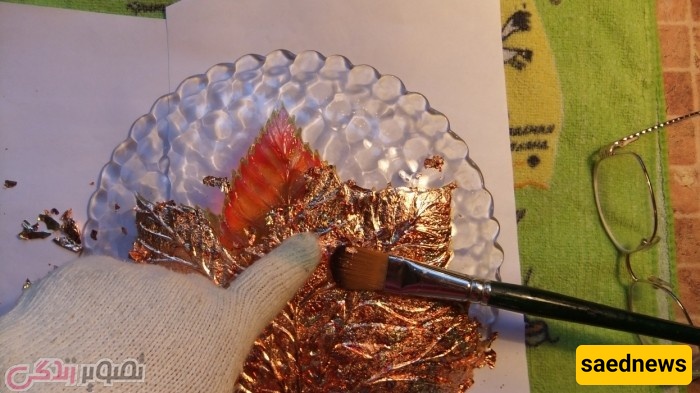
Gold leaf can be used on a wide variety of surfaces, including:
Wood
Ceramic
Clay
Glass
Plaster
Polyester and more
It is also widely used in decorative painting, patina techniques, decoupage, and transfer art.
Wood gilding requires patience and precision. The decorative result should ideally have extremely thin metallic layers that create a refined appearance.
Basic steps include:
Repair and prepare the wooden surface.
Fill gaps using suitable epoxy or filler materials.
Smooth the surface with sanding tools.
Apply a base coat (often clay or primer-based paint).
Re-sand for a smooth finish.
Apply adhesive and carefully place gold leaf sheets.
Press gently to ensure full adhesion.
Clean excess fragments using a soft brush.
Optionally polish the surface with a smooth stone or tool for shine.
A final protective varnish layer helps preserve the gilded surface.
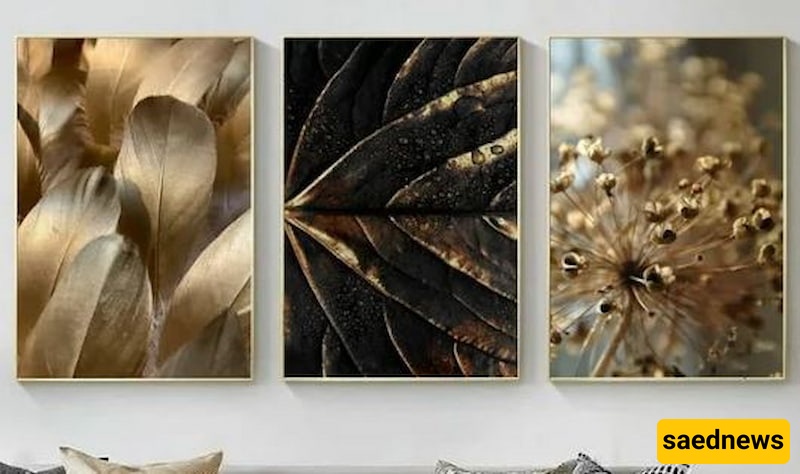
Gold leaf is widely used in:
Decorative painting and wall art
Furniture design (especially classical and luxury styles)
Ceiling and plaster ornamentation
Resin art compositions
Glass decoration techniques
In furniture design, gold tones are often applied to legs and frames to create a royal and luxurious appearance. Both solid and liquid gold leaf techniques may be used depending on the design requirements.
Contemporary decorative paintings often combine gold leaf with resin to create textured and visually rich artworks. These techniques significantly increase both aesthetic and artistic value.
Gold leaf is extremely fragile, so careful handling is essential during application. Any sharp contact before drying can damage its surface and reduce its visual quality.