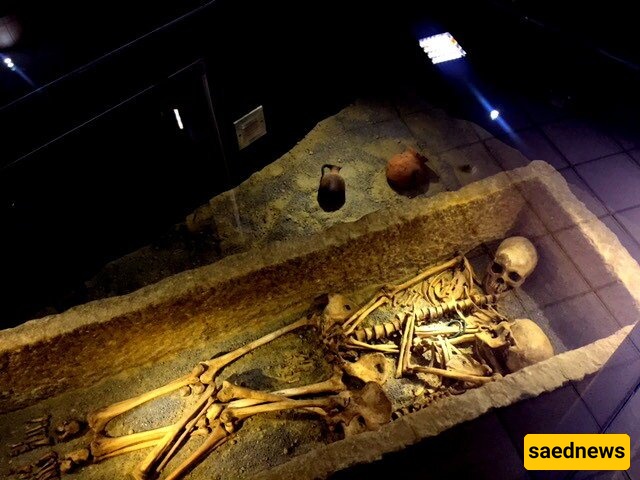
SAEDNEWS: These two skeletons, belonging to a man and a woman, are estimated by experts to date back to the Parthian era.
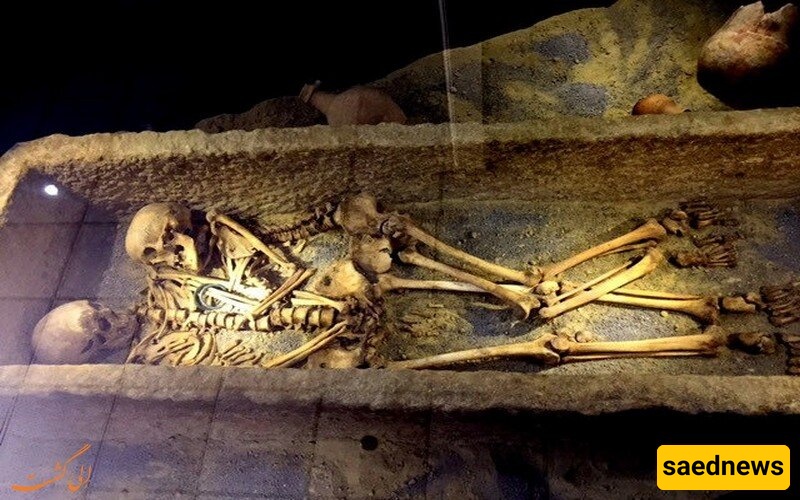
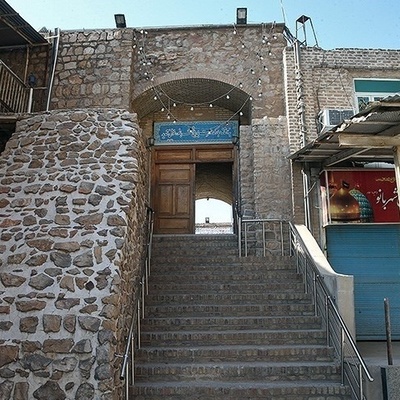
According to Saed News’ society service, citing ISNA, this is not the first time valuable artifacts have been unearthed in Hamedan. However, last November, workers from the city’s water and sewage department uncovered a remarkable find: a coffin containing the skeletons of a man and a woman dating back 1,800 years. The discovery occurred during excavation work in one of the city’s historic neighborhoods, inside the bazaar on Jarrah Street, at a depth of three meters.
Previously, during construction in Imam Khomeini Square to build a fountain and pool, workers discovered a water channel, skeletons, several column bases, and a millstone. The find caused a stir in the city, with rumors of hidden treasure spreading quickly, prompting the excavation to be halted. The uncovering of this couple’s coffin created a similar buzz, as the market and surrounding streets quickly became crowded.
A Museum Home for Ancient Lovers
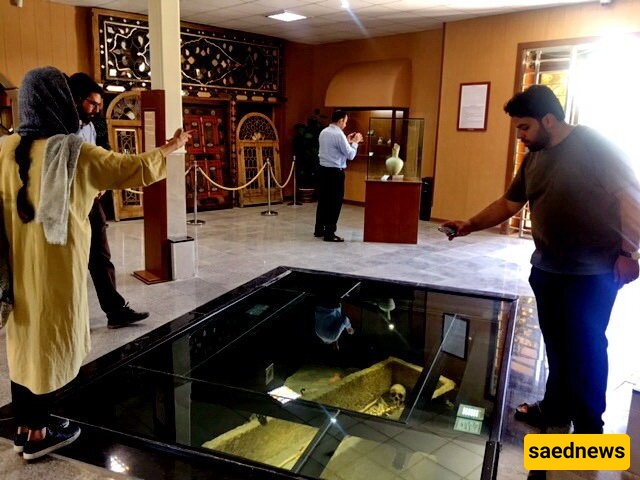
The two skeletons, identified as a man and a woman whose estimated age places them in the Parthian period, were transferred to the Hegmataneh Museum for study and display. They are now exhibited together in a glass case near the museum’s entrance, evoking earlier discoveries of “lover skeletons” in Iran and Italy.
According to the museum guide:
“This couple lived approximately 1,800 to 2,000 years ago. Although they did not die at the same time, they were buried together in a single coffin.”
Ali Malmir, Director General of Cultural Heritage, Handicrafts, and Tourism of Hamedan Province, added:
“When this coffin was discovered, research into historical periods—particularly the Parthian era—showed evidence of family burial practices and a special respect and value accorded to women.”
The coffin, which has been open to public viewing since April this year, measures 190 centimeters long, 50 centimeters wide, and 30 centimeters deep. The female skeleton, buried on her side, holds two bronze bangles, and the coffin itself is made of limestone.
Parthian Burial Practices
Archaeological findings from the Parthian period indicate that, alongside coffins, everyday objects were often buried with the deceased. Bodies were placed in the ground, graves, or stone coffins, with burial positions varying—extended, crouched, or with arms raised. According to the Heritage Protection Unit, the accidental excavation on Jarrah Street yielded only this single coffin containing the couple’s skeletons.













![Meet Clone Alpha: The Human-Like Robot Redefining the Limits of Technology [Video]](https://en.saednews.com/storage/files/post/e11a0fae-588f-44d1-bb15-fb9e7dbc1119-NlBIil6L8Kqqjlhn/circle-image.jpg)