SAEDNEWS: It’s hard to imagine a sponge-like material withstanding a high-velocity bullet, but it’s not impossible.
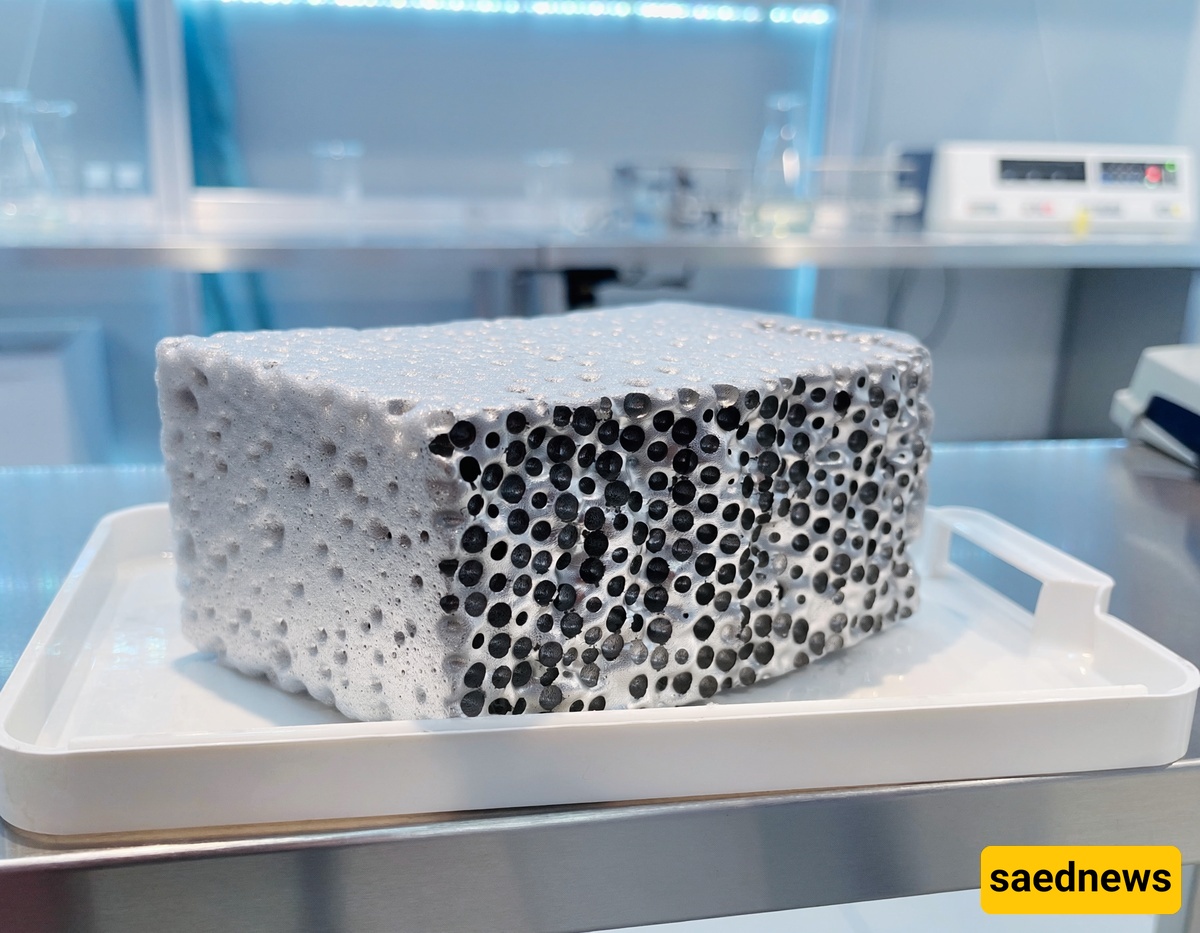
According to SaedNews Science and Technology Service, scientists have developed a material called “metal foam” that is transforming conventional equations in engineering and defense. This product, combining extremely low weight with the high strength of metals, demonstrates that durability does not necessarily come from mass but from “smart structural design.”
Metal foam is created by trapping gas bubbles in molten metals such as steel or aluminum. The result is a network whose volume is mostly air, giving it a porous, sponge-like structure. Remarkably, some of these foams are so light that they float on water, yet they possess a stunning capacity to absorb massive amounts of energy.
When a bullet or other projectile strikes this surface, its energy is spread across thousands of microscopic cellular walls instead of passing through. The foam neutralizes the projectile’s kinetic energy through controlled compression and micro-scale destruction. In tests, advanced metal foam samples have been able to stop armor-piercing bullets instantly, completely shattering them on impact.
Although much of the research is focused in the United States, the potential of this emerging technology extends far beyond body armor and combat applications:
Aerospace: Reducing the weight of aircraft and spacecraft without compromising safety.
Automotive: Designing car bodies that absorb crash energy, protecting passengers from impact.
Civil Engineering: Developing materials that withstand earthquakes or explosions in sensitive structures.
Structural Engineering: Optimizing weight for bridges and large industrial components.











![Inside Fawzia’s Lavish Multi-Tiered Wedding Cake: Egyptian Bride of the Pahlavi Shah – A Glimpse into Royal Extravagance [Photos]](https://en.saednews.com/storage/files/post/205db531-a262-4f05-a379-8eb632e7e358-tZlV8PeJUQ2dZs0g/1x1-image-crp.jpg)