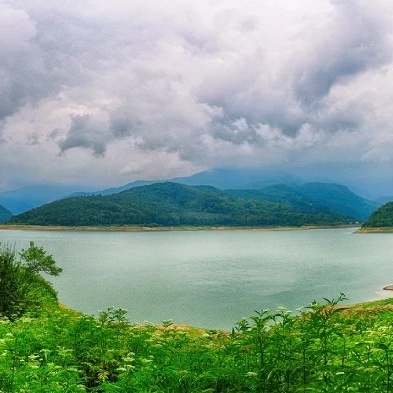
SAEDNEWS: About 50 years ago, Mr. Najafi discovered this cave. In 1998, village elders reported it to officials as the legendary “Hell Cave” on Eshqabad’s outskirts, which no one dared to approach.
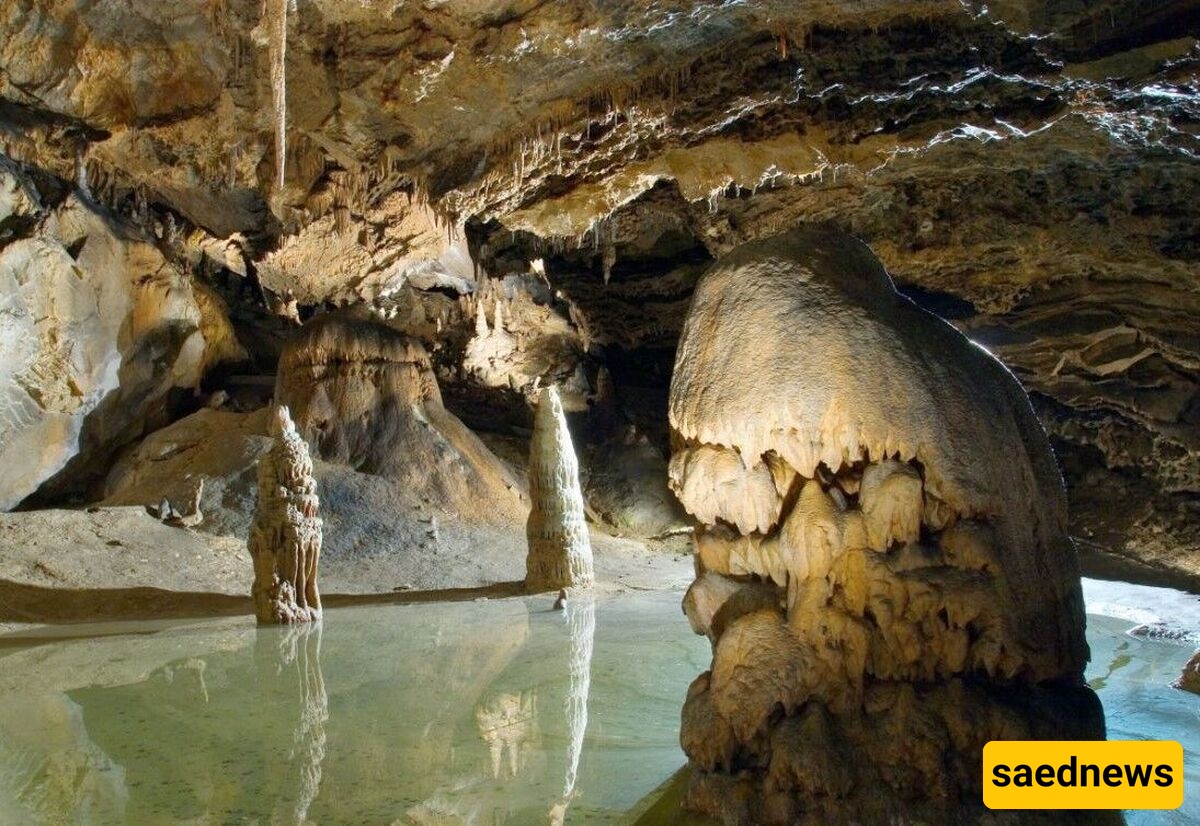
According to Saed News’ Tourism Service, citing Fararu, the Hell Cave of Bardaskan is a historic cave dating back 50 million years, featuring breathtaking natural sights. This article introduces you to this extraordinary cave.
The Hell Cave of Bardaskan is an ancient cave located near Eshqabad in Bardaskan and Tabas. Its name comes from the warmth inside the cave, not from any frightening appearance. Inside, the cave is stunning and full of visual wonders.
Dr. Ariamnesh, a geology PhD and university professor, estimates the cave’s age at around 50 million years. The large, beautiful stalactites and stalagmites inside are undoubtedly several hundred years old, captivating every visitor’s gaze.
The cave is located 195 kilometers from Tabas and 85 kilometers from Eshqabad, Bardaskan, in the Kuh Yekhab rural district. It sits north of the Sefid Tappeh Taq Mountain, part of the Dastgerdan district in Tabas County, South Khorasan Province, about 15 kilometers from the Eshqabad-Bardaskan road.
To reach the cave, visitors must travel 40 kilometers along a dirt road from the village of Tah Taq.
About 50 years ago, Mr. Najafi discovered the cave. Locals initially avoided it due to its unknown and intimidating reputation. In 1998, two village elders reported to the regional Water and Wastewater Department that a mysterious cave, known as the Hell Cave, existed near Eshqabad and that no one dared approach it.
A team of ten local officials, led by Mr. Rostami, the Dastgerdan district chief, entered the cave for the first time, equipped with the necessary gear to explore and study it.
Hell Cave is essentially a vertical cave, 50 meters deep and 350 meters long. Until recently, few dared to enter this 50-meter shaft. Proper climbing and caving equipment, including a 30-meter rope, are essential for exploration.
The marble stalactites inside create one of the most spectacular natural scenes, reminiscent at first glance of the Ali Sadr Cave in Hamedan. The cave has four openings, ongoing chemical activity, and is considered one of Iran’s active limestone caves.
During an exploratory visit in 2008, a water reservoir measuring 6 by 2 meters was observed inside the cave. Despite recent droughts, the final pool still retains water, which reaches 20–40 centimeters in depth by late November.
Remains of various animals—including goats, dogs, hyenas, and snakes—have been discovered inside, covered with a layer of calcite.
Visitors can also see white cauliflower formations, needle-like “blow” stalactites, flowstones, small draperies, and spongy textures, making the cave a visual treasure for geology enthusiasts.
In 2015, marble extraction caused damage to the cave’s entrance, sparking public outcry among environmentalists. Although the Hell Cave is registered as a valuable natural site by the Iranian Cave Society, it does not have recognized archaeological or residential significance, and mining restrictions could not be formally enforced.
Following persistent environmental advocacy, mining was banned within a one-kilometer radius of the cave entrance. Despite this, permits for manganese and marble extraction nearby led to a violation in which a miner destroyed the cave entrance entirely.