SAEDNEWS: Viburnum lentago (known as “Badagh” in Persian) is a deciduous shrub belonging to the Adoxaceae family. It is native to northeastern North America and southern Canada.
According to Saednews, Family: Adoxaceae
Native range: Temperate regions
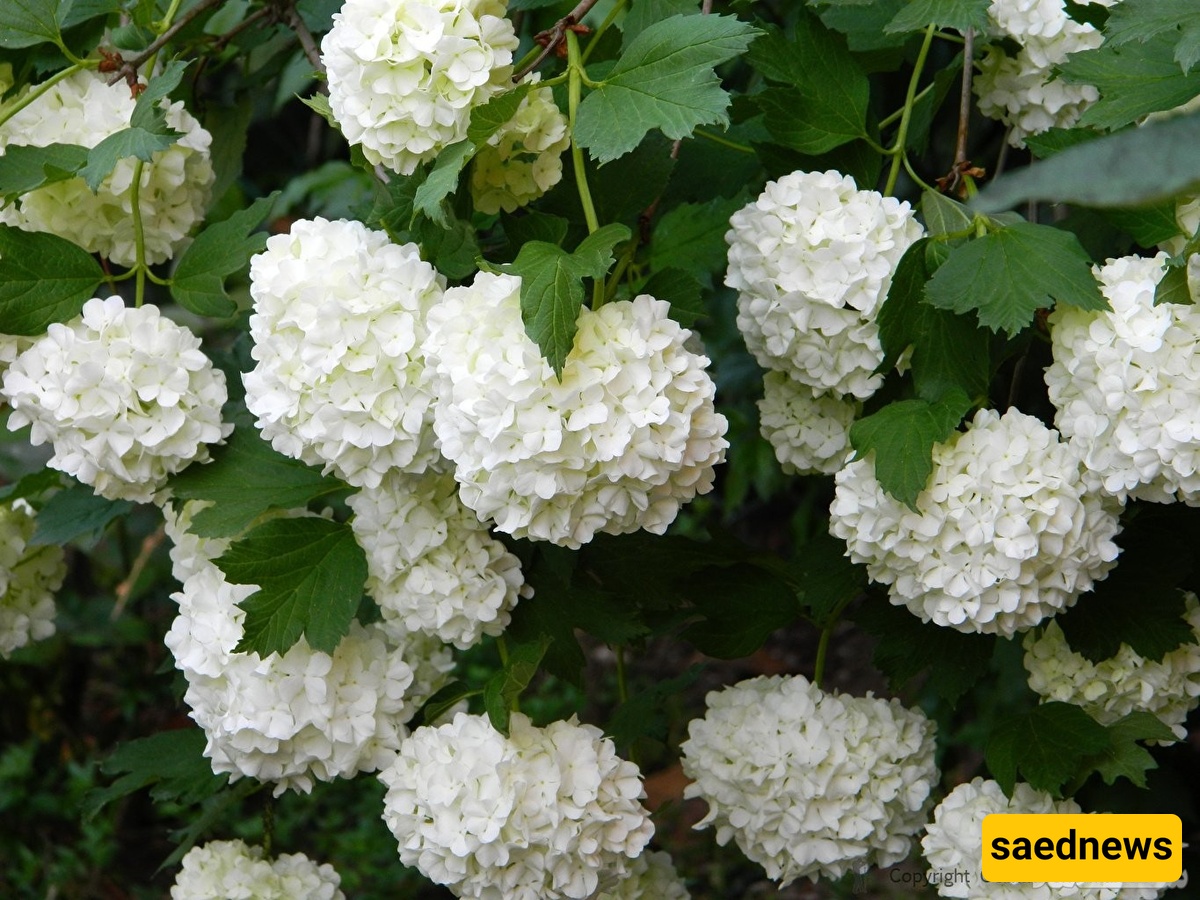
Viburnum is a fast-growing shrub valued for its attractive foliage, beautiful flowers, and edible fruits. It is widely used in gardens, especially as a hedge plant.
Its leaves are typically three-lobed, about 5–10 cm in length and width, resembling maple leaves. In autumn, the foliage turns red or orange, adding seasonal ornamental value.
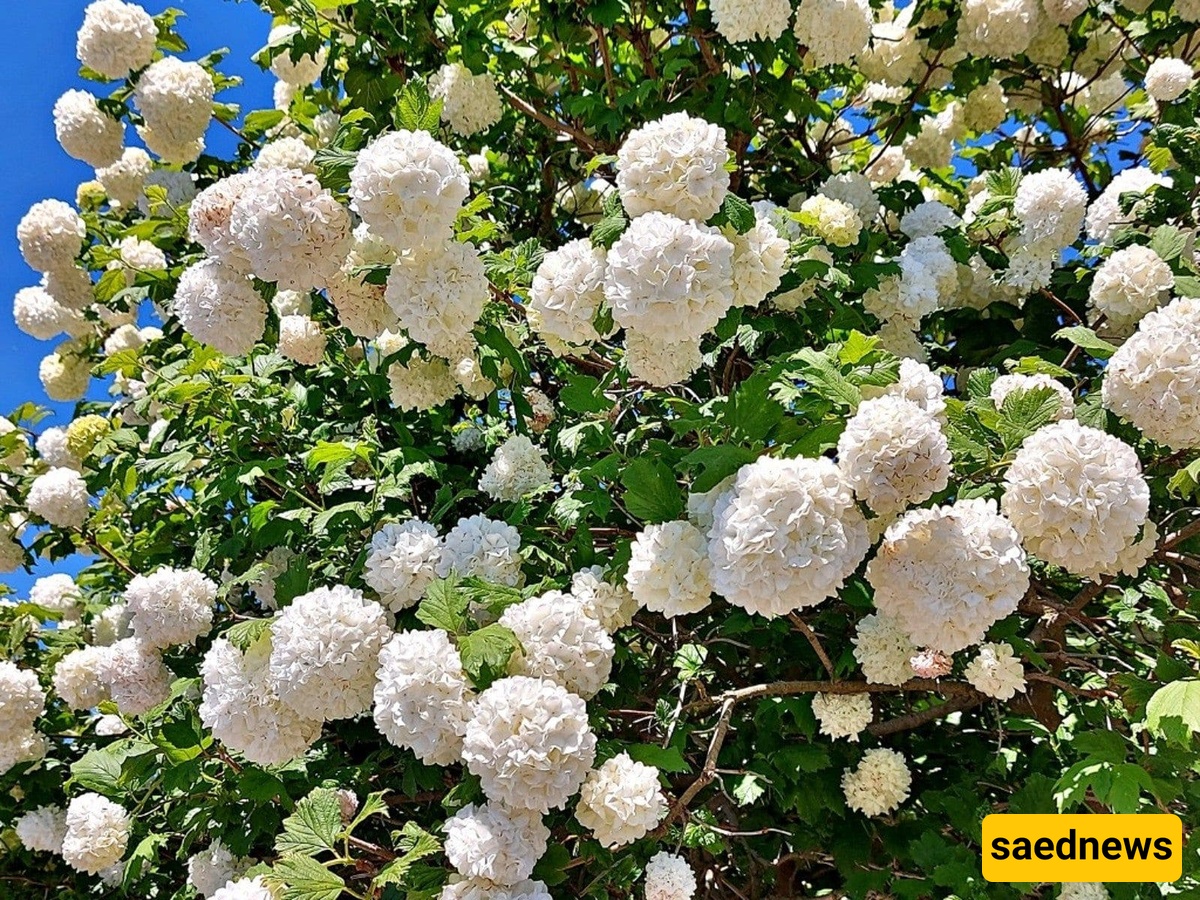
The flowers appear in spherical clusters. They are initially pale green and gradually turn white. Fertile flowers are located in the central part of the cluster and are smaller, while larger peripheral flowers are sterile. The flowering season is spring.
The plant also produces round, red, edible fruits that are visually appealing. Viburnum is a relatively large shrub with moderate growth speed and good resistance to cold and air pollution, making it suitable for urban planting. It has an upright, multi-stemmed growth habit with a rounded crown. The bark is initially green, later turning red-brown. When the stem is broken, it emits an unpleasant odor.
Viburnum performs best with regular and consistent watering, especially during hot periods. Irrigation should be done when the soil surface becomes nearly dry. Although the plant can tolerate moist soils, constantly waterlogged conditions cause leaf yellowing, leaf drop, and overall decline.
On the other hand, drought stress—especially in young plants or during hot, sunny conditions—can lead to leaf tip burn, drying, and wilting.
Viburnum can be grown in full sun to partial shade (at least 4–5 hours of direct sunlight daily). Excessive shade reduces flowering, produces smaller blooms, and causes elongated, weak stems.
This shrub can grow in a wide range of soils, but good drainage is essential. Suitable soil types include sandy, loamy, moist, and well-drained soils.
Applying mulch helps retain soil moisture and keeps roots cool during summer.
At the beginning of spring, a 5–7 cm layer of compost or leaf mold can be spread over the soil surface to gradually nourish the plant. Viburnum generally does not require heavy fertilization, and organic matter is usually sufficient.
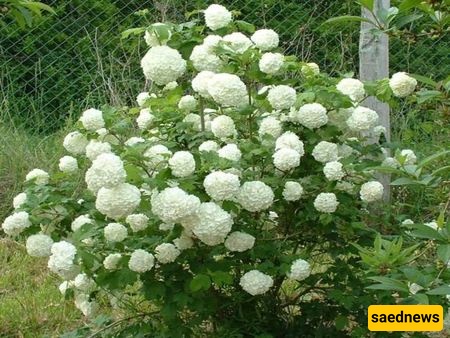
Viburnum is a deciduous plant and can tolerate winter cold down to approximately -34°C during dormancy. During the growing season, the optimal temperature range is 20–30°C. In regions with hot summers, it is best planted in partial shade to reduce stress from intense afternoon heat.
In spring and after flowering, balanced fertilizers can be applied. In late winter, calcium and phosphorus fertilizers may also be used.
Pruning is done to control plant size and improve airflow within the shrub. The best time for pruning is after the flowering period. Very old stems can be cut close to the ground, while overly long or crowded young stems should be shortened to maintain shape and structure.
One of the most common propagation methods is softwood cuttings taken from current-season growth in late spring or early summer. Cuttings are about 12–15 cm long, with lower leaves removed from half of the stem.
Wounding the lower stem slightly can enhance root formation. Suitable rooting media include sand + leaf mold or peat moss + perlite. Cuttings should be inserted so that at least one-third of their length is buried.
The pot should be placed in a bright location away from direct sunlight. Covering with a transparent plastic bag helps maintain humidity. Rooting typically takes 6–8 weeks.
Layering can be done in spring using a young lower branch. A small 2 cm wound is made on the section that will be buried. The branch is then placed 15–20 cm into the soil, leaving the tip above ground.
The soil should remain lightly moist. Rooting takes about 8 weeks, after which the new plant can be separated from the parent.
Seed propagation is possible but slow, taking up to 18 months due to specific temperature requirements.
Fruits are collected in early autumn, and seeds are extracted by removing the pulp and washing them. Seeds may be soaked to soften the fruit tissue if needed, then dried at room temperature for 1–6 weeks.
Seeds are planted about 5 cm deep in a mixture of peat moss + sand or leaf soil + sand. They require warm conditions (20–30°C) for 2–3 months, followed by a cold period to stimulate germination. After this process, seeds are moved to around 20°C with light and moisture, and germination occurs within 3–6 months.