SAEDNEWS: The Maya civilization, one of the most advanced and mysterious of the ancient world, thrived thousands of years ago in parts of modern Mexico, Guatemala, and El Salvador, building vast cities, grand pyramids, and remarkable archaeological sites.
According to the Science and Technology Service of Saed News, the Maya civilization has long been admired for its extraordinary achievements in astronomy, mathematics, precise calendar-making (including highly accurate solar year calculations), complex surgery, herbal medicine, and advanced anatomical knowledge. Recent discoveries, such as possible astronomical instruments in Tikal or the use of the golden ratio in Palenque architecture, attest to the independent and creative genius of this people, who achieved high scientific levels thousands of years ago without relying on external technologies.
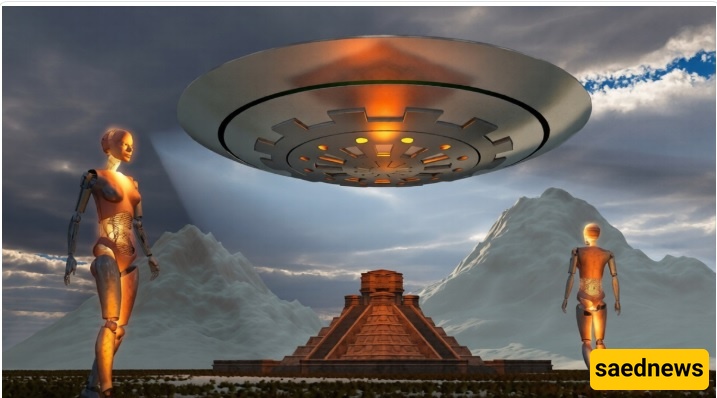
However, some theorists, most notably Erich von Däniken, author of the famous book Chariots of the Gods, claim that such advancements could not have been the product of human effort alone and must have involved extraterrestrial beings. He argues that the Maya gods were actually advanced visitors from space who taught the Maya astronomy, mathematics, and technology. Von Däniken interprets Maya inscriptions and reliefs, such as the sarcophagus lid of King Pakal in Palenque, as evidence of ancient astronauts piloting spacecraft. Citing these images and the scientific sophistication of the Maya, he suggests that contact with aliens explains their knowledge, and reading his works can profoundly alter one’s perspective on human history.
Despite the popularity of these theories among the public and shows like Ancient Aliens, archaeologists and Maya specialists reject such claims. They emphasize that these interpretations are based on misunderstandings of Maya religious symbolism—such as the World Tree, journeys to the underworld, and mythological imagery—and that there is no credible scientific evidence of extraterrestrial involvement. In reality, the Maya’s achievements reflect the intelligence, creativity, and accumulated knowledge of generations who carefully observed the sky, used a vigesimal (base-20) number system, and worked with simple stone tools.
Ultimately, the Maya legacy endures not only in their monumental architecture and precise calendars but also in their cultural resilience, sustainable environmental management, and the preservation of identity even after the collapse of their classical civilization and colonial incursions—lessons that remain valuable for modern society.