SAEDNEWS: Closing the Strait of Hormuz Has Brought Iran Significant Financial Gains
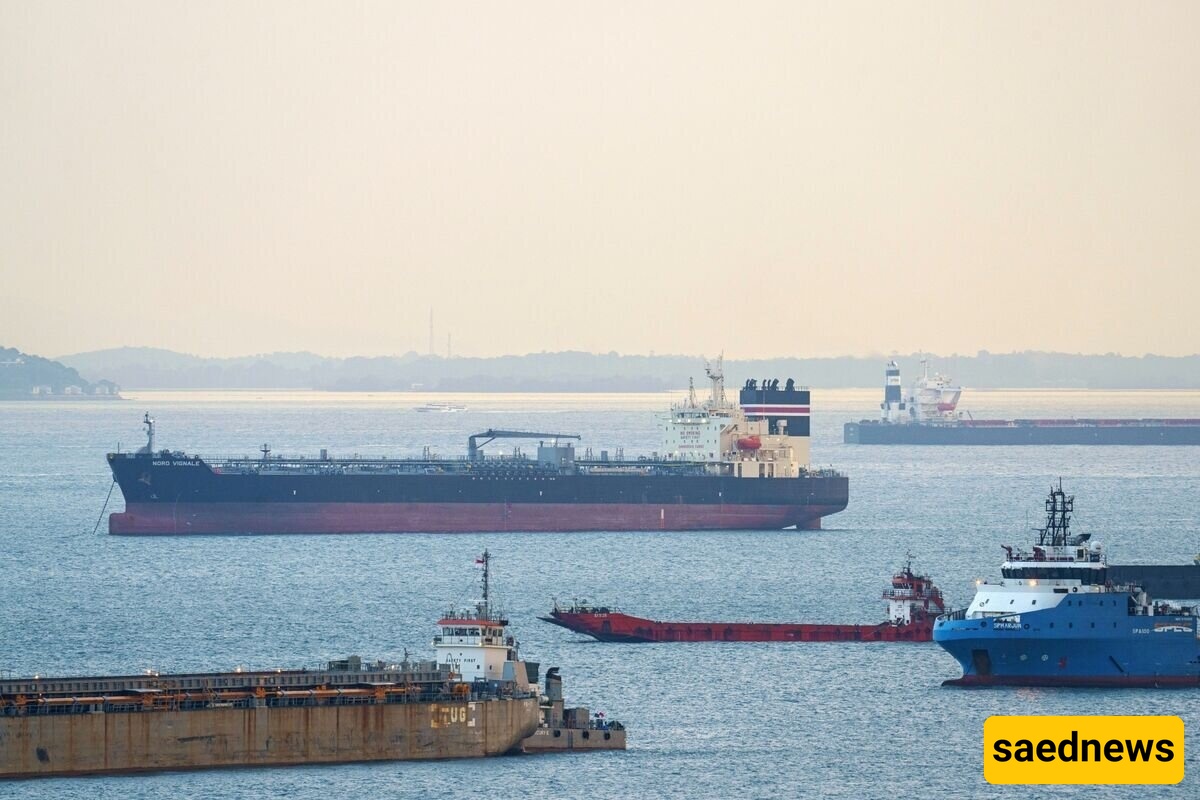
According to the political news service of SaedNews, Hamshahri Daily reports that reviewing developments following March 9, 2026, at both regional and international levels shows the emergence of new pathways for revenue generation and war damage compensation. International media and analysts in recent months have repeatedly pointed to these developments, and some experts have even emphasized that the recent conflict may have generated around $20 billion in “additional revenue” for Iran only from oil sales.
American author and journalist Thomas Friedman stated:
When Tehran announces that passage through Hormuz is subject to new standards, it is essentially telling Washington and Brussels that the era of “maritime guardianship” is over. They have shifted the world’s economic veto power from Wall Street to the rocky shores of the Persian Gulf.
American analyst and CNN host Fareed Zakaria said:
The Strait of Hormuz is not completely closed; it remains open for Iranian oil. The ultimate result of the war so far is that Iran now earns about twice as much daily revenue from oil sales compared to the pre-war period.
The journal Foreign Affairs reported that Iran’s $80 billion revenue from the Strait of Hormuz is a cost the West must pay.
London-based financial institution Lloyd's of London stated that Iran has effectively created a secure shipping corridor through its territorial waters in the Strait of Hormuz, allowing vetted vessels to pass in exchange for inspections. In at least one case, a ship reportedly paid Iran $2 million in transit fees.
The Financial Times reported that Iran plans to charge $1 per barrel of oil passing through Hormuz, payable in cryptocurrency (Bitcoin).
Iranian MP Mohsen Zangeneh stated that the 2026 budget was based on oil at $54 per barrel, but current revenues exceed $90 per barrel.
A source in the Ministry of Oil told media (May 2026) that despite wartime conditions, not only has national oil revenue increased, but oil is being sold at double previous prices.
The Economist reported that Iran is now earning nearly twice its previous daily oil income since the start of the war.
The business magazine Bloomberg reported (April 2026) that Iranian oil traded above Brent crude for the first time since May 2022, signaling a major structural shift in the oil market.
The CNN reported that Iran’s oil exports increased from around 1 million barrels per day to 1.7 million barrels, with prices exceeding $100 per barrel.
Research firm Kepler (March 2026) reported exports reaching 3.8 million barrels per day, the highest level in years.
Investment bank JPMorgan Chase estimated Iran is exporting 2.4–2.8 million barrels per day at significantly higher prices despite war and sanctions.
India’s Oil and Gas Ministry (April 2026) confirmed that Indian refineries are sourcing crude oil from Iran with no payment barriers.
The Wall Street Journal reported that Iranian oil is being shipped to China, with Chinese firms building infrastructure in return.
Al Jazeera stated that China instructed its companies not to comply with U.S. sanctions on five Chinese refineries allegedly handling Iranian oil, and has begun countering extraterritorial sanctions.
Israeli media outlet Ynet reported Iranian Caspian Sea ports operating around the clock to bypass sanctions.
The New York Times stated that the Caspian Sea has become a sanctions-avoidance route beyond U.S. reach.
The Guardian reported that Iran’s economic position has strengthened in some dimensions, while the U.S. administration faces growing challenges.
The New York Times stated Iran is using the Strait of Hormuz as leverage to raise global energy prices.
CNN reported that rising gasoline prices in the United States are a direct consequence of the conflict, increasing pressure on American consumers.
Foreign Affairs argued that Iran has developed a “physical blockade weapon,” capable of disrupting up to 20% of global oil and gas flows through Hormuz.
Bloomberg also noted that control over Hormuz gives Iran significant leverage over global maritime trade.
Deutsche Bank warned that the long-term legacy of the conflict could test the foundations of the petrodollar system.
The International Affairs Forum stated that Iran’s shift toward using the Chinese yuan challenges U.S. financial dominance.
Modern Diplomacy reported that increased use of the yuan could accelerate the emergence of a “petroyuan” system.
Bloomberg also noted rising oil payments in yuan as part of this shift.
Reuters reported that India received its first shipment of Iranian oil in seven years and settled payments in yuan.
Bloomberg confirmed that India resumed oil imports from Iran at prices around $100 per barrel.
CNBC reported that India’s renewed imports reflect efforts to rebalance relations with Tehran.