SAEDNEWS: Archaeologists in Mexico City have discovered a stone box at an Aztec temple containing 15 green stone figurines and other artifacts. The figures are believed to be around 1,000 years old at the time they were buried.
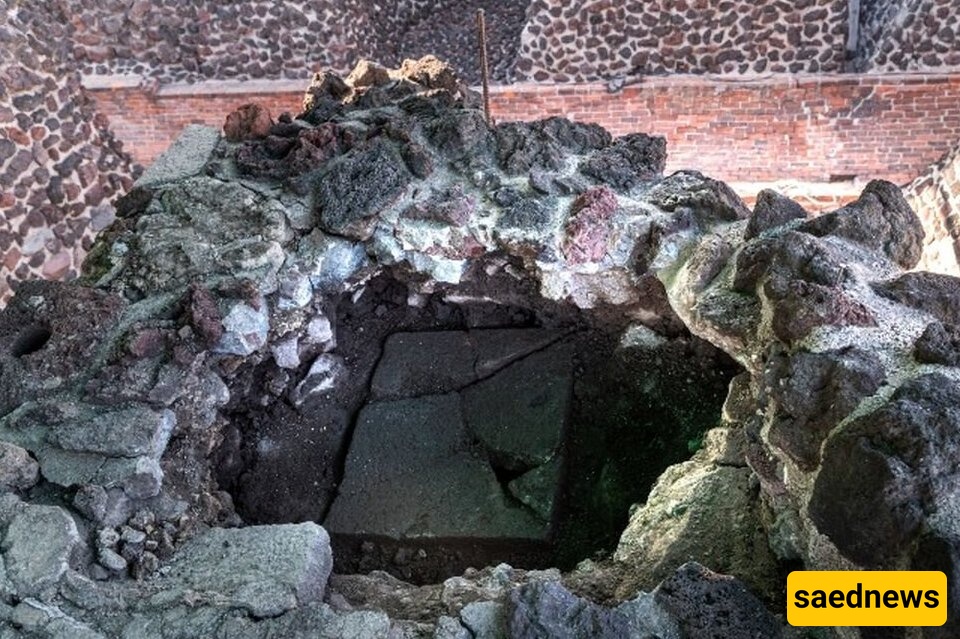
According to Saed News Agency, citing Fararu, Moctezuma Ilhuicamina—also known as Moctezuma I—was the fifth ruler of Tenochtitlan, governing the Aztec Empire between 1440 and 1469 CE. Recently, several burial objects were discovered in a sacred area of the ancient city of Tenochtitlan in Mexico. These artifacts were buried during Moctezuma’s reign and reflect the wealth and prosperity of the city in that period.
These findings were uncovered at the main historical temple of Tenochtitlan, a site now located in the center of modern-day Mexico City. Archaeologists from the National Institute of Anthropology and History discovered the artifacts just a few centimeters beneath the ground.
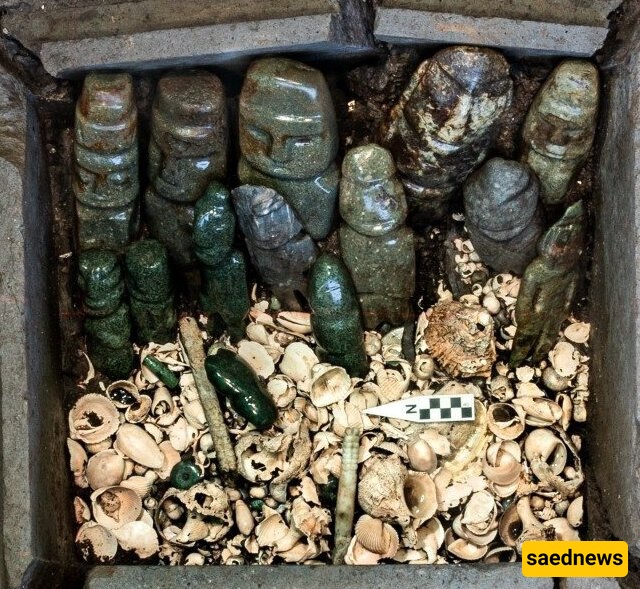
The most significant discovery is a stone offering box containing 15 small human figurines. Fourteen of these sculptures represent male figures, while one depicts a female.
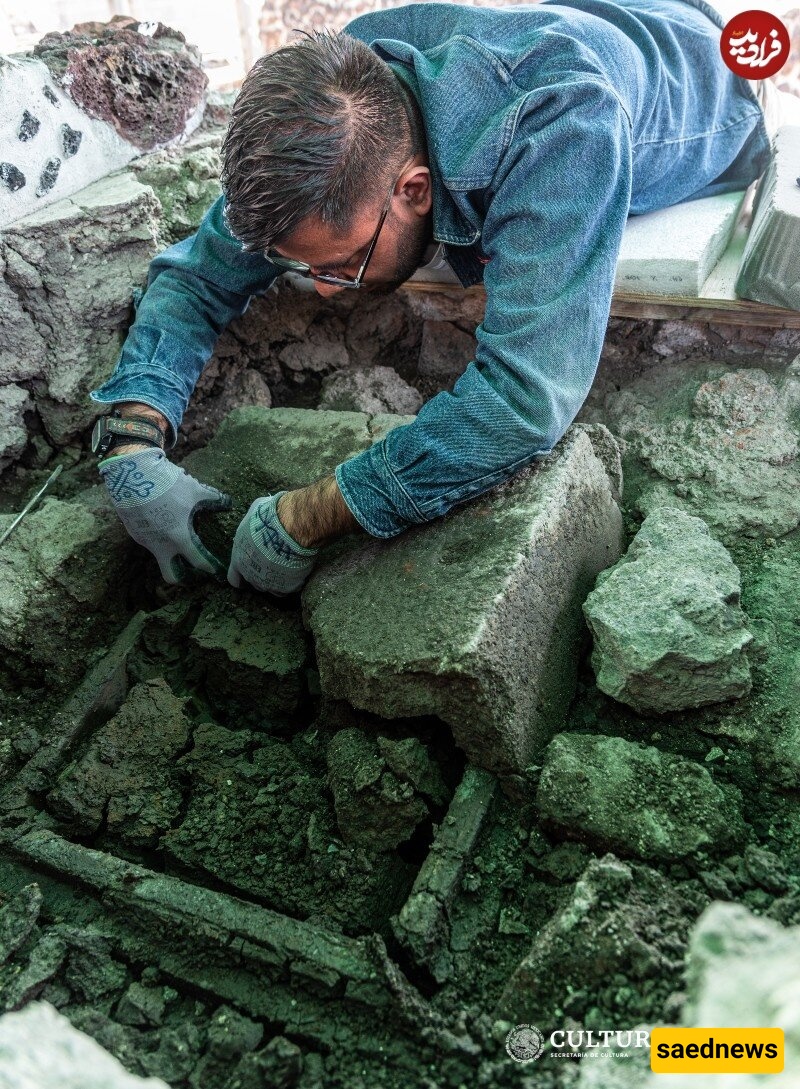
According to Alejandro Molina, a member of the excavation team, the figurines were carved from green metamorphic stone. The largest figure is 30 centimeters tall, while the smallest measures only 3 centimeters.
Interestingly, these figurines originally belonged to the Mazcala culture, which was later brought under Aztec rule. Such artifacts were typically produced between 400 and 1200 CE by the Mazcala people. This suggests that by the time they were buried, some of these objects may have already been up to 1,000 years old. The Aztecs likely acquired them as spoils and later used them as burial offerings.
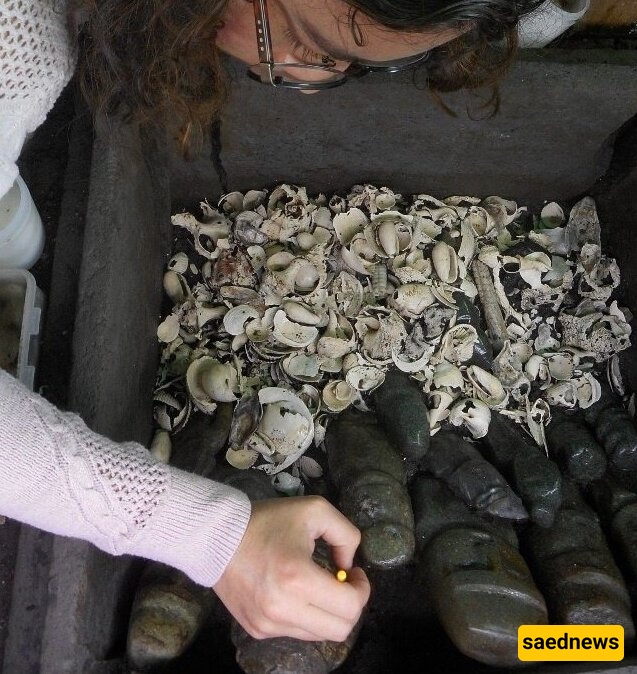
Among the finds were also two long rattlesnake-shaped earrings embedded among shells.
Some of the figurines still bear traces of paint on their faces, suggesting that they may represent Tlaloc, the god of rain.
In addition to the figurines, the stone box contained two rattlesnake-like earrings, 137 green stone beads, some beach sand, and numerous shells and pieces of coral.
Such stone boxes were commonly used in ancient Mexican households to store valuable items such as fine feathers, jewelry, or ceremonial garments. It is also possible that priests kept representations of deities inside them for ritual purposes.