SAEDNEWS: Reports have revealed a new path for handling Benjamin Netanyahu’s corruption case—one that relies on advancing a negotiated settlement rather than a “presidential pardon.” The proposed agreement would, in legal terms, bring his political career to an end with what is described as a “moral stain.”
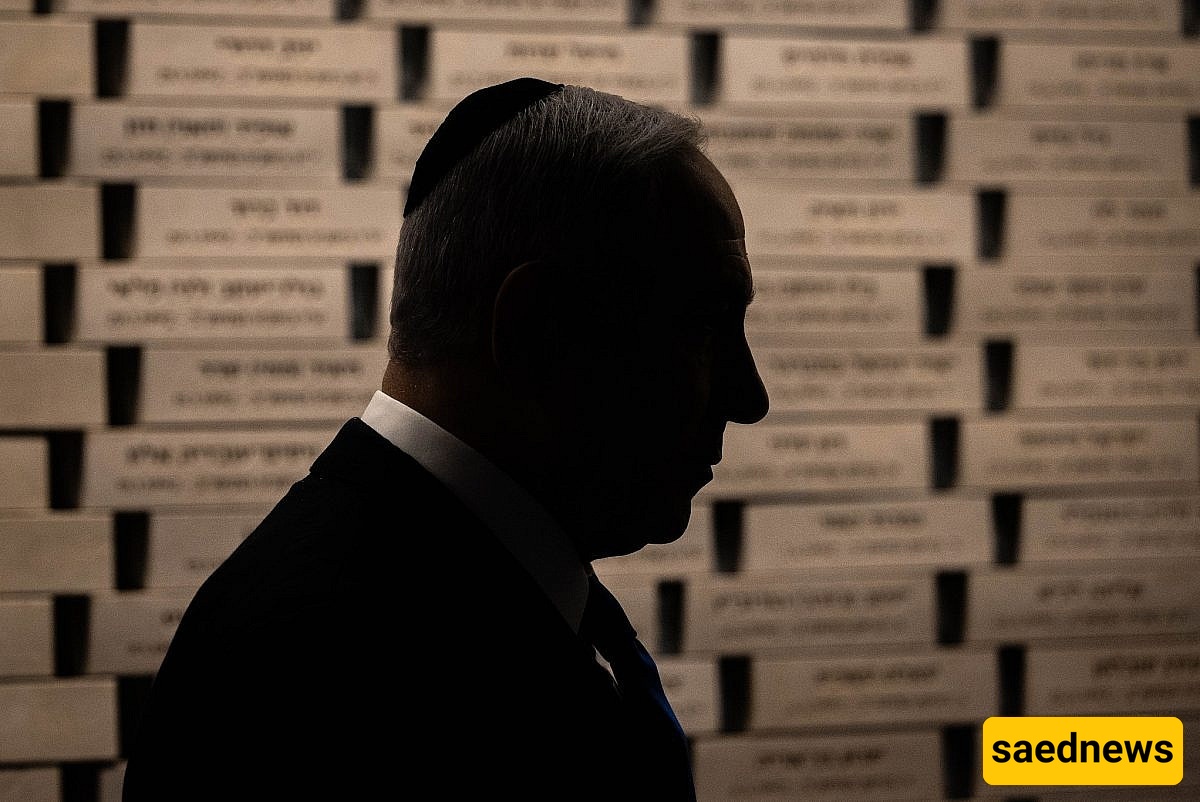
According to the political news service of the SaedNews analytical website, and based on a report by the Hebrew-language website “Walla,” this initiative is said to have the support of Isaac Herzog, the president of Israel.
Herzog reportedly believes that reaching an agreement between the parties would be a “suitable solution,” especially if full use is made of all settlement mechanisms before a pardon request is considered.
Sources familiar with the matter say that the idea of “criminal mediation” had been raised previously but did not progress due to opposition from the Attorney General’s Office. However, it has recently resurfaced in judicial circles and within the presidential institution of Israel.
Available information suggests that the issue is not merely theoretical. Even the names of several potential judges who could oversee the mediation process have been discussed, provided they are accepted by all parties involved.
The process is expected to proceed informally and in parallel with the ongoing court proceedings. Under this arrangement, an independent judge would be appointed to help bring the positions of the prosecution and the defense closer together.
Time is considered the most significant challenge to this option, as criminal mediation requires a detailed and comprehensive review of the case from the beginning, which could take a long time. In addition, the positions of legal bodies—including the current government legal advisor and their potential successor—remain cautious and skeptical about this approach.
At the same time, it is expected that court testimony sessions and the interrogation of Benjamin Netanyahu will conclude within the coming weeks. This could reduce the practical need for a pardon request, as the time pressure caused by a prolonged trial would diminish. In contrast, a “plea bargain” option remains on the table and, according to leaked information, may include a reduced admission of guilt without a prison sentence, in exchange for Netanyahu’s withdrawal from political life.
In an official response, Herzog’s office emphasized that “reaching an agreement between the parties in Netanyahu’s cases is a suitable and proper solution.” The office also stated that negotiations between the parties are “an essential part” of efforts to reach an agreement and that “this path should be fully pursued before a pardon request is considered.”
If a plea agreement is reached between Netanyahu and the prosecution, one of the most prominent scenarios being discussed is his exit from political life.
Under this path, he would be required to fully withdraw from politics; otherwise, he could face a legal designation referred to as “moral turpitude.” Legally, this classification would bar him from running for the Knesset for a period that could last up to seven years, effectively ending his political career—at least in the medium term—and removing him from direct electoral competition.
In criminal terms, such agreements are typically designed to avoid imprisonment, instead relying on lighter penalties such as fines or suspended sentences. This option is generally seen as a middle ground between accepting legal responsibility and avoiding the consequences of jailing a prominent political figure. As a result, Netanyahu’s future in this scenario would depend less on imprisonment and more on his withdrawal from political life.