Saed News: The egg chooses, and this changes everything we thought we knew about fertilization.
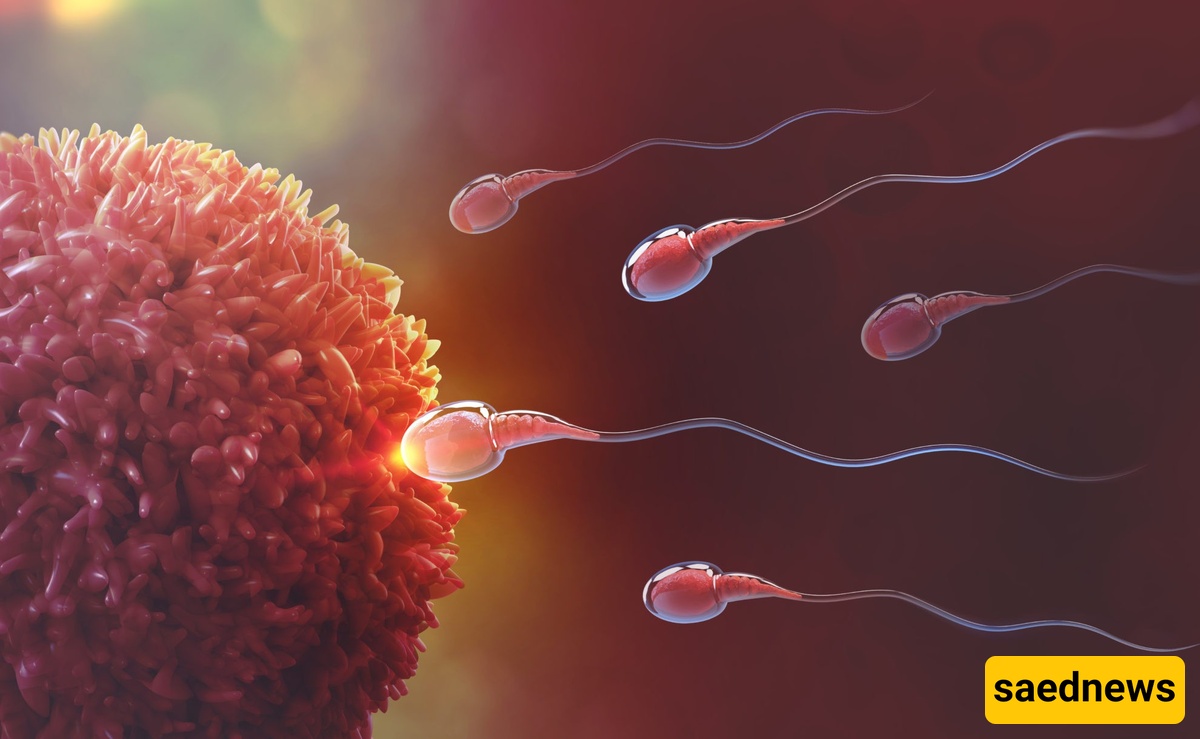
According to SAEDNEWS, for a long time, the dominant narrative was essentially a passive one: millions of sperm race toward the egg; the fastest and strongest one wins; fertilization occurs; and the egg simply waits.
But a study from Stockholm University completely transformed this picture. Researchers found that the egg actively controls which sperm it attracts through chemical signals called “chemoattractants” — fluids released by the egg that guide sperm toward it. And the crucial point is that different eggs release different chemical signals that attract different sperm. The egg does not simply sit there; it chooses.
Even more astonishing is that the egg can ignore the first sperm that arrives. If the chemical compatibility is not suitable, the egg simply does not show the reaction necessary to complete fertilization. Instead, another sperm whose chemical profile better matches the egg’s signals may be preferred, regardless of when it arrives.
This finding has profound implications for reproductive biology. It suggests that fertilization is not merely a competition of speed and strength, but a process of compatibility; a biochemical dialogue between egg and sperm that influences which genetic combinations get a chance at life.
Scientists believe this mechanism may play a role in reproductive success between partners and may possibly explain why some couples conceive easily together, while they may have difficulties with others.
The sperm race is real, but the final vote belongs to the egg.
For a species that for centuries insisted reproduction was entirely driven by male contribution, discovering that the egg is an active and selective participant in its own fertilization is considered one of the quietest yet most revolutionary findings in modern biology.
Biology never stops rewriting what we assumed to be obvious.