Saed News: Japanese researchers, in their efforts, tried to solve the problem of producing sperm and eggs from completely unrelated cells in the body. In experiments on mice, they took adult skin cells and reprogrammed them into stem cells that could turn into any other cell type, and then succeeded in converting them into sperm or eggs.
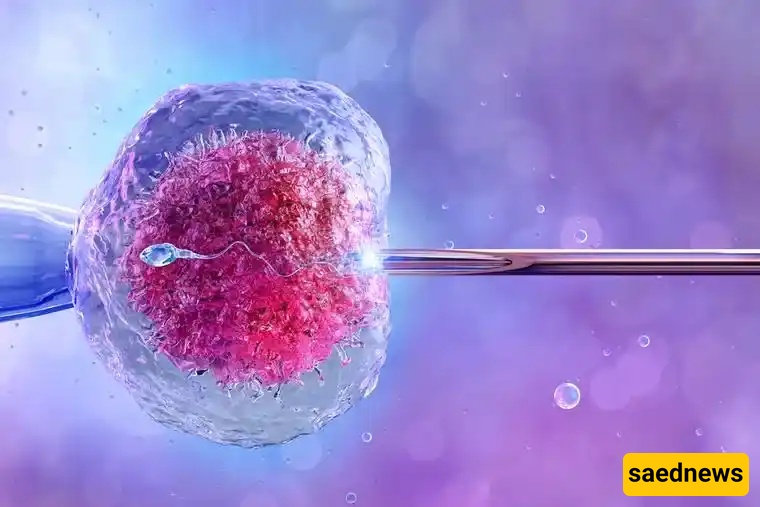
According to SAEDNEWS, and citing Sina Press:
Given the progress in this field, a high percentage of infertility cases are treatable, and couples can experience becoming parents. However, scientists have reached new findings suggesting that for creating a new life, sperm or eggs may no longer be necessary. New studies could create a major revolution in fertility and treat many infertility problems. The journal New Scientist has covered this topic in its latest issue.
Researchers at the University of Michigan recently made a surprising discovery in laboratory studies. They observed that the cells they were studying joined together and formed something similar to a human embryo. The idea that scientists may have taken the first step toward creating human life is astonishing. But this was not the first discovery. A year earlier, in 2017, Japanese researchers conducted studies that led to the birth of live baby mice. They did this using eggs derived from adult mouse skin cells.
Such discoveries bring us closer to treating previously unsolvable infertility and reproduction problems. Now, 40 years after the birth of the first test-tube baby, this discovery creates a major biological transformation that may help scientists create human babies. Imagine being able to create a child from a person’s skin cells, with or without their permission.
About 1.5% of all children born in Western Europe, North America, and Australia are created through IVF (in vitro fertilization). Therefore, creating life outside the body is considered relatively normal. However, it remains unpredictable. Scientists still do not know why some embryos fail to implant after IVF or natural fertilization, while others continue to develop.
In IVF, sperm and eggs from fertile parents are used with the hope of pregnancy. Japanese researchers attempted to solve the problem of producing sperm and eggs from completely unrelated body cells. In their mouse studies, they took adult skin cells, reprogrammed them into stem cells capable of becoming any cell type, and then converted them into sperm or eggs. In 2016, they reported successfully fertilizing some of these eggs with sperm from normal mice and implanting embryos into the uterus. In this experiment, 8 live baby mice were born.
One year later, researchers performed the same process using laboratory-produced sperm. These studies could greatly increase the potential for treating infertility, but efforts to produce human sperm and eggs in the laboratory have so far only resulted in early precursor cells. For example, researchers at the University of Cambridge announced in late 2017 that they intended to grow early stem cells into the basic materials for sperm and eggs within four weeks.
There is also hope that if such sperm or eggs are implanted in the body, fertilized eggs may mature and help infertile individuals conceive. Promising results were also reported by scientists at the University of Edinburgh in early this year. They cultured mature human eggs derived from stem cells found in ovaries in laboratory conditions. This method may also help women with cancer who become infertile due to chemotherapy.
If producing sperm and eggs from skin cells in a lab becomes possible, people in wealthy societies with strong healthcare systems might prefer this method over sexual reproduction. In the future, parents may meet at fertility clinics where small skin samples are taken to produce stem cells and grow sperm and eggs.
After genetic screening, parents would select fertilized eggs for implantation into the uterus. This would eliminate the painful and invasive process of egg retrieval in IVF. Men and women who cannot produce sperm or eggs could have genetically related children. These screenings could also reduce the risk of genetic diseases.