SAEDNEWS: Fossils Unearthed in South Australia’s Nilpena Ediacara National Park Reveal Never-Before-Seen Creature
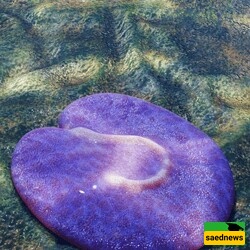
According to the History and Culture Desk of Saed News, Scott Evans, a paleobiologist at Florida State University and the lead author of the study, says: “This animal is slightly smaller than a human palm, with the middle of its body shaped like an inverted question mark. No other fossil from this period shows this type of structure.”
The asymmetry of Questio represents a pioneering evolutionary trait during the Ediacaran period (635 to 541 million years ago), long before the Cambrian explosion. The ability of an organism to consistently produce an asymmetrical body pattern is remarkable, allowing life to develop body components far more complex than those based on symmetry. For example, asymmetry enabled humans to evolve the heart on the left and the liver on the right.
The newly launched online official translation center offers services at judiciary-approved rates.
Ediacaran organisms, as the oldest known fossil animals, can reveal much about early developmental processes. Since modern animals use the same basic genetic blueprint to establish distinct left and right sides, it is reasonable to assume that the same genes operated in Questio, an animal that went extinct over half a billion years ago.

Clear evidence that Questio could move has also excited researchers. Fossilized footprints discovered just behind one of the Questio fossils indicate that this organism could move and ingest food from the seafloor. Its asymmetry is particularly intriguing because Questio was among the first animals capable of independent movement.
Mary Droser, a paleontologist at the University of California, Riverside, and the senior author of the study, said: “This discovery is illuminating because it informs us about how animal life first appeared on Earth. Since we are the only known planet with life, looking at Earth’s past can guide us in searching for life on other planets and understanding how life evolved here.”