Saed News: The film The Cycle was banned for three years, its negatives were destroyed, and its director was threatened with prosecution; however, years later the same film saved the lives of thousands of Iranians. This is the bitter paradox of censorship history during the Pahlavi era.
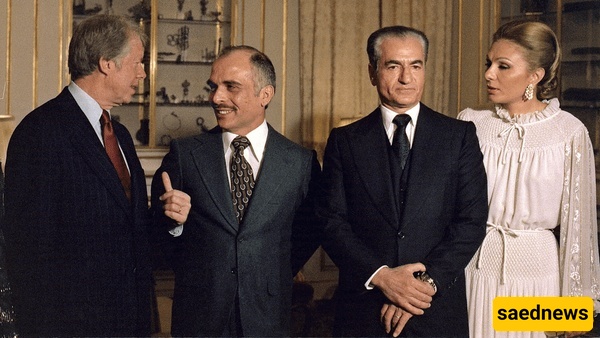
According to SAEDNEWS, citing Fars News Agency, “Mehrjui’s The Cycle was banned during the Pahlavi era but was released a few years later and had a significant impact on blood transfusion,” these are the words of Marzieh Boroumand on the day of Dariush Mehrjui’s funeral.
The history of culture sometimes resembles a film whose best scenes have been cut out; an incomplete narrative of reality. Today we know Dariush Mehrjui for masterpieces such as The Cow, The Tenants, and Hamoun, but few know that this director once faced censorship, removal, and even destruction of his works; to the extent that the film The Cycle was banned for three years and, during a private screening, provoked Mohammad Reza Pahlavi’s anger, who shouted: “They must be tried!”
This confrontation was not a temporary incident, but part of a broader pattern in dealing with artists. Even the film The Cow, now one of the pillars of Iranian cinema, was also banned during that period. In literature, Jalal Al-e-Ahmad faced a similar fate; his book Westoxication was confiscated and pulped before publication. These examples show that restrictions were not isolated cases but structural and widespread.
Iraj Rad, in a candid account of The Cycle, says that after years of banning, when Mehrjui intended to release the film, he was informed that almost all of his scenes had been removed and only a distant shot remained. Even the film negatives had been destroyed, making reconstruction impossible. At the same time, Marzieh Boroumand emphasizes that the film ultimately had an important social impact and contributed to the establishment of Iran’s blood transfusion organization; a clear paradox between suppression and influence.
These pressures were not limited to cinema; narratives from Dariush Eghbali and Siavash Ghomayshi also show that after the execution of Khosrow Golsorkhi, they were arrested and subjected to psychological pressure, including staged execution scenarios.
What emerges from these accounts is that stricter surveillance overshadowed all fields of art, culture, and sports during the Pahlavi era, to the extent that Abdullah Movahed fell out of favor simply for not kissing Mohammad Reza Pahlavi’s hand.