SAEDNEWS: Homemade cheese (sheep's milk) is one of the most popular dairy products worldwide, traditionally made from cow's or sheep's milk. While it might seem challenging at first, making cheese at home doesn’t require special equipment or complex steps—you just need to follow a few key tips to ensure a delicious result.
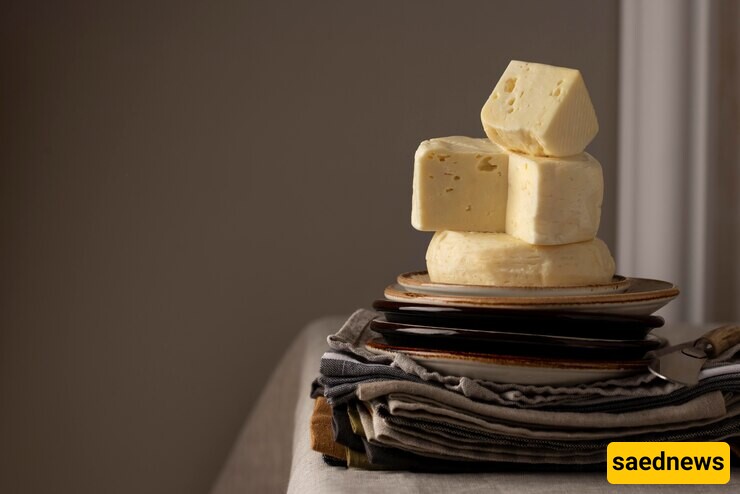
According to SAEDNEWS, Cheese is made by curdling milk, and this can be achieved using white vinegar or sour yogurt. We recommend using a combination of both: for every 1 kilogram of milk, add 1 tablespoon of vinegar and 3 tablespoons of sour yogurt. For the best quality cheese, use fresh local milk rather than pasteurized milk, as pasteurized milk does not produce high-quality cheese.
Below is a step-by-step guide for making homemade sheep's milk cheese:
Full-fat sheep's milk: 4 kg
Rennet: A pinch (tip of a teaspoon)
Salt: As needed
Lukewarm water: Half a glass
Warm the Milk:
Gently warm the milk until it’s lukewarm. It shouldn’t be too hot or too cold.
Prepare the Rennet:
Dissolve the rennet in lukewarm water and add it to the milk.
Stir briefly with a spoon, cover the pot with a lid, and wrap it with a blanket to keep it warm.
Let the Milk Curdle:
Allow the milk to rest for about 30 to 45 minutes.
Check if the milk has curdled and formed a solid mass.
Strain the Curd:
Once curdled, stir gently and pour the curds into a fine cheesecloth placed over a strainer.
Gather the edges of the cloth and press gently by hand to drain excess whey.
Press the Cheese:
Place a tray or flat surface on top of the wrapped cheese and add a heavy weight on top.
Let it sit until all the excess whey is drained and the cheese becomes firm and compact.
Cut and Salt the Cheese:
Once fully firm, cut the cheese into your preferred sizes (not too small).
Roll the pieces in coarse cheese salt. If specialty cheese salt isn't available, regular table salt can be used—just make sure to wipe off excess salt to prevent it from becoming overly salty.
Curing the Cheese:
Place the salted cheese in a clean jar or container and let it rest in its whey.
Allow the cheese to age for at least 1-2 months before consuming.
The longer the cheese sits in its whey, the richer and more flavorful it becomes.
Pro Tip: Some people even let their cheese age for up to 3 months for a deeper, more matured taste.