SAEDNEWS: Drawing is one of children's favorite hobbies. A child's ability to draw results from other skills such as vision and correctly holding a pencil. To find out how to recognize a child's talent through their drawings, stay with Saeed News.
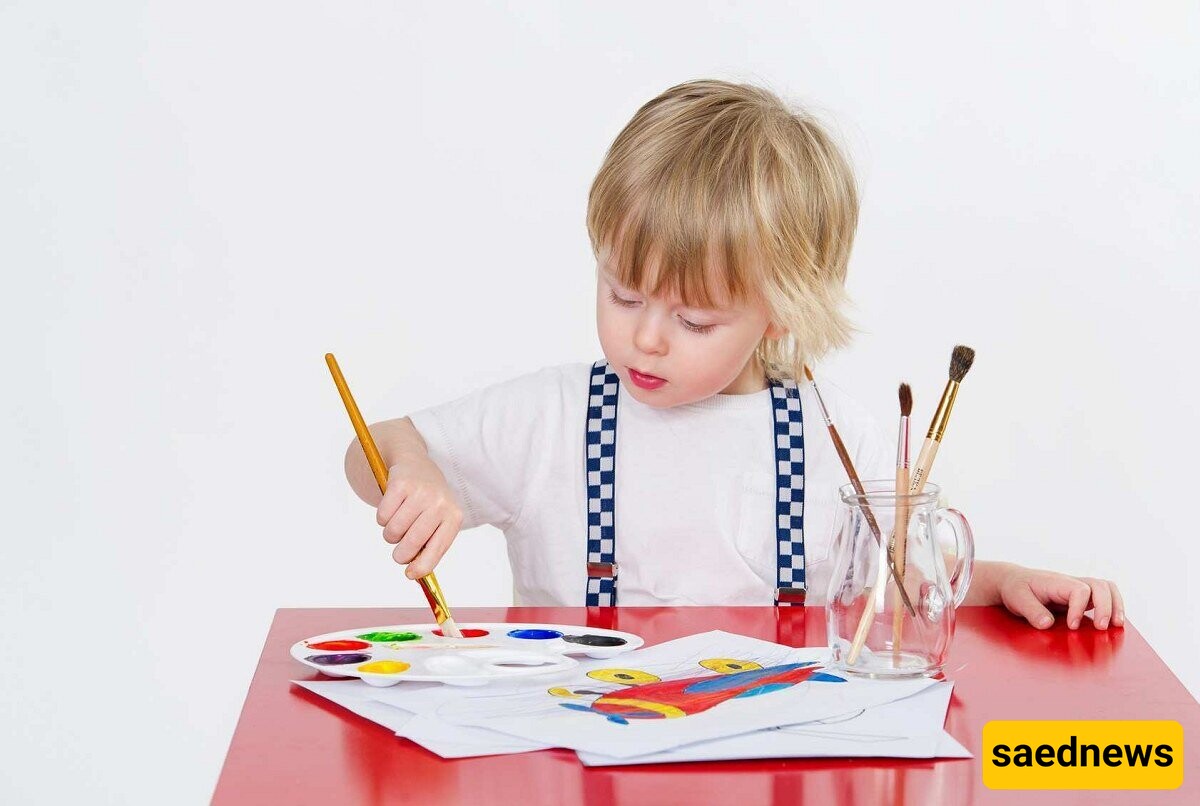
According to SAEDNEWS, It seems that children's drawing ability is influenced by both genetic and environmental factors. However, a child's ability to draw can also be an indicator of their intelligence in adulthood. Research has shown that children who score higher in drawing tests tend to have higher intelligence levels. Studies conducted on over 700 pairs of identical and non-identical twins have revealed that genes play a significant role in a child's drawing ability and future intelligence. In fact, a 4-year-old child's drawing can predict aspects of their life for the next 10 years.
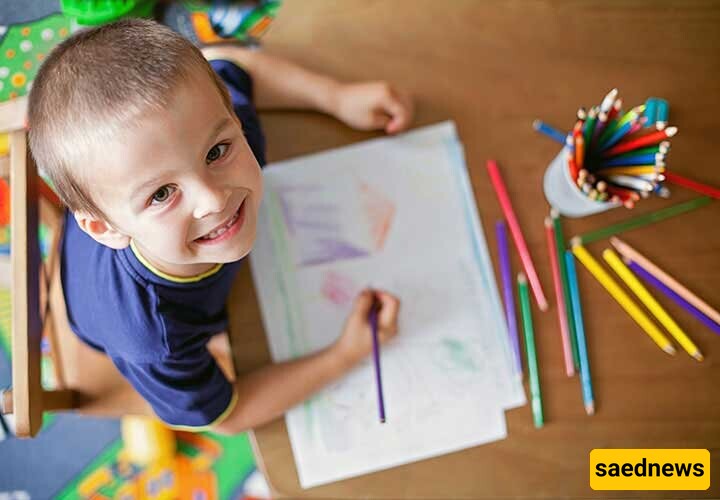
As we know, from a psychological perspective, drawing is a valuable tool for understanding a child and gaining insight into their inner world. A child's drawing reflects their inner world and worldview, indicating their level of stability, family dynamics, and their role within the family. It also illustrates their confidence level and reveals family behavior patterns and cultural influences. Even a child's scribbles have meaning and can indicate their level of creativity.
Children’s drawings vary greatly, and an excellent childhood drawing does not necessarily mean the child will have exceptional artistic talent in the future. It is essential to encourage children to draw freely and let them discuss their drawings openly.
The use of colors in a child’s drawing is highly significant, as it helps us understand their emotions and inner world. Psychologists believe that every element of a child’s drawing—colors, lines, and sizes—has a specific meaning. Below are some interpretations of colors in children's drawings:
Black and white: Represents fear, anxiety, despair, and sadness.
Brown: Indicates resistance against parental pressure regarding cleanliness.
Purple: Shows a tendency toward opposition and sometimes anxiety.
Blue: Represents introversion, peace, calmness, and submission.
Green: A color of nature that reflects a need for attention and a desire for social interaction.
Red: An energetic color, signifying extroversion.
Yellow: A color of happiness, indicating optimism and a willingness to engage with others.
Pink: Represents peace and a desire for balance in life and relationships.
Gray: A neutral color with no specific meaning in children's drawings.
Drawing serves as a tool for enhancing a child’s emotional, mental, and intellectual growth. There is no expectation for children to create perfect drawings. Art is an acquired skill that can be learned through good instruction, a supportive environment, and encouragement from parents. It does not necessarily require special talent.
All drawings have content (subject matter) and depth (underlying meaning), which is why child psychiatrists use drawings as a diagnostic tool. When interpreting a child's drawing, it is important to consider their circumstances and available resources. Before the age of seven, drawing and play should be unrestricted and free from formal instruction. It is best to give children broad, tangible subjects to help them express their emotions and excitement more easily.
Children start experimenting with drawing at around one year old by simply tapping a pen or pencil on paper. By 18 to 20 months, they begin to make lines. At age three, children start expressing their inner emotions through drawings. This marks the beginning of symbolic movement and imitation of real-life situations.
From ages five to six, children's attention and abilities improve, allowing them to depict the most important aspects of their lives based on their interests. This stage involves pattern recognition and replication of geometric shapes. From this point on, a child’s drawing can be used as a personality test and analyzed based on projection principles.
Drawing is a form of play that enables children to connect with the real world using paper and pencil. The details in a child's drawing can indicate their intelligence—children who include more details tend to be more intelligent. Smart children draw human figures with great attention to detail, carefully illustrating all body parts. Therefore, a child's drawing can serve as an indicator of their intelligence in adulthood.