SAEDNEWS: Men and women can both benefit from Kegel exercises. In women, many factors such as pregnancy, childbirth, aging, and excess weight can weaken the pelvic diaphragm. The pelvic diaphragm muscles protect the uterus, bladder, and intestines. If these muscles are weak, pelvic tissues may descend into the woman’s vagina.
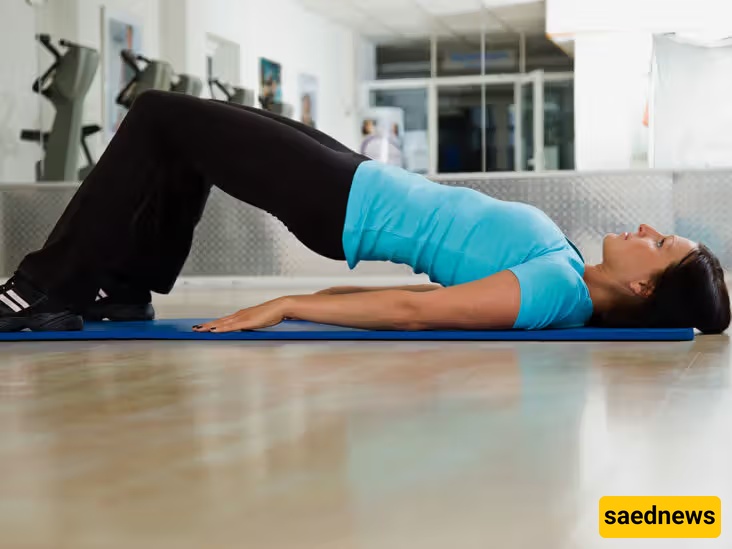
According to Saednews, Kegel exercises are a set of contraction and relaxation movements designed to strengthen the pelvic floor muscles. The pelvic floor refers to the area between the buttocks that supports the reproductive and urinary organs. These muscles and tissues form a supportive structure at the base of the pelvis. When the pelvic floor becomes weak, it can lead to various problems, including urinary and fecal incontinence.
One of the advantages of Kegel exercises is that once you learn how to perform them correctly, you can do them anytime and anywhere—whether standing in a bank line or sitting at a computer—to help strengthen your pelvic muscles.
Both men and women can benefit from Kegel exercises.
In women, factors such as pregnancy, childbirth, aging, and weight gain can weaken the pelvic floor muscles. These muscles support the uterus, bladder, and intestines. When weakened, pelvic organs may shift downward into the vagina, a condition that can be uncomfortable and may also cause urinary incontinence.
In men, aging can also weaken the pelvic floor muscles, leading to urinary or fecal incontinence, especially after prostate surgery.
At the beginning, some women may have difficulty locating these muscles. One method is to insert a clean finger into the vagina and try to contract the vaginal muscles around it.
Another method is to attempt to stop urination midstream. The muscles used to stop urine flow are the pelvic floor muscles. However, this should only be done for learning purposes. Doing it frequently or with a full bladder is not recommended, as it may increase the risk of urinary infections or incomplete bladder emptying.
If there is still uncertainty, a medical specialist can help. Devices such as vaginal cones or biofeedback techniques may be used to help identify and strengthen these muscles.

Men can also locate these muscles in several ways. One method is to insert a finger into the rectum and try to contract the surrounding muscles without tightening the abdomen, thighs, or buttocks.
Another way is to notice the muscles used when trying to hold in gas.
Stopping urine flow midstream can also help identify the correct muscles, but like in women, this should not be done regularly.
If needed, medical professionals can assist using biofeedback devices to help locate and train the pelvic floor muscles.

Before starting, it is recommended to empty the bladder. Begin in a comfortable position, such as lying down or sitting in a quiet place.
Contract the pelvic floor muscles and hold for a few seconds, then relax. Repeat this process about 10 times per session. Over time, you can increase the duration of each contraction.
The goal is to perform about 10 repetitions daily.
Results are not immediate. It may take several months of consistent practice to notice improvements, especially in cases of incontinence. Results vary from person to person, but many experience significant improvement in bladder and bowel control.

If you experience pain in the abdomen or lower back while doing Kegel exercises, it likely means the exercises are not being performed correctly. Only the pelvic floor muscles should be engaged; the abdominal, back, thigh, and buttock muscles should remain relaxed.
Overdoing Kegel exercises can also lead to muscle fatigue, reducing their effectiveness. Consistency and correct technique are more important than excessive repetition.