SAEDNEWS: Ancient clay tablets that were added to the British Museum’s collection several decades ago have finally been decoded, and their contents have now been published.
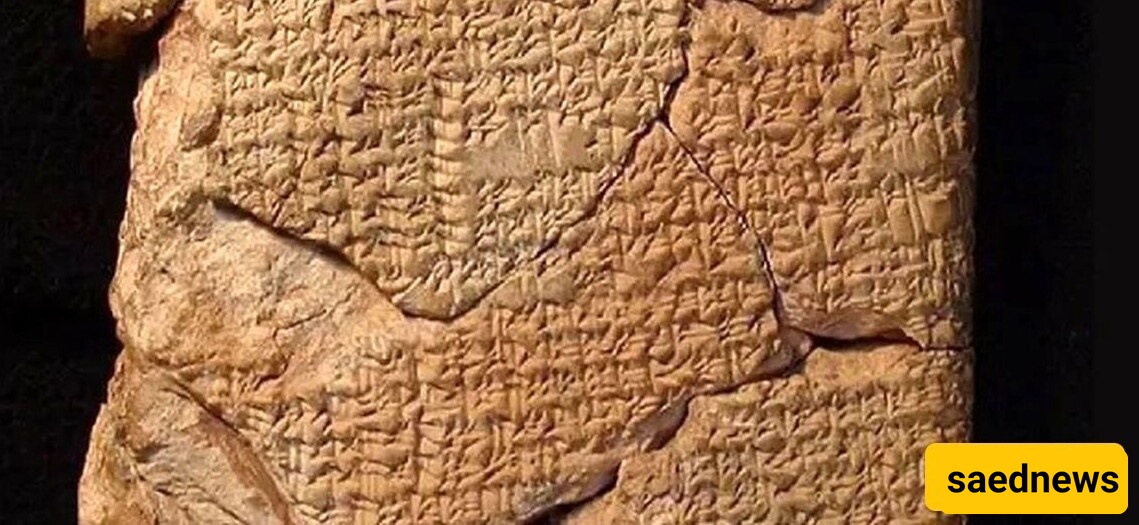
According to Saed News Agency, citing Faradid, researchers have finally succeeded in deciphering 4,000-year-old clay tablets that were discovered in Iraq more than 100 years ago and have now been able to read the text inscribed on them. These tablets describe how certain “eclipses” could be interpreted as signs of death, destruction, and disease.
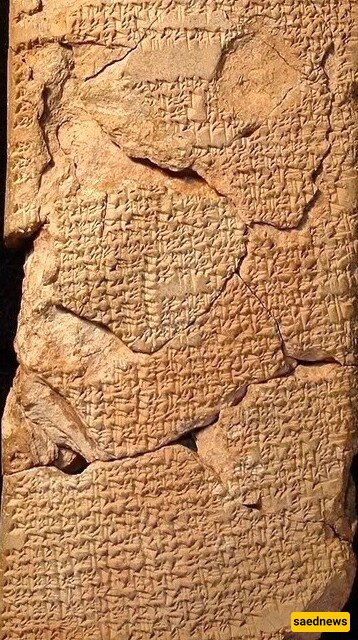
According to Andrew George, professor emeritus of Assyriology at the University of London, and Junko Taniguchi, an independent researcher, these four clay tablets represent the oldest known examples of eclipse-based divination ever discovered.
In a recently published study, the two researchers state that the tablets used the movement of shadows, as well as the timing and duration of eclipses, as tools for making predictions.
For example, one prophecy states that if “an eclipse suddenly becomes obscured at its center and then clears, a king will die and Elam will be destroyed.” Another prophecy says that if “an eclipse begins in the south and then clears, it is a sign of the downfall of Subartu and Akkad” (Subartu, Akkad, and Elam were ancient civilizations and kingdoms in Mesopotamia). Another prediction states that “an eclipse at sunset is a sign of plague.”
According to George, ancient astronomers may have drawn on past experiences to establish these eclipse omens:
“Some of these signs may have originated in real experiences; that is, people may have previously observed that a particular event occurred after an eclipse, and concluded that whenever an eclipse of that kind happens, a similar event will follow.” However, most of the omens were likely determined through a theoretical system that linked eclipse characteristics to different signs.
These cuneiform tablets likely originated from Sippar, a city located in present-day Iraq. At the time they were written, the Babylonian Empire was flourishing in parts of the region. The tablets were added to the British Museum collection between 1892 and 1914, but had not been fully translated and published until now.
In Babylon and other parts of Mesopotamia, there was a strong belief that celestial events could predict the future. People believed that astronomical phenomena were coded messages sent by the gods as warnings about what was to come. As a result, astronomers who advised kings observed the night sky and compared their findings with collections of celestial omen texts.
However, ancient Mesopotamian kings did not rely solely on eclipse omens to predict the future. If a prediction indicated a bad omen such as “the death of the king,” another form of divination based on the examination of animal entrails would be performed to determine whether the danger was real.
Even if the entrails suggested that real danger existed, it was believed that bad omens could still be neutralized through special rituals, and evil forces could be counteracted. Thus, even when signs were unfavorable, people believed the future could still be altered.