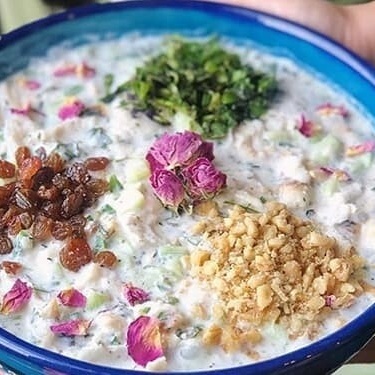
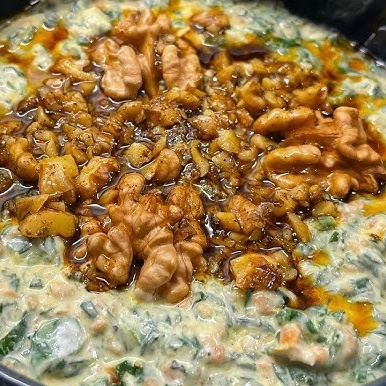
SAEDNEWS: If you are from Khorasan or Sistan and Baluchestan, you are probably familiar with Glour. Glour is a traditional Muharram dish from South Khorasan, Birjand, and Zabol, prepared during religious and mourning occasions such as Ashura, Tasua, Arbaeen, and the 28th of Safar, and shared among the community.
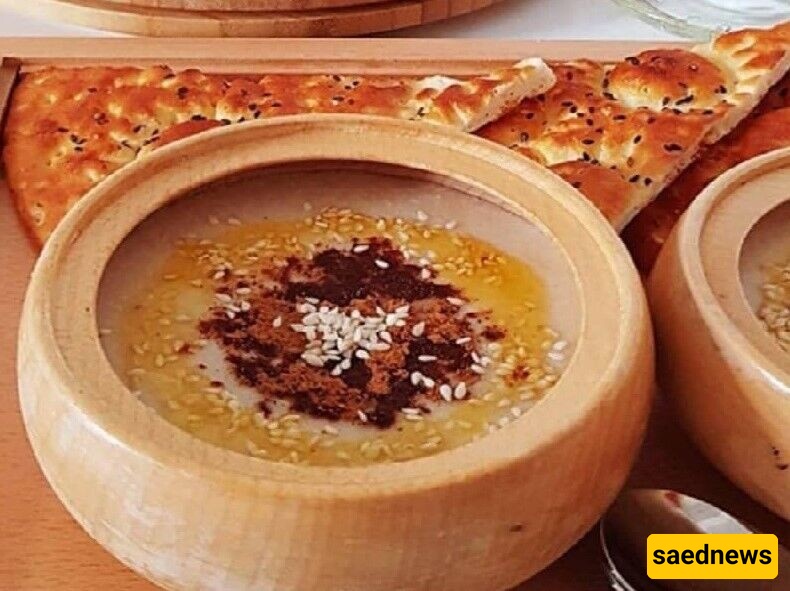
According to Saed News Family Service, if you’re from Khorasan or Sistan and Baluchestan, you’re probably familiar with Ghalor. Ghalor is a traditional dish prepared during Muharram in South Khorasan, Birjand, and Zabol. It is served during religious and mourning occasions such as Ashura, Tasua, Arbaeen, and the 28th of Safar. Communities often come together to make Halim Ghalor or Ghalor soup, with cooking starting at night and continuing until the next morning.
The name Ghalor comes from bulgur, which is the main ingredient. Other ingredients are added to enhance flavor. In this article, we focus on preparing Zabol-style Ghalor (Halim Zahedani), a type of halim also cooked in South Khorasan during Ramadan for Iftar.
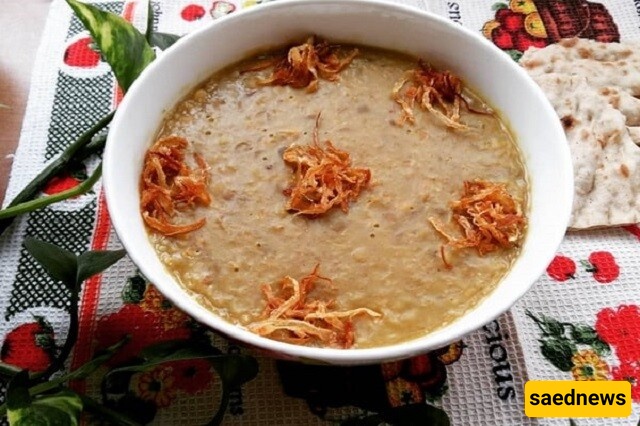
Wheat bulgur: 3 French-style cups
Boneless veal: 500 g
Chickpeas: ½ French-style cup
Pinto beans: ½ French-style cup
Lentils: 1 French-style cup
Fresh garlic: 200 g, grated
Onions: 2 large, chopped
Water or meat broth: 2 French-style cups
Tomato paste: 1 tbsp
Salt, black pepper, turmeric: as needed
Ground ginger: 1 tsp
Curry powder: ½ tsp
Strong brewed saffron: 1 tbsp
Cooking oil: as needed
Kashk (fermented whey) and fried onions: for garnish
Preparation Time: 30 minutes
Cooking Time: 6 hours
Calories (per 100 g): 184 kcal
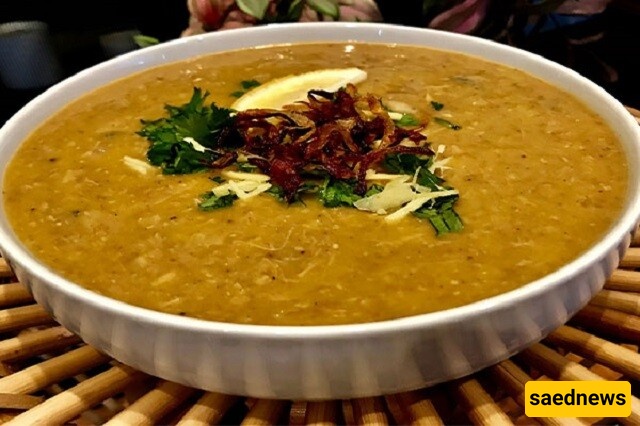
The night before, soak the chickpeas, lentils, and bulgur in three separate containers, covering them with water. Change the water several times during soaking.
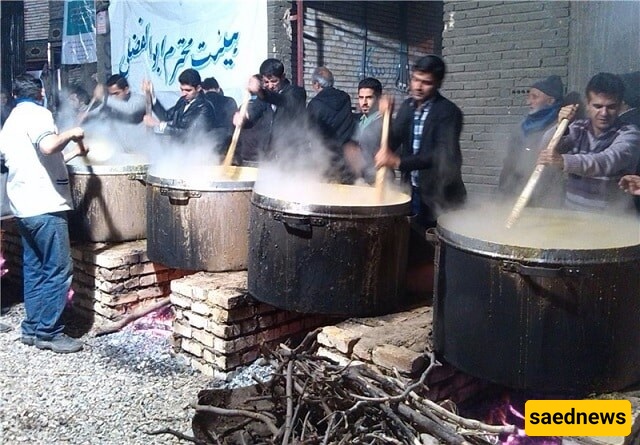
Drain the bulgur and cook it in a large pot with fresh water over medium heat. Simmer once it reaches a boil. In separate pots, cook the drained lentils, pinto beans, and chickpeas until half-cooked.
Cut the veal into stew-sized pieces. Chop the onions finely or into thin slices. Fry the onions in oil until golden, then add tomato paste, curry powder, turmeric, and black pepper. Sauté briefly to remove raw flavors and bring out the paste’s color.
Add the meat to the sautéed onions and brown slightly. Pour in some water and bring to a boil, then reduce heat to simmer until fully cooked.
Add grated garlic and ginger to the cooking bulgur. Stir constantly to prevent sticking. Add the half-cooked lentils, beans, and chickpeas, and cook until all are tender.
Remove the meat from its cooking liquid and add the broth to the bulgur. Shred the meat by hand or mash it with a pestle, then mix it into the bulgur for a thick, cohesive texture.
Stir the strong brewed saffron into the Ghalor. Adjust salt and pepper, cover, and cook for 30 more minutes to let the saffron aroma infuse the dish.
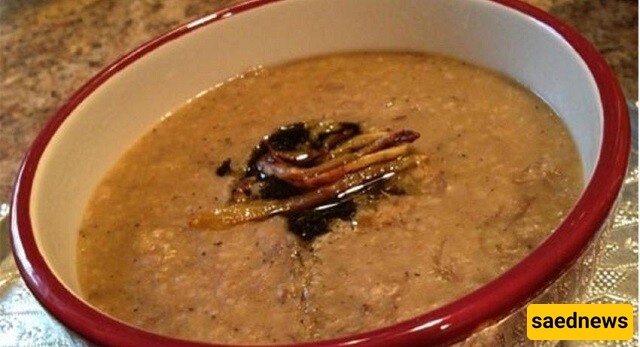
Taste and adjust seasoning. Serve in a suitable dish and optionally garnish with kashk or fried onions.
If you forget to soak legumes or are short on time, boil them twice, drain, and then cook. This reduces gas-causing compounds.
For richer flavor, use ghee or butter instead of vegetable oil.
Adding meat broth is optional but enhances creaminess and taste.
Keep the heat low during cooking and stir frequently to prevent bulgur from sticking.
A little flour mixed with water can be added at the end for extra thickness.
Some recipes mash the legumes before mixing with bulgur for a smoother consistency.
Variations include using Afghan lentils or beans alongside traditional ingredients.
In some regions, cinnamon and sugar are used as garnish, though this is not common in Zahedan or Sistan and Baluchestan.
Which city is Ghalor originally from?
Ghalor is traditionally from Zabol and Sistan and Baluchestan, though similar versions are prepared in South Khorasan, including Birjand. It is also popular in neighboring Afghanistan, where Herati and Afghani Ghalor are well-known.
What meat is best for Zabol-style Ghalor?
Boneless veal is preferred. Bone-in meat can be used if bones are removed after cooking. A mix of lamb and veal is also suitable.