SAEDNEWS: Chess, also known as Shatranj, is a two-player game played on a chessboard using chess pieces (king, queen, rook, bishop, knight, and pawn). Each of the chess pieces moves in a specific way and can capture the opponent’s pieces.
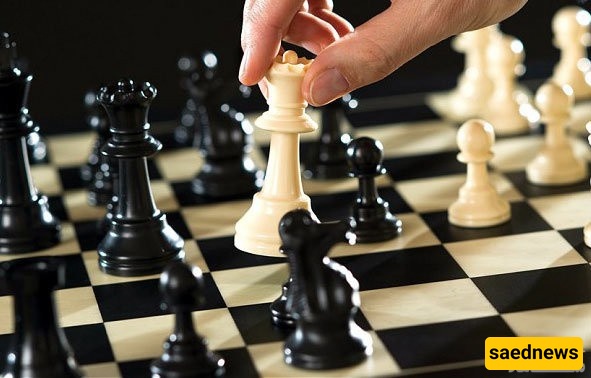
Chess is a sport in which two players compete using a square board and a number of pieces. The chessboard consists of 64 equal squares, and each player has 16 pieces, one of which is the “King.” During the game, each player tries to move their pieces in a way that threatens the opponent’s king, a situation known as “check.” A player who cannot resolve the check loses the game.
The origin of chess has been attributed to various civilizations, including Iranians, Indians, Egyptians, and Chinese. However, the oldest written records and evidence referring to chess come from India. Games similar to chess have been played in this region for about two thousand years and are considered its predecessors.
In ancient India, two games similar to modern chess were played: Chaturaji (Four Kings) and Chaturanga (Four Divisions).
In Chaturaji, four players participated, each having a king, a bishop, a knight, a ship, and four pawns.
The second game, Chaturanga, was closer to modern chess. Its name referred to four military divisions: infantry (pawns), cavalry (knights), elephants (bishops), and chariots (rooks). The king and minister (queen) represented commanders at the center of the army.
The game was played between two opponents on an 8×8 board with 64 squares called “Ashtāpada,” which was considered sacred.
Over centuries, chess spread from India to other parts of the world, including Persia. After the arrival of Muslims in Persia, the game gained attention and popularity. Persians called it “Chatrang,” but Arabs, lacking the sounds “ch” and “g,” adapted the word into “Shatranj.”
During the Abbasid Caliphate, chess was highly popular, and matches were held in the presence of caliphs such as Al-Wathiq and Al-Mutawakkil.
Between the 13th and 15th centuries, chess spread to countries such as France, Spain, and Italy, where modern rules gradually developed. In the late 18th century, the French player François-André Danican Philidor contributed significantly to the development of modern chess principles.
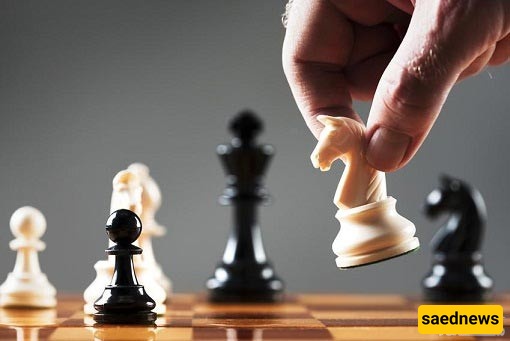
Each player starts with 16 pieces:
1 King, 1 Queen, 2 Rooks, 2 Bishops, 2 Knights, and 8 Pawns.
Initial setup (first rank from right to left):
Rook, Knight, Bishop, King, Queen, Bishop, Knight, Rook.
The second rank is filled with pawns.
King:
The most important piece. If it cannot avoid capture (checkmate), the game ends.
Queen:
The most powerful piece, combining the movements of the rook and bishop. It can move in straight and diagonal directions.
Rook:
Moves vertically or horizontally any number of squares if the path is clear.
Knight:
Moves in an “L” shape and can jump over other pieces.
Bishop:
Moves diagonally any number of squares but remains on the same color throughout the game.
Pawn:
Moves forward one square (or two on its first move) and captures diagonally. When it reaches the last rank, it can be promoted to another piece (usually a queen).
When a pawn reaches the last rank, it is removed and replaced by another piece (queen, rook, bishop, or knight). Multiple promotions are possible, potentially resulting in several queens.
White always moves first, and players alternate turns. A player wins by checkmating the opponent’s king.
Only the king cannot be captured, but if it is in a position where it cannot escape attack, it is checkmate.
Scoring in tournaments:
Win: 1 point
Loss: 0 points
Draw: 0.5 points each
Touch-Move Rule:
If a player touches a piece, they must move it. If they touch an opponent’s piece, they must capture it if possible.
Check:
When a king is under threat. The player must respond by moving the king, blocking the attack, or capturing the attacking piece.
Checkmate:
When the king is in check and cannot escape.
Stalemate (Pat):
A draw occurs when a player has no legal moves but is not in check.
Pin (Achmaz):
A piece cannot move if doing so would expose its own king to check.
Blitz:
Fast chess games lasting less than 15 minutes.
Castling:
A special move involving the king and rook, performed once per game under specific conditions.
En Passant:
A special pawn capture under specific conditions when an opponent’s pawn moves two squares forward.
A game may end in a draw if:
Neither side can checkmate with remaining pieces
The same position is repeated three times
Grandmaster:
An official title awarded by the International Chess Federation (FIDE) to top-level players, typically requiring a rating of at least 2500.
Some legends attribute the invention of chess to Zoroaster. Ancient texts such as Karnamak-e Ardashir Papakan mention chess in Persia. Abu Rayhan al-Biruni also recorded that chess was introduced to Persia during the reign of Khosrow I.
Famous Persian poets such as Ferdowsi and Nezami Ganjavi referenced chess in their works.
Modern chess was reintroduced to Iran through cultural exchanges with Europe during the Qajar era. The Iranian Chess Federation was officially established in 1950.
FIDE (Fédération Internationale des Échecs) is the international governing body of chess, founded in Paris on July 20, 1924. It connects national chess federations and organizes international competitions. Its headquarters is in Athens, Greece.
Chess can be started at ages as young as 3–4.
It can be played at any age.
It is a highly mental sport requiring concentration.
Average calorie burn: about 100 calories per hour.