SAEDNEWS: As hybrid and technology-driven warfare replaces conventional threats, Iran’s top military commanders are redefining national defense around artificial intelligence, unmanned systems, and advanced indigenous technologies.
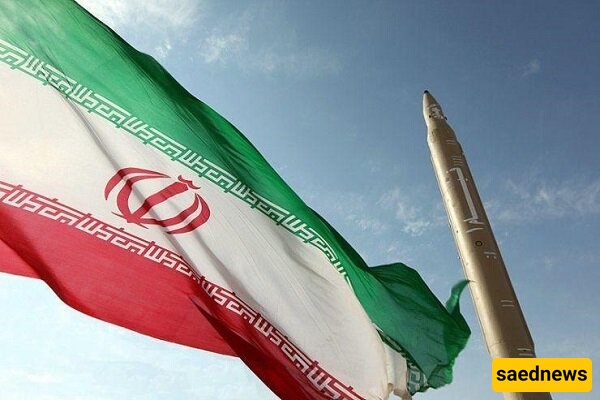
As the nature of threats facing Iran evolves from conventional military confrontation toward hybrid, cognitive, and technology-driven warfare, senior Iranian military commanders are increasingly emphasizing emerging technologies as a core pillar of national defense.
Rapid advances in military and security technologies have accelerated a broader shift within Iran’s armed forces toward a knowledge-based defense posture. In this framework, technologies such as artificial intelligence (AI), unmanned aerial systems, laser systems, and quantum technologies are no longer viewed as auxiliary tools. Instead, they are regarded as the foundation of what Iranian officials describe as “smart power generation”—a concept aimed at countering external threats, mitigating the long-term effects of international sanctions, and reinforcing deterrence at both regional and global levels.
Within this context, Iran’s Chief of the General Staff of the Armed Forces, Major General Seyed Abdolrahim Mousavi, highlighted the strategic necessity of acquiring and indigenizing power-enhancing technologies during a visit to Imam Hossein University on December 17. He emphasized the university’s role in training specialized human capital, producing indigenous knowledge, and aligning scientific research with the operational needs of the armed forces. Mousavi described the institution as a model of a revolutionary-standard university that integrates idealism with practicality, warning that future conflicts will be defined primarily by technology and that neglecting this domain could impose irreversible costs.
This technology-oriented outlook extends across multiple branches of Iran’s military. Brigadier General Ali Jahanshahi, commander of the Iranian Army’s Ground Force, has pointed to significant progress in areas such as artificial intelligence, quantum technology, unmanned systems, and laser-based capabilities. According to him, Iran has reached a level of effective operational power in these fields, which he described as decisive in countering hybrid, cognitive, and combined warfare approaches. Iranian officials argue that such methods are being employed by the United States and the Israeli regime against Iran.
In the maritime domain, Rear Admiral Alireza Tangsiri, commander of the Islamic Revolutionary Guard Corps Navy, has identified artificial intelligence as a key driver of transformation in Iran’s naval power. Speaking at a national conference on maritime threats, he outlined four primary platforms for AI integration—unmanned surface vessels, drones, missiles, and submarines—stressing that future naval missions will be unattainable without intelligent and autonomous systems.
Similarly, Major General Amir Hatami, Commander-in-Chief of the Iranian Army, has described the development of deterrence-oriented technologies as a strategic imperative. In a message marking Research Week, he stated that the armed forces are pursuing technologies that clearly convey readiness and strength to adversaries. He underscored close cooperation with universities, scientific institutions, and knowledge-based companies as essential for overcoming constraints and sanctions, warning that falling behind in emerging technologies would increase vulnerability on future battlefields.
Air defense has also been identified as a critical component of this technology-centric doctrine. During a visit to the Khatam al-Anbiya Air Defense Headquarters, the Chief of the General Staff emphasized the continuous enhancement of air defense capabilities, attributing recent progress to synergy among scientists, defense industries, and operational forces. Expanding networks for detection, monitoring, and forecasting advanced technological threats was presented as part of a broader strategy to safeguard Iranian airspace against evolving challenges.
Taken together, these positions point to the emergence of a coherent military doctrine within Iran’s armed forces—one that treats technology not as a supporting element, but as the core of deterrence. In the wake of recent regional developments and heightened tensions with the United States and the Israeli regime, Iran has increasingly sought to transform technological self-reliance into a strategic advantage, reframing sanctions as a catalyst for innovation.
Unmanned systems, intelligent platforms, and advanced technologies now form a central component of Iran’s defense architecture, enabling the country to exert greater influence in regional security dynamics at comparatively lower cost. Nevertheless, analysts note that financial constraints, international pressure, and the rapid pace of global technological change highlight the need for sustained innovation and long-term investment in research and development.
Overall, the growing emphasis placed by Iranian military leaders on power-generating technologies reflects a clear assessment of the future character of warfare—one in which superiority is determined less by troop numbers or traditional hardware, and more by technological intelligence, adaptability, and speed in responding to emerging threats.